Tichaona Zindoga
The recent 31st Session of the Conference of the Parties on the Parties to the United Nations Framework Convention on Climate Change (UNFCC) — otherwise simply known as COP31 — that was held in Antalya Turkey, revealed a number of critical issues regarding arguably one of the most critical issues of our times.
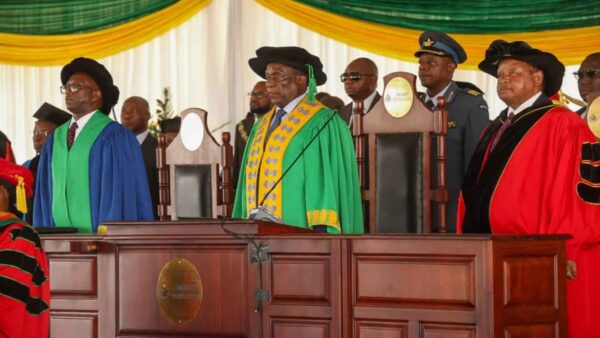
Zimbabwe participated, represented by Vice President Constantino Chiwenga, who highlighted key issues during his address that included spelling out Zimbabwe’s ambitious climate targets, community resilience and food security, ecosystem protection, participating in just energy transition through lithium value addition and call for climate finance as part of the just transition mechanism.
Zimbabwe’s situation regarding climate change shocks — including suffering the harsh weather patterns such as this year’s “Super” El Nino phenomenon — is emblematic of many countries in the Global South, formerly referred to as the Third World who are bearing the brunt of climate change that they contributed little to cause; as climate change is blamed on industrialisation that occurred in rich Western countries.
However, against this background, this year’s summit revealed deep cracks in the global response to the climate crisis steeped in lack of responsibility by Western powers such as the United States of America who are not just abdicating their responsibilities and moral expectations, but also actively rolling back the years by reverting to climate-harming fossil fuels.
US President Donald Trump is a climate denier. A staunch one. He has been encouraging his country to, “drill, baby, drill” oil — the dirty fuel. He has even kidnapped a president, Venezuela’s Nicholas Maduro, just to lay his hands on the country’s rich oil reserves.
Recently Britain announced that it approved and started gas production at the Jackdaw gas field in the North Sea, Scotland.
Western countries were largely conspicuous by their absence and lack of voice at the COP31 — by design — with UK’s Prime Minister Andy Burnham the only G7 leader in attendance.
Western media, too, largely ignored the event and its significance despite the reality of the climate change even on their shores.
By contrast, China showed up and showed leadership — which the Global South must follow closely and build cooperation around so as to fight the phenomenon particularly in mitigation and adaptation strategies.
China has certainly turned a corner.
Not so long ago, the country was frequently portrayed as the world’s environmental bad boy, its spectacular industrial rise accompanied by choking urban smog, polluted rivers, degraded landscapes and an enormous dependence on coal. Images of Beijing’s grey skies became emblematic of the environmental costs of rapid industrialisation and — more importantly — being the manufacturing hub of the whole world.
Yet, in the space of little more than a decade, China has been rewriting that narrative, emerging as a major force in ecological restoration, renewable energy development and green technological innovation.
Ironically just before and after Antalya there were reports of Asian cities engulfed in sickening smog — something that used to be characteristic of Beijing a decade or so ago. No one raised this stunning contrast in Western media.
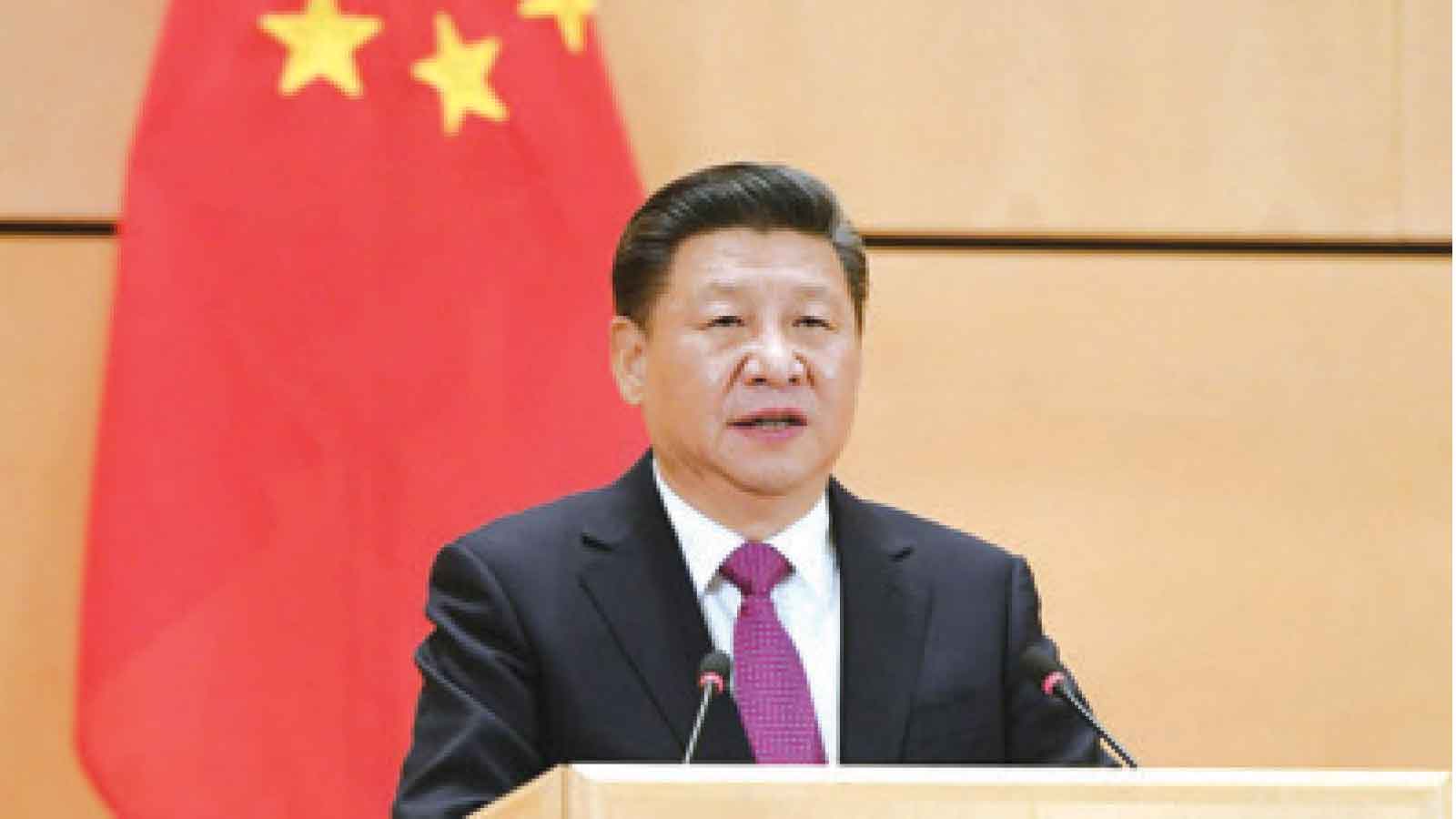
China’s climate transformation has its roots in President Xi Jinping’s now-famous concept that “lucid waters and lush mountains are invaluable assets” that underpin what China calls ecological civilisation and sustainable development.
First articulated in 2005, when Xi visited Yucun village in Zhejiang Province, the idea challenged the conventional assumption that environmental protection must come at the expense of economic development. President Xi posited that nature itself constitutes economic wealth, and that protecting ecological resources is not an obstacle to modernisation but an essential condition for sustainable prosperity.
On April 10, 2020, while delivering a speech at the seventh meeting of the Commission for Financial and Economic Affairs under the ruling CPC Central Committee, President Xi declared that, “We must ensure harmony between humanity and nature”.
He said eco-civilisation was vital to China’s sustainable development and that China’s plan of economic and social progress must based on the harmony between humanity and nature.
Then he delivered an acutely conscientious message. Quoting a German philosopher, Engels, President Xi said: “Let us not, however, flatter ourselves over much on account of our human victories over nature. For each such victory nature takes revenge on us.”
The climate catastrophe is a clear manifestation of nature taking a cold and cruel revenge.
However, China has taken steps to reverse this and assume climate leadership in eco-civilisation, including cutting down on its fossil fuel consumption, investments in dirty fuels and innovating to ensure clean energy transition way ahead of its Western counterparts. Cities like Beijing are breathing, while the countryside is a breath of fresh air, lush mountains and clear waters.
Some of the innovations such as new energy vehicles are now challenging the status quo, and being fought by the West, ironically. China is leading in solar technologies which are helping developing countries (A report on BBC featured this progress in Pakistan, notwithstanding the source).
Zimbabwe’s advances in the exploitation and value addition/beneficiation of lithium, placing it at the centre of the global value chain and the overall climate action is being bankrolled by China.
Such things are not being celebrated in the West.
China flipped the script — and is now the undisputed leader in climate action.
AT the summit in Antalya, Chinese Vice President Han Zheng, President Xi Jinping’s special representative, relayed China’s position that climate response is a common cause for all humanity; and noted that the adverse impacts of global climate change are emerging at a faster pace.
In light of the new circumstances, China put forward four proposals: The first is to focus on common goals and strengthen collective actions. China says it is important to follow the principle of common but differentiated responsibilities, fully and effectively implement the UNFCCC and its Paris Agreement, and pool synergy for global climate governance.
Secondly, China called for the acceleration of the green transition and promote low-carbon development. It is important to facilitate the free flow of quality green technology and products, and promote the transition and upgrading of economic and industrial structure, Han said.
Thirdly, there is need to prevent climate disasters and enhance climate resilience. China is calling for commitment to both mitigation and adaptation, and strengthening cooperation on disaster prevention and reduction, monitoring and early warning, and rescue, so as to improve climate adaptability.
Lastly, China called the world to uphold openness and inclusiveness and deepen international cooperation, emphasising the importance of offering more support and assistance to developing countries and jointly building a clean and beautiful world.
It would be a comfort for the world to have the luxury of judging who is the real global leader on climate — the facts speak for themselves. What is needed is for progressive nations, especially those in the Global South, to close ranks and build stronger cooperation with, and around, China to find lasting solutions to the climate catastrophe.
China has shown the way.
The writer is an expert on China-Africa issues and a friend of China. He is a journalist and director of a local think tank, Ruzivo Media and Resource Centre.