tawandamusarurwa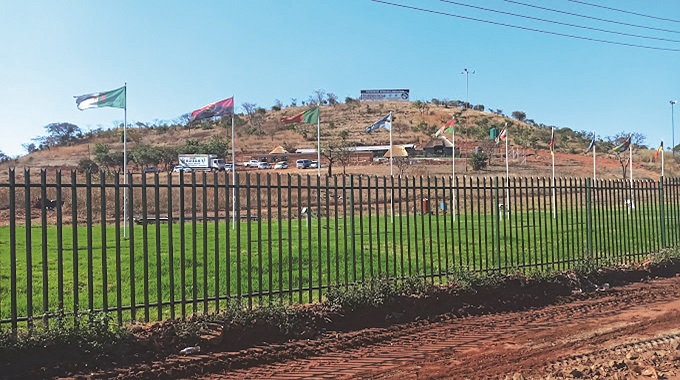
AFRICA’s 55 flags are flying high at the Museum of African Liberation in Harare.
Charles Mavhunga
They represent the convergence of taste in brand identity architecture in Africa.
The flags are symbols meant to communicate the past, present and future vision of the continent.
Exhibition of the flags at the theme park marks the determination of Africa to become a brand of choice in the world.
In essence, the theme park is Africa’s dream factory that is meant to curate the history of the continent.
It is meant to communicate the continent’s common aspiration to become standardised, packaged and globalised.
Africa is a rich continent but its brand identity was systematically eroded by colonialism.
But the fluttering flags at the museum symbolise the new identity architecture that Africa is now hopeful of a much-awaited resurgence.
They also define the glocal position (interconnection of the global and local) of the African story.
In tourism branding, exhibitions form the fine art of balancing the assimilation of influences that serve to protect the African identity.
They also form the fabric that naturally fits into the glocalisation trajectory to explain the story of Africa through experience.
Therefore, the flags at the Museum of African Liberation articulate the new horizon for Africa’s tourism vibrancy.
The concept of Africa as a rising giant is largely denoted by the glocalisation of the realities of the African story.
Developed countries are formidable because they are very sensitive to their history.
Identity architecture in the tourism industry is an important ideological stance meant to build the innovative nature and cultural values of people to become a brand.
To establish a new and strong Africa, the continent must embrace the concept of identity building.
The founding fathers of the Organisation of African Unity (now the African Union) had a dream of a united Africa that is a force to be reckoned with on the globe.
It is, therefore, against this background that Zimbabwe earned a privileged position to host the museum, which marks the continent’s new identity.
Founding fathers of the African dream such as Kwame Nkrumah and Julius Nyerere envisioned a united and great continent.
On May 24, 1963, Nkrumah delivered a moving speech that defined the blueprint for Africa to become a formidable force in the world.
Incidentally, at the museum in Harare, Ambassador Kwame Muzawazi is the captain of the ship, driving the mood for Africa to be identified globally through tourism exhibitions of the continent’s heroes.
This means the defining moments for Africa to become a global brand through tourism exhibitions are following the footprints of the founding fathers of Africa.
Innovations in Africa have lagged behind because the brand suffered a great deal of distortions from colonialism.
Through tourism brand architecture, Africa is being repositioned.
The Museum of African Liberation becomes a symbol of modern science and technology.
Overall, the flags flying at the museum have inscriptions that show the following:
- The respective country’s independence day
- The name of the capital city
- The official currency
- The population of the country
- The official languages of the country concerned
In addition to publicising historical facts of African countries, the flags also confirm how colonisation distorted identities of the African people.
They also tell the world what Africa went through.
Information is important to help African states shape leadership and economic development, as well as shape the brand of the continent to become strong and effective.
Africa is a rich continent that provides 60 percent of the world’s gold.
It also produces uranium for nuclear power, copper for electronics, titanium for supersonic projectiles, iron and steel for heavy industries and diamonds, among other minerals.
The new roadmap for the African continent is now being defined in Zimbabwe at the Museum of African Liberation.
Africa’s new direction in terms of brand identity now starts with the flying flags.
Charles Mavhunga co-authored textbooks in business enterprising skills and is currently studying for a PhD in Management at Bindura University of Science Education. He can be contacted at: [email protected]/ Cell: +263772989816


 Online Reporter