admin
admin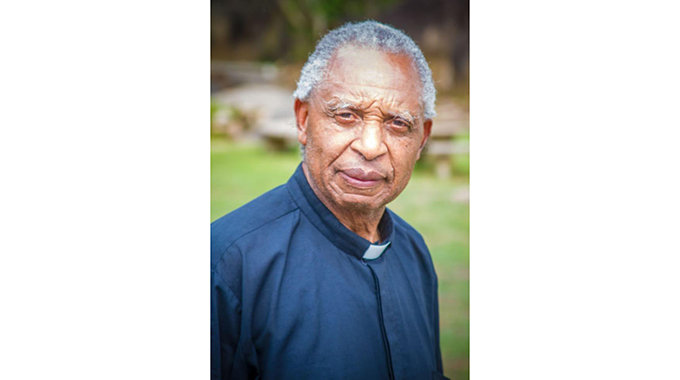
Father Reki Mashayamombe
Correspondent
If music be the food of love, play on…” wrote William Shakespeare in Twelfth Night.
The Roman Catholic Church and the nation at large celebrate the life of a man who epitomised sacred music. A nationalist par excellence, Fr Ribeiro was so loved by God who chose him to be His very own, to work for the Church and to work for the nation.
Speaking from her UK home, Father Ribeiro’s niece, Caroline Ribeiro, described her uncle as a family pillar who took care of her since she was only nine months old. She mentioned how much Fr Ribeiro lived for music and would always gather his nephews and nieces around to practice his song compositions, meticulously working on every note, sound, and pitch.
Who was Fr Emmanuel Ribeiro?
Father Emmanuel Ribeiro, the son of Francisco and Hilda Ribeiro, was born on 15 August 1935 in Chivhu. He was the fourth born in a family of five, Joseph being the first, followed by a Catholic nun, Sr Assumpta Caroline, then Elizabeth, Emmanuel, and lastly Alois.
He started his school in Gatooma (Kadoma) in 1944 (Sub A) and after sub-B in Gatooma (1945), he went to Driefontein for standard 1 to standard 5 (1946-1950). In 1951 he went to Kutama Mission for his Standard 6, where he met the late President Mugabe, then a teacher, for the first time.
After that, he did his Junior Certificate in Education in 1952 at Chishawasha seminary. By then he had already started answering his call to the priesthood.
He proceeded to Gokomere Mission where he did his teaching course.
Journey to priesthood
As stated above he began answering his call to priesthood in 1952. From 1952 to 1954 he was undergoing his spiritual formation at the minor seminary, and at the same time advancing in his education. He started philosophy studies in 1957 and completed them in 1959 at Chishawasha Seminary.
He then went for probation in 1960, during this time he was teaching at Marymount mission. From 1961 to 1964 he studied theology at Chishawasha Seminary.
He got his tonsure on 27 October 1961 at Chishawasha Seminary from Archbishop Markall.
Ordination and Priestly Ministry
He was conferred the ministry of sub-deaconate on 18 July 1963 and was ordained a deacon on 08 December 1963 at the Sacred Heart Cathedral, Salisbury, by Archbishop Markall. On 13 December 1964, he was ordained a priest in the Sacred Heart Cathedral in Salisbury by Archbishop Markall. He had his pastoral year as a priest at Chishawasha Seminary.
From 1965 to 1967 he was assigned at St Michael’s Mhondoro as a curate. He was moved to St Mary’s, Highfield 1967, as a curate, where he stayed until 1969, after which he was appointed Chaplain of Rhodesia Prison Service, a position he held until 1982.
After that, he worked in the Ministry of Education and Culture.
He went to Indiana University, the USA in August 1990 where he furthered his music education. When he came back from the United States he was assigned briefly (08 Sep 2008 to Dec 2008) to Mt St. Mary’s, Wedza as a Curate.
In January 2009 to the time he was called home (17 June 2021) he was assigned at St Mary’s, Highfield as a Curate.
His musical career
Fr Ribeiro was known, and was outstanding for his musical prowess, particularly in the area of church music where he was credited with composing the first Shona hymns in the late 1950s. He composed many popular hymns to an extent that he had lost count, nevertheless, conservative figures put his lot at 65, excluding those that he co-composed with various composers.
More importantly, he departed from the practice of translating songs from English to Shona, to creating a new genre of Catholic Shona songs, which was a massive step forward in the enculturation of faith into Shona culture.
His first composition was “Gamuchirai Mambo Mupiro Uyu,” released in 1961 and is still one of the revered songs in the liturgy today. Among his other popular compositions are: “Alleluia munyika dzose”, “Tauya nezvipo zvemupiro”, “Mambo Mwari wamasimba”, “Hwayana yaMwari”, “Mwari Ngaarumbidzwe”, and “Mutungumirireiwo Yesu” which is sung at almost every Catholic funeral.
The Papal visit of St Pope John Paul II in September 1988 to Zimbabwe saw Father Ribeiro composing the song, “Simon mwana waJonah.” He noted that the composition of the song emanated from the Biblical passage where Jesus asked Peter if he loved him.
In the particular song, Fr Ribeiro felt that God was asking if St Pope John Paul II loved the nation of Zimbabwe, his visit being the answer, “Yes, I love the people of Zimbabwe.”
The song “Hwayana yaMwari,” was composed when Fr Ribeiro went and took seven political prisoners from Mutare to Harare who were on death row and were hanged in his presence. As prison chaplain, he had the responsibility of counselling them, and the difficult task of informing their families of their demise.
On his way back he reflected upon the prisoners’ lives, whose ages ranged from 17 to 25, and it dawned on him how these young men were just but sheep led to the slaughter. Till his death, Fr Ribeiro remained in close contact with the families of these seven political martyrs.
Speaking to In Touch, a Jesuit publication, he said, “I started with music in 1951 when I was at Kutama College. But the music work became more pronounced when I was at Gokomere Mission, training to be a teacher just before I was ordained. The then Bishop of Gweru, Rt Rev Haene encouraged us to make use of Shona cultural expressions and symbols for evangelisation. Bishop Heane encouraged African musical instruments like drums, rattles (mbira) and trumpets for use in church. That encouraged me and my late friend, Stephen Ponde with whom I was working to compose songs for liturgy.”
Sr Redempta, who worked with father Ribeiro from his seminary days to the time was a chaplain of Rhodesia Prison Service, described him as a man who had a deep love for God and the people of God. She said that he was poor in expressing his love for God and people in words but through his music one would understand the deep love he had for God and the people of God. She went on to say the man had a love for his country and would talk passionately about it.
“He was pained by the fact that many people did not know the history of our country”, she said.
He is also said to have contemplated staging a drama about Mbuya Nehanda.
His service to the Nation
It was during his time as the chaplain that he met for the second time the first President of Zimbabwe, the late Cde Robert Gabriel Mugabe, whom he would later on, in 1975, help escape from the Rhodesian forces and cross to Mozambique. He sheltered Mugabe and Enos Nkala at his rectory at Rhodesville parish when they were being hunted down by the security forces of the country.
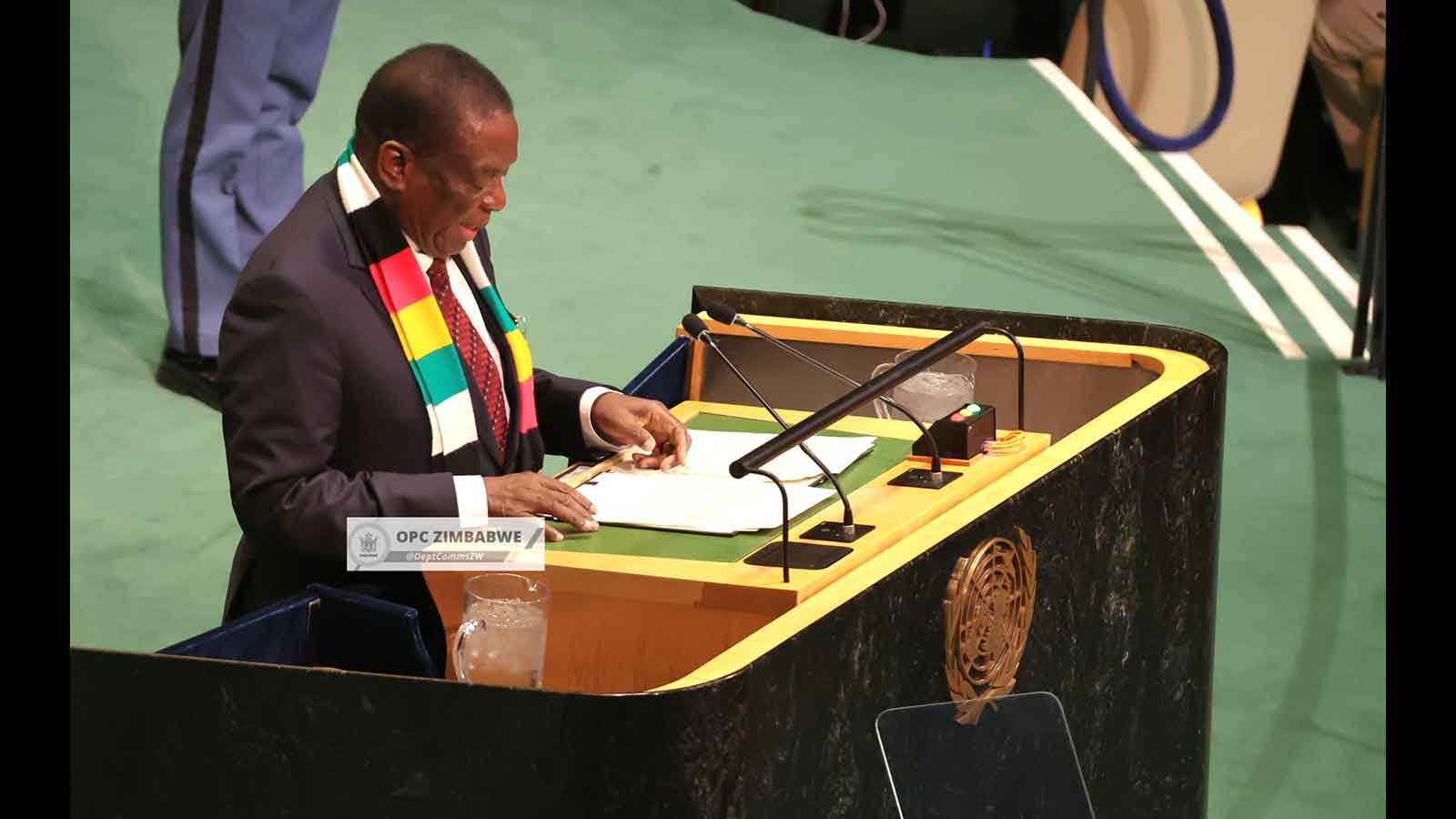
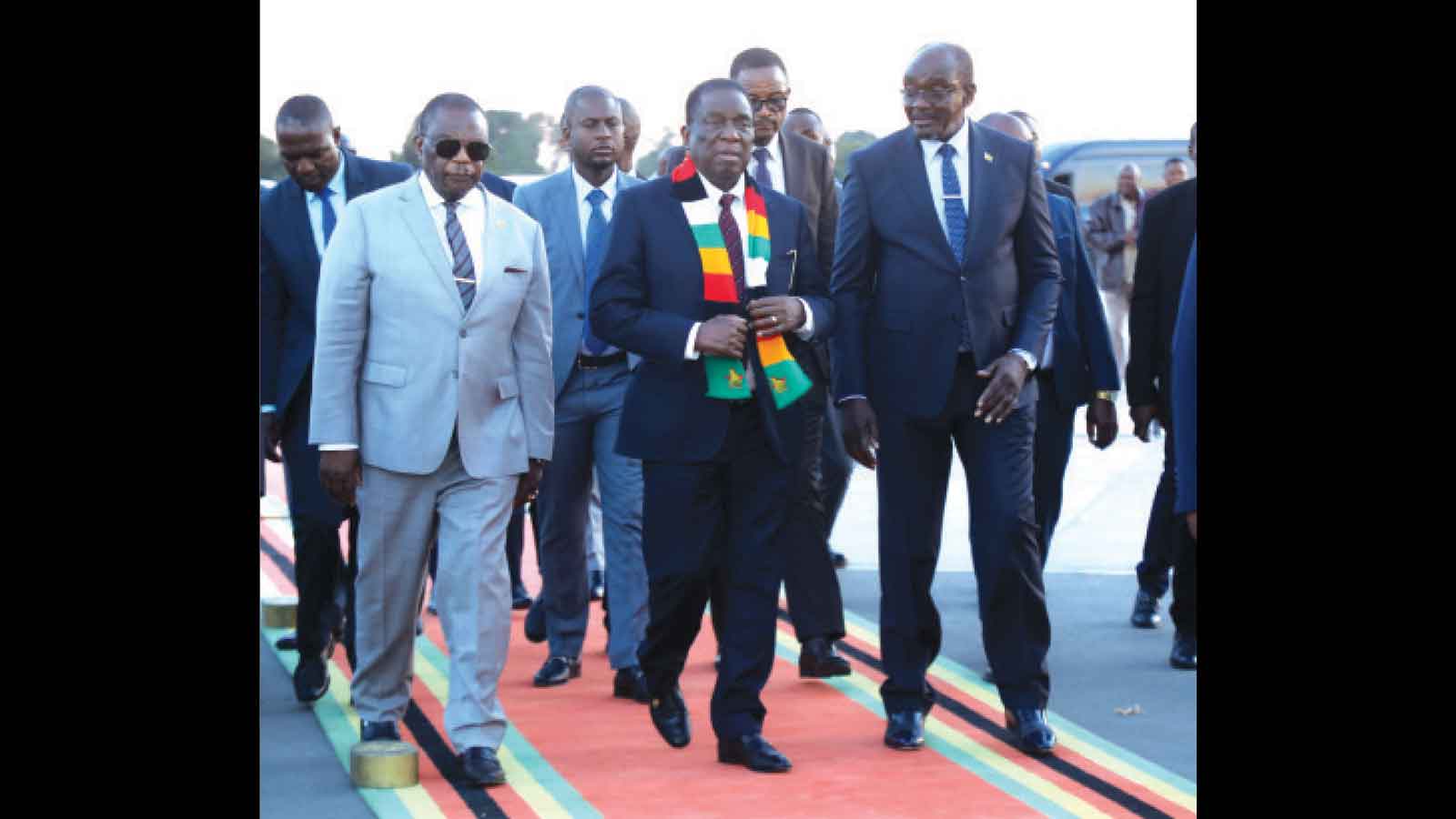
It was also during his time as Chaplain of Rhodesia Prison Service that he met President Emmerson Mnangagwa who had been arrested for bombing the Rhodesian locomotive at Fort Victoria railway station. In prison with President Mnangagwa were Mathew Malowa, Victor Mlambo, and James Dhlamini. These were known as the Crocodile Gang and were all sentenced to death. Fr Ribeiro facilitated President Mnangagwa’s removal from the death row. Unfortunately, Victor Mlambo and James Dhlamini were hanged in prison.
Because of his love for his country mentioned above, he did not hesitate, in 2019, to be part of a group of religious leaders who called for the removal of sanctions imposed on Zimbabwe ahead of October 25 which was declared by SADC as a day to protest against the sanctions. During his stay in the United States, he became Vice President Constantino Chiwenga’s spiritual mentor. He also mentored priests, nuns, Catholics and non-Catholics.
An Author in his own right, Father Ribeiro penned three novels, namely, Muchadura (1967), Tonderai (1969), and Ndakaitei.
Muchadura and Tonderai (his first two novels) won prizes in competitions arranged by the Rhodesia Literature Bureau. With the publication of the novel, Muchadura, Fr Ribeiro joined the rank of early vernacular publishers, including Bernard Chidzero, whose novel Nzvengamutsvairo was published in 1957, and the late Archbishop Patrick Chakaipa’s Garandichauya published in 1967. In ‘Muchadura,’ the nationalist in Fr Ribeiro is revealed through his expression of Shona culture and African tradition. Muchadura has been used as an academic literature set book for many years.
In 1967 he was elected the first chairman of the Shona and Ndebele Writers’ Association. He also wrote Shona epilogues for the Rhodesia Broadcasting Corporation’s African Service for two years.
Research
Fr Emmanuel Ribeiro died of an aortic aneurysm at St Anne’s Hospital in Harare on 17 June 2021.
His research assistant, Naison Ingwani, said, “We were researching prisoners of war who were executed in jail during the liberation war at Salisbury central prison and Chikurubi maximum prison, so we mainly focused on who they were, how many of them were executed, how old they were when they were executed. Before he died, we wanted to find all their relatives, some of whom we had already located and contacted.
“We also did research on the Chinhoyi 7 heroes and we were at advanced stages of the book about them.”
Let it always be known that whenever we hoist the Zimbabwean flag anywhere in the world, at various events and functions, we are hoisting the idea of Father Ribeiro imbued in the colours of our nation. May it also be known that when we sing our National Anthem we are sounding the melody of Father Ribeiro.


 Online Reporter