admin
admin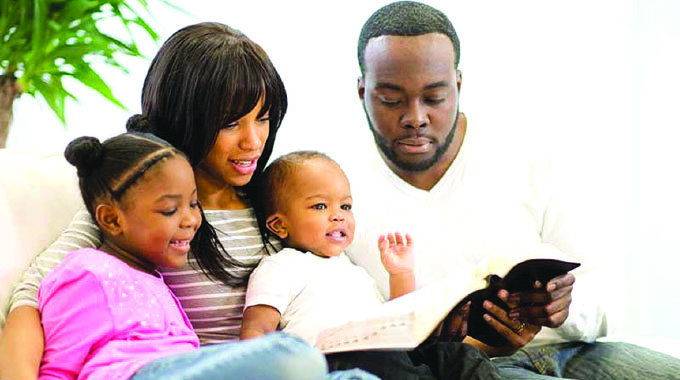
Samuel looked at his wife holding their new-born son.
As a young man living in the city, Samuel was thankful for his close friends in the church. But he missed the village where he grew up.
As he thought about parenting, he remembered the physical and emotional closeness he had shared with his large extended family and the protection he received in his early life. Now he asked himself, “How can I help my wife and children to feel that we are a close family, protected, and safe—here in this city?”
How should a family raise children in today’s modern culture?
Parenting in the city
Samuel and his young family are like millions of African parents who find themselves far from home, faced with the challenges of city life and removed from the old assurances of the large extended family.
They want to remain true to the roots that make them Christian and African. Their question is: How should a family raise children in today’s modern culture?
When living in their community, parents could call upon their own parents for advice, help, and continuity. A well-known entrepreneur and marketer is quoted as remembering that her grandmother modelled and taught her the “virtues of love and hard work, integrity, and an irrepressible sense of humour.
She showed me how to maintain my dignity”. For parents like Samuel and his wife, who do not have family around them, here are a few bits of advice on Godly parenting.
Pass on traditions, values and rituals
Parenting is a link between the generations past and those of the future. Children are God’s gifts to us. Christians in Africa have a double belonging: first to God, and then to our people group and community. Parents stress this belonging through all stages of growth, enshrined in rituals of birth, child naming, rites of passage, courtship, marriage, and other life celebrations.
However, we must be careful to distinguish which traditional rituals can enrich our understanding and obedience of God and which are contrary to our Christian beliefs.
In the midst of great change and globalisation of values, such rituals provide continuity, stability, shared identity, and collective experiences.
By honouring our traditions, parents can offer their children the resources for finding identity and resiliency. Traditions help us hold the past, present, and future together.
Build on your traditions
Authentic christian parents build on traditions where children are trained to honour God as creator, respect older people as mother or father, acknowledge age mates as brothers and sisters, treat younger ones as siblings, and care for strangers as fellow humans.
Although children are brought up to belong to a specific community, they also have individual responsibility and should be held accountable for what they do.
Encourage your children to own their ethnic identity and yet belong to an ethnically diverse community of shared faith.
A common community in which people of different ethnicities find belonging is the church. It is a joy to see ethnic diversity expressed within a community where parents can encourage their children to own their ethnic identity and yet belong to an ethnically diverse community of shared faith.
Stay with your children
A young man says, “As a child, I seldom saw my parents. Both my father and mother had jobs. So our family had money, but we had very little time together.
I felt like I did not really know them, and they did not know me. Throughout primary school, other children did homework with parents. But dad paid tutors to help us. Whether we children were in boarding school or staying at home, we all felt that we did not really know our father and mother.
Our hearts felt empty. Both dad and mum never realised that money does not solve every problem. We just needed dad and mum to spend time with us”
Young children should not be away from parents at the age when they need love and teaching most.
In Africa today there are perhaps too many boarding schools. While good education is a priority, young children should not be away from parents at the age when they need love and teaching most.
The result of such separation is overemphasis on academics and less emphasis on discipline, patience, morality, self-confidence, and other values that are foundational to character building. Such qualities are gained in an atmosphere of love, stability, and modelling. That can only happen in a home where parents are consistently present with their children.
As much as possible, children should live in the same home with their parents. Someone has said that values are “caught” not taught, meaning children learn best when they are near their parents.
Praise your children
All children need praise. A mother arrived home and found that her 14-year-old daughter had cleaned the house, washed the clothes, and started dinner. She praised her daughter by saying, “Ruth, you did so well. You cleaned the house, washed the dirty clothes, and even started dinner. Thank you. Now we can all eat early”.
All children need praise
Ruth was so happy to realise that her unselfish work touched the lives of all the family members. As a young person, she also learned: “I must praise people who do kind actions for me”.
Help your children turn to Jesus
Some people say, “Do not tell a child, ‘You should become a Christian’. Instead, let each child choose whether he wants to be a Christian, or go some other way”.
But God says, “You must commit yourselves wholeheartedly to these commands that I am giving you today. Repeat them again and again to your children. Talk about them when you are at home and when you are on the road, when you are going to bed and when you are getting up” (Deuteronomy 6:6-7).
A child who receives little or no teaching will feel an empty hole in his heart. He may try to fill that hole with all kinds of evil.
Children need bible teaching. A child who receives little or no teaching will feel an empty hole in his heart. And he may try to fill that hole with all kinds of evil. A Christian parent should take every opportunity to teach the bible often to all young people in the home.
Be an example
No matter what you tell your children, they will imitate your actions. For instance, if they see you doing corrupt things, they will follow in your footsteps. Never tell yourself, “I must engage in this shady practice so that I will get money to help my children”. Money from corruption will never bless your children.
No matter what you tell your children, they will imitate your actions.
As a parent, you can help your children by being an example of diligence and hard work. Then teach your children that money earned honestly will bring blessings to the family, but a person who gets money through corruption will reap trouble.
Today there are youth and young adults who refuse to work. In some cases, their parents failed to model and encourage diligent work at home. If you have a child who will not work, take steps to show him that laziness brings poverty (Proverbs 6:9-11). – TGC Bible Study



 Online Reporter