

 admin
admin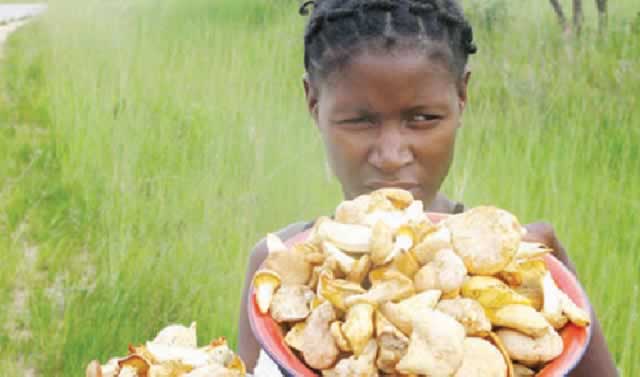
Sarudzai Mupangi Features Writer
Atime to focus on regenerating the economy that has been battered by years of economic sanctions and a painful four years of the inclusive Government.
While politicians during their campaign trail gave people hope, some of them yet to deliver on their election promises.
A word of warning for the majority of politicians who are still to start delivering on election promises – the electorate will always come to mark their performances come the end of five years. Ask former senators, Members of Parliament among other political portfolios who lost the seats for failing to deliver.
Most Zimbabweans are not waiting for politicians to deliver but started taking their own steps to self-improvement, economically.
Not to be left out are women who have taken it upon themselves to improve the welfare of the society. They have taken it upon themselves to feed their families and the nation at large by venturing into agricultural projects in both cities and in rural areas.
They are keen to learn modern and more productive ways of doing things to improve their welfare. It is in this vein that politician Maidei Mujuru and agricultural specialist, seasoned farmer and trainer Regina Sagonda Ndlovu have teamed up to run programmes to educate both rural and urban communities on mushroom production, potato and tree nurseries.
Mujuru said: “The three are inexpensive to grow and anybody can do it.
“There is no need for a lot of capital when establishing tree nurseries. All one has to do is collect seed from their neighbourhood thereby cleaning the environment and make money in the end. We are also doing mushroom production training because it is a high value crop that is cheap to grow. Mushroom growing requires serious and knowledgeable people and that is what we are teaching the people.”
She said improving agricultural production was the only way out for a country that is under sanctions.
“The country does not have to import some agricultural commodities, whenever challenges or shortages occur there is a positive side to it, a ready market would have availed itself.
“It does not make sense for Zimbabwe to continue importing commodities such as potatoes, mushroom, chicken and eggs among others. These products should be produced locally. Zimbabwe should just do away with importing these commodities and motivate and train the people to grow food crops,” she said.
Zimbabweans should always see an opportunity in these shortages and not find comfort in complaining at all times.
She said in line with the Zanu-PF party manifesto which emphasises on the empowerment of women and youths or black empowerment in general all shortages should be business opportunities.
“For example, when there are meat shortages it means there is a new business opportunity.
“Now that the country has secured its sovereignty by voting Zanu-PF there cannot be a better time to focus on bread and butter issues.
“Because we have an understanding on which direction our economy should take communities should work on that.
“We should not allow ourselves to be swayed off the mark but work hard and restore our breadbasket status.”
Mrs Ndlovu said there is need to train more trainers as most women are interested in learning new farming ideas.
She said the response has been overwhelming too many people need to venture into farming.
Over 3 000 people have been trained in the past six months and more are waiting to receive training.
Growing mushroom, potatoes and trees among other things has seen some women expand into big businesspeople some of whom have managed to diversify their operations.
“We have trained thousands of women on how to grow the above mentioned items and most of them have done fairly well,” said Mrs Ndlovu.
She added: “After training we always make it a point to follow up on our students and help them deal with any challenges as we monitor their progress.
“This, however, means that we cannot move away from an area soon after training. We have to train more trainers to cater for the increasing demand. Many people are eager to learn.
“While we are focusing on women we have also accommodated hundreds of men in our programmes.”
More than 2500 people have been trained in the past six months and the majority have yield positive results in their projects.
Mrs Ndlovu said there was a ready market for the crops that they produce, in and outside the country.
“Considering the fact that there are challenges of destruction of forests by farmers to cure tobacco and by the general public as they look for energy alternatives there has been a greater need to replace trees.
“The country is facing energy challenges which means our trees will continue to be destroyed. As responsible citizens of this country and business-minded people we have decided to focus on producing tree nurseries,” said Mrs Ndlovu.
Ivy Kanokanga of Sunningdale (42) said after going through a training programme she felt motivated to venture into something just to earn extra cash.
“I have been idle and depending on my husband for too long and I think I could start by making my own nurseries; they do not cost much. After all, there is plenty of seed lying around,” said Kanokanga.
“This has been quite an experience for me I no longer see myself as an ordinary housewife but a businesswoman in the making.
“The training has given us hope and helped us realise our potential as women. This will also benefit our families.”
Corporates and individuals from Waterfalls, Harare South, Hatfield, Mbare, Sunningdale, have already benefited from the training programmes.
The project is going to Bulawayo before moving to other areas.
One group has been allocated land in Zvimba where they are growing potatoes, trees and mushroom.
Kudzai Musengeya (33) from Mbare said she had not benefited from the land reform and the youth fund but has since found a role to play in the country’s economy by joining the cooperative.
“I was worried that a lot of developments and opportunities were coming up in our economy and I always wondered if I would ever be a beneficiary.
‘‘I even applied for the youth fund but could not benefit maybe my project proposal was not good enough. I hope to gain experience from working with other women, maybe one day I will become a seasoned business woman,” said Musengeya.
Government has been promoting the massive production of highly nutritious crops such as mushroom to improve livelihoods and enhance food security.
The emancipation of women has proved to be a positive move for national development. More farmers are going into potato production and fewer people are venturing into mushroom production.
Feedback: [email protected]/[email protected]



 Online Reporter