Debra Matabvu
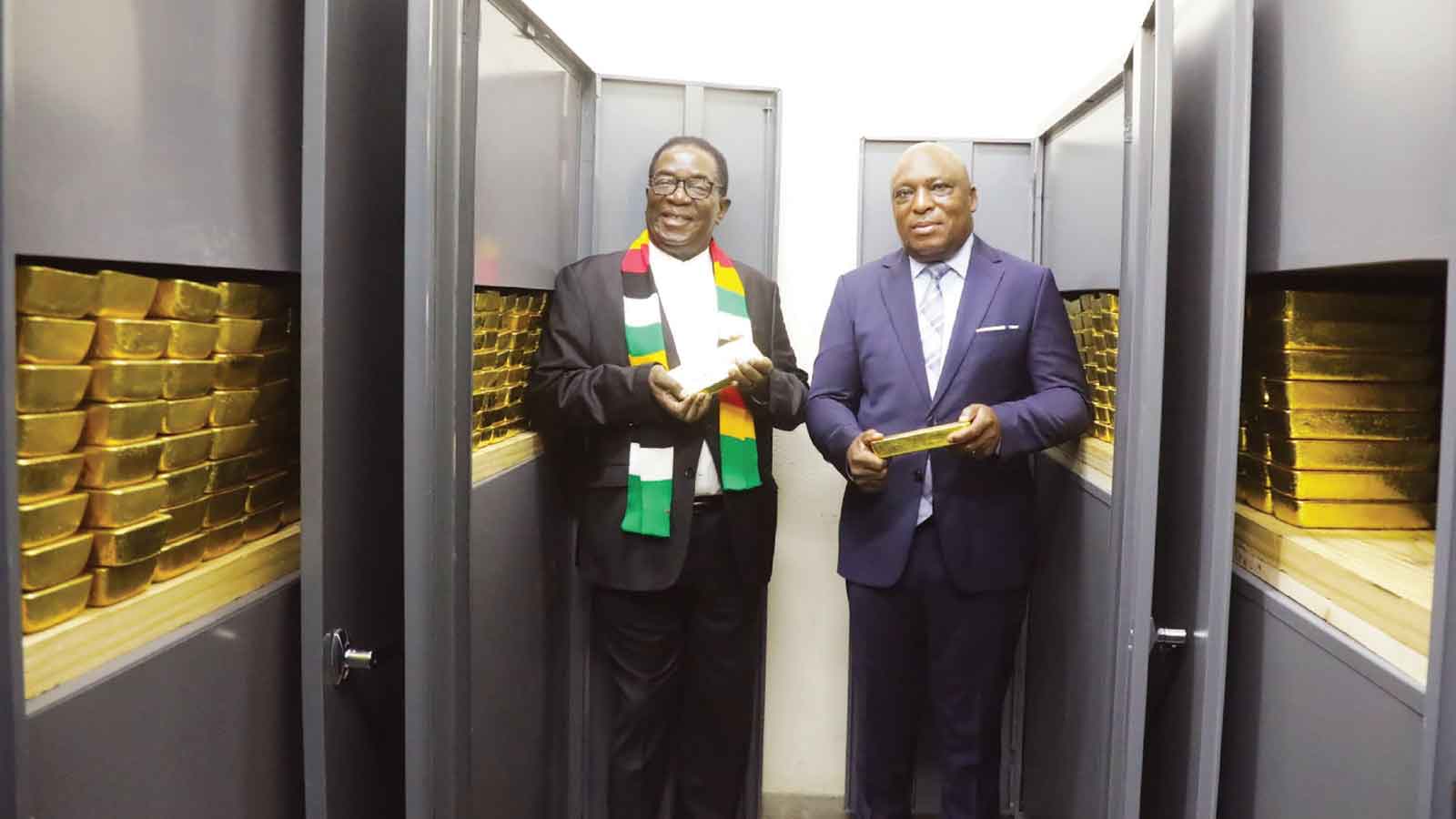
ZIMBABWE’s gold reserves have surpassed 4,5 tonnes while foreign currency receipts reached a record US$10,72 billion during the first six months of 2026, the highest foreign currency inflows ever recorded in the country’s history, providing stronger backing for the ZiG and reinforcing broad macroeconomic stability.
The latest developments are contained in the Reserve Bank of Zimbabwe’s (RBZ) Quarterly Snapshot on Recent Monetary, Currency, Price and Financial Developments for the second quarter of 2026 released yesterday.
The record foreign currency receipts represent a 47,8 percent increase from the US$7,25 billion recorded during the corresponding period in 2025, underscoring the economy’s growing capacity to generate foreign exchange through exports, remittances and other inflows.
The strengthening of gold reserves is equally significant as gold forms part of the assets backing the ZiG.
Higher reserves improve confidence in the local currency, strengthen the country’s foreign reserve position and enhance the central bank’s ability to cushion the economy against external shocks.
The RBZ said the country had also continued to accumulate foreign currency reserves, which rose to US$1,6 billion by the end of June, providing import cover of 1,6 months.
According to the central bank, the reserves are sufficient to cover about six times the stock of ZiG reserve money and approximately one-and-a-half times total ZiG deposits.
“The Reserve Bank continued with the accumulation of foreign currency reserves backing the ZiG during the quarter ending June 2026,” the report said.
“Foreign currency reserves increased to US$1,6 billion in June 2026, sufficient to cover about 6 times the stock of ZiG reserve money and about 1,5 times the ZiG deposits.
“The build‑up of foreign currency reserves is critical for the lasting stability of the ZiG currency.”
Another notable milestone highlighted in the report is the growing acceptance of the ZiG, with about 40 percent of all transactions processed through the national payment system now being conducted in the local currency.
The increased use of the ZiG is regarded as an important indicator of growing public confidence in the domestic currency and supports the effectiveness of the monetary policy by reducing excessive reliance on foreign currencies in local transactions.
The report noted that Zimbabwe had “maintained a relatively high proportion of ZiG usage in the economy to around 40 percent of total national payment system transactions.”
The RBZ attributed the country’s continued macroeconomic stability to prudent monetary policy management, saying inflation expectations had become increasingly anchored despite global economic shocks.
“The continued macroeconomic stability during the second quarter of 2026 was underpinned by prudent monetary policy management.
“The increased stability has resulted in inflation expectations becoming more anchored and the Reserve Bank will continue to pursue prudent monetary policy measures that promote price stability while supporting sustainable economic growth,” the report said.
Annual ZiG inflation remained below five percent, ending the second quarter at 4,72 percent despite the impact of rising international oil prices triggered by the Middle East conflict, while month-on-month inflation averaged just 0,47 percent between January and June.
The RBZ said better-anchored inflation expectations had acted as a buffer against the global oil price shock.
“Annual ZiG inflation remained low and stable at 4,7 percent in June 2026, despite high international oil prices due to the Middle-East conflict,” the report said.
“Better-anchored inflation expectations helped shield the economy from the recent global oil price shock.”
Reflecting the improved inflation environment, the Monetary Policy Committee reduced the Bank Policy Rate from 35 percent to 30 percent in June.
The RBZ stressed that the reduction did not signal an easing of monetary policy but rather “a recalibration of the Policy Rate to the structural shift in inflation dynamics.”
Lower policy rates are expected to reduce borrowing costs, stimulate productive investment and support economic growth while maintaining price stability.
The report also showed that the ZiG exchange rate remained broadly stable throughout the second quarter, trading between ZiG25 and ZiG27 to the United States dollar, while the parallel market premium remained below 20 percent.
Stable exchange rates are important because they improve business planning, reduce imported inflation and enhance investor confidence.
Foreign exchange inflows continued to exceed external payment obligations.
The RBZ said total foreign currency inflows of US$10,72 billion compared with payments of US$7,3 billion during the first half of the year, generated substantial surpluses that have supported reserve accumulation and domestic liquidity.
Exports remained the largest source of foreign currency, accounting for 70,3 percent of receipts, followed by diaspora remittances at 14,4 percent and loan proceeds at 9,2 percent.
“Higher exports of tobacco and favourable prices for gold, PGMs, and lithium drove export performance,” the report said.
RBZ Governor Dr John Mushayavanhu said the central bank would maintain prudent monetary policies to preserve stability.
“The prudent monetary policy stance, coupled with proactive Government interventions in the fuel sector, has helped the country to weather the inflationary impact of the recent oil price shock.
“The Reserve Bank will continue to calibrate the monetary policy stance in line with the evolution of macroeconomic fundamentals to support the country’s inflation and growth objectives,” he said.