admin
adminexecutive officer of JP Morgan Chase & Co.
Oil supply will trail consumption in the second half as the Organisation of Petroleum Exporting Countries and other producers won’t increase output fast enough, the bank said in a report on May 6.
Rabobank Groep expects shortages in corn and cotton this year while Barclays Capital is predicting deficits in copper, nickel, tin, lead and platinum.
“Ultimately, the long-term fundamental supply and demand of commodities is still pointing to higher prices,” Eyles said in an interview.
“The commodities that have the best underlying fundamental stories at the moment are in energy because of unrest in the Middle East and Japan’s nuclear crisis”, he said.
Crude oil has more than tripled since December 2008 and gold doubled, with the Standard & Poor’s GSCI Index of 24 commodities beating stocks, bonds and the dollar for five straight months through April, the longest run in at least 14 years.
That kept global food costs near a record, prompting central banks from Brasilia to Beijing to raise interest rates and helping spur conflict and riots in the Middle East and North Africa.
June delivery oil traded at US$98,56 a barrel on the New York Mercantile Exchange today after the most active contract touched US$114,83 this month, the highest level since 2008.
Precious metals will benefit the most from a “strong interest” in diversification and inflation and currency hedges, Eyles said on May 16.
“What people tend to underestimate is how strong and how far the market can go when there is a limited supply to match a very heavy demand,
“Gold stored in the bank’s vault in Singapore is “rapidly increasing,” he said.
Cash gold touched a record US$1 577,57 an ounce on May 2 and is up to 5,2 percent this year after a 30 percent rally in 2010.
The S&P GSCI Index slumped 11 percent in the first week of May on signs of an economic slowdown after climbing 20 percent through April and more than doubling since the start of 2009.
“In the short term, the macro landscape seems to have taken a turn,” said Eyles, referring to signs of a slowing global economy, China’s monetary tightening and the European debt crisis that’s weighing on industrial metals,” he said.
Copper declined 6,7 percent this year on the London Metal Exchange and zinc dropped 12 percent.
Goldman Sachs Group Inc. in reports on April 11 and April 15 told investors to be “underweight” commodities in the next three to six months.
The bank still expects commodities to advance about 10 percent over the next 12 months.
JPMorgan, the second-biggest US bank by assets, has joined Citigroup Inc, Nomura Holdings Inc (8604) and Australia & New Zealand Banking Group Ltd in boosting staff and business in Asia to profit from investment and hedging demand.
The number of clients in Asia has grown 50 percent after the acquisition of RBS Sempra Commodities LLP in 2010, the report said.
Eyles, (41), who joined the bank in 1988, said the operations in Asia had about 100 employees across sales, trading, research, warehousing and physical business.
The bank won the top spot in the 2011 rankings by Asia Risk magazine of energy and commodity derivatives brokers and dealers in the region.
Formerly chief executive of commodities for Europe, Middle East and Africa, Eyles said the bank is seeking to expand its physical trading of copper, aluminum and zinc to include gold in China, a country that it considers an important priority.
“We continue to build our gas, coal and power franchises in the region as well as physical oil and investor businesses,” he said. – Bloomberg


Online Reporter
- Chronicle
- July 22, 2026
- 10 views
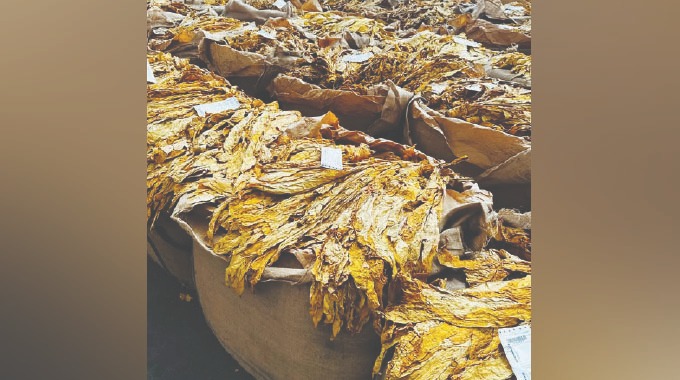
Tobacco marketing season closes month-end
Elita Chikwati [email protected] THE 2026 auction tobacco marketing season will officially close on July 31, with Zimbabwe maintaining strong sales volumes to sustain its position as one of the world’s…