Chronicle Editor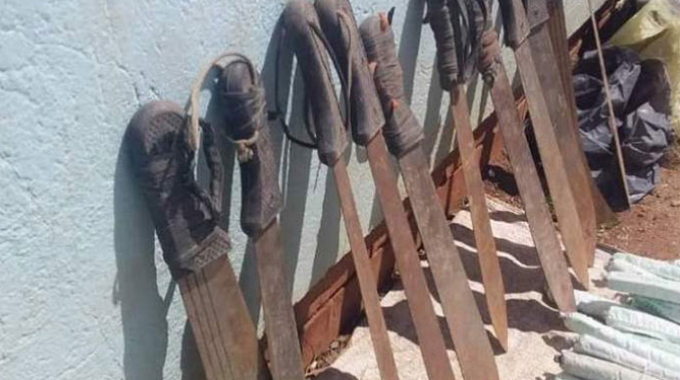
Bruce Ndlovu, Sunday Life Reporter
A young man who only wanted to be identified as Bernard told Sunday Life that when fights broke out at their mining site, located in Umhlonyane in Matobo District, Matabeleland South Province, there were usually between young men from Lupane and Kezi.
In that gold-rich belt of Matobo near Umhlonyana Dam, young men who left their families in search of the precious metal have forged fresh bonds and instead of family names and totems, they identify each other using their district numbers as shown on their national identity documents.
When the war horns are sounded, it is usually safer to have a national ID number that does not end with 39 or 41. If by any chance you’re from those districts, Matobo (39) and Lupane (41), then war is upon you, whether you want it or not.
“The battles are always between the 39s and the 41s,” Bernard told Sunday Life.
“Those are the groups that are at each other’s throats. I am a 28 so I am almost always safe. I am from Gwanda and we are here in fewer numbers so these guys usually leave us well alone. The 39s and 41s on the other hand, cannot stand each other because there’s more of them than any other group.”
According to Bernard, the district wars at the mining site are a result of the fact that the 39s regard the 41s as invasive strangers that do not belong anywhere near the rocky hills of Matobo.
“The 39s believe that they are from here and no other group should challenge them but there are a lot of 41s and that leads to bloody fights,” he said.
Bernard revealed that alcohol and women were usually the reason why fights ignite spontaneously in the informal settlement where even shops have suddenly sprouted.
“Sex workers have realised that there’s not a lot of money in Bulawayo or there’s more money this side so they travel from town to come here in the evening. At night, they will be working and that’s when the fights start. A 41 will beat a 39, for example, over a girl, then that one person goes to their district members to tell them what happened and before you know it, one group is arranged one side against another. The rest of us will be on the sidelines watching,” he said.
Bernard said that most of the fights were started by younger gold panners who, in their eagerness to make feared names for themselves, were always willing to see blood spilled.
“The fights are intense and they usually happen at night. There are some torch-lights that one can buy in town for US$25 and at night they can light up everything. Those are the lights that they go hunting with. It can get pretty intense and we have had a lot of people injured when these fights break out. Sometimes even the police are sent and they also get assaulted.
“For some of these boys, I think they feel the pressure to do what those before them did. It’s now a family thing. When they were growing up, they were told about what their brothers used to do and so when they come here, they want to continue in the same vein or even exceed what they know. So, the violence is mostly perpetrated by youngsters who are trying to match the exploits of their elder brothers,” he said.
At 34 years of age, Bernard is a single father of three. Due to the things he has seen in the mining pits, he said he did not want any of his children to grow up and be gold panners.
Despite the dangers that the life of a gweja poses, he said he cannot leave the trade now. Bernard spoke of the hunt for gold as an addiction that he wished he had never acquired but could not shake off.
Gold panning, he said, had made him unemployable as he would start daydreaming about the much sought-after metal whenever he got a stable job.
“I have been digging for gold since I was 18 in Gwanda but I don’t have a single wound from a fight for gold. I started in 2008. I think it just depends on who you are as a person. I think the guys fight over gold a lot because they never grew up around it. There are not as many mines in Kezi and Lupane as they are in Gwanda. We grew up around gold.
“I don’t want my child to be in this line of work because gold is addictive. I will do anything in my power to make sure that they never get a taste of it. If there is a way to quit I would but whenever I try, I find myself back again in the same pits looking for gold. You can never employ me because, after a few weeks, I will start thinking about gold again. I will start wondering how the crew that I worked with is doing, or if they have hit a score. Once you have tasted the money from gold, there’s no going back,” he said.
When Sunday Life met Bernard on Old Gwanda Road, he was covered from head to toe in dust. However, while he might have looked a fearsome sight as he stood on the side of the road, he revealed that when he is away from the desperate search for gold and the wars and the fights that accompany it, he is a presentable young man who blends into the rest of society seamlessly.
“When you meet me in town, when I am well-dressed, you can never tell that I am a gold panner. I don’t drink much but the guys I work with do. I can leave my place carrying US$1 500 and go to the bar with the other guys. Once there I will not spend much but the other guys will be spending a lot and I will end up also borrowing them a lot of money.
I don’t drink much but I have a brother who has joined me here who does. He is not as disciplined as I am and he loses a lot of money. I can’t stop him from taking alcohol but this is something that he will have to learn on his own,” he said.
For now, Bernard said he was eager to stay out of the way of the 39s, the 41s, and any other violent groups that might endanger his safety. His children, he said, deserved to get the kind of upbringing he never got.
“I never got a chance to finish my education. I left school when I was in Form 3. My mother died when I was 18 and that’s when I went into the bush. I never had a father in my life. I was given the option of herding cattle but I didn’t think that was the life for me. My mother had been struggling while she was alive and it looked like life could become worse if I took that route. So, I chose this life instead and when I started making money, I went back to look for my siblings who were now scattered all over.
“I can’t afford to die and leave my children with any other people. My children don’t have any grandmother that they can lean on if I happen to die while looking for gold. Some elders don’t prioritise the children’s education when their parents pass away.
After they finish Grade 7 you hear that a child is now a maid or they are pregnant. From then on their life will never be fixed. It will rather be better for my children to get pregnant while I am around so that they have a chance to realise their mistake and fix their life,” he said.


 Online Reporter