admin
admin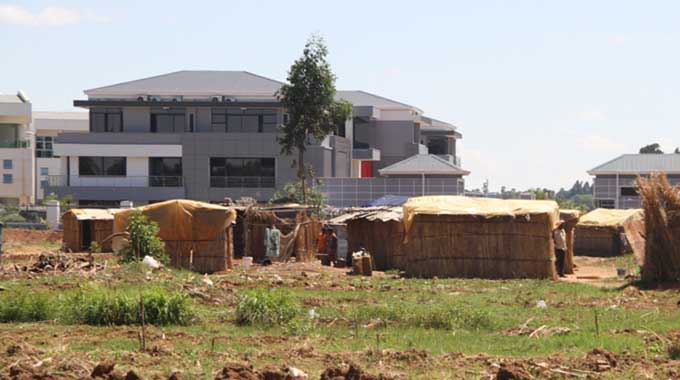
Pardon Gotora Urban Scape
Slums are perceived to be an eyesore and an egg in the face of public policy. There are various alternatives available to deal with slums and/or informal settlements. These range from demolitions and mass evictions, relocations to in-situ upgrading.
All of these options have been explored in Zimbabwe and the world over with mixed results. Just like a coin, all of them have two different sides, the good and the bad.
Being a rural boy growing up in a not so privileged family, I used to wear torn shorts. These shorts had one style of wearing out, only the backside would be ravaged, while the front remained intact.
Depending on your age, when you were fortunate enough, the shorts would be patched.
Unfortunately, my granny and my mum were not so blessed with their fashion and fabrics. When on your own, you felt very comfortable and confident.
Nightmares came when you met someone on the pathway or when obliged to greet visitors at home. You had to summon your entire acrobatic prowess to turn around without anyone spotting your backside.
Slums are patches in the housing delivery system’s backside. For ages, authorities all over the world have always tried to ensure that “no one notices the backside”.
But the magnitude of the challenge has always made it difficult to cover up. UN-Habitat (2008) estimates that over one billion people live in slums globally, with the potential to blow up to two billion if no action is taken to address the challenge.
Slum growth varies from region to region, but the largest impact manifests in Africa.
Urbanisation is synonymous with slum growth. The malfunctioning of the housing delivery sector culminates in scarcity of adequate and affordable housing.
Social and economic inequalities flourish whenever there is scarcity of housing goods and services. But how do governments respond to slum growth?
Zimbabwe, just like any other country, has tried a number of alternatives to deal with slum growth in a trial and error approach.
In 1980 for instance, squatter settlements of approximately 30 000 people at Chirambahuyo was bulldozed and residents were relocated to a planned site and service scheme while in 1983, shanties of a further 10 000 people were bulldozed again at Russelldene, an area between Harare and Chitungwiza, (Butcher, 1986).
When Zimbabwe hosted the Commonwealth Heads of State and Government Summit in 1991, some slum dwellers were relocated from the city centre and main transport routes and relocated to Churu farm, Porta farm and Dzivarasekwa Extension.
The most common slum clean-up exercise was Operation Murambatsvina of 2005, and those affected were partly accommodated under Operation Garikai/Hlalani Kuhle.
The Government has intimated on its desire to regularise the existing informal settlements.
From the look of things, it is more to do with in-situ upgrading. In-situ upgrading is a process where land occupied by slum dwellers is re-planned, pegged, surveyed, reallocated and serviced without or with minimum displacements.
Those affected by displacements are principally the ones settled in undesignated swathes of land such as wetlands, school sites, open spaces, recreational facilities, road servitudes and way leaves.
There is comfort drawn from the fact that the affected are not thrown on to the streets, but allocated alternative land.
Each approach, whether demolitions and evictions, relocations and in-situ upgrading have consequences. Demolitions and mass evictions are a low hanging fruit with immediate outputs.
Once the dust from the rubble settles on nearby trees and grasses, you see change instantaneously, the physical slum infrastructure disappears.
However, slumming remains unabated for as long as there is no alternative shelter from the dwellers.
In this era of global human rights activism, the concept is considered repressive and archaic.
Civic society groups have advocated for its abandonment for more humane options. Global condemnation often trends whenever there are demolitions and mass evictions, especially in this era of social media.
Therefore, demolitions and mass evictions are no longer a better option in this age.
Relocations are more effective when there are viable site and service schemes. Such schemes help to absorb all those whose homes would have been demolished.
Construction of better and conventional tenements starts before the slums are demolished. Upon completion, the dwellers are relocated to these finished houses for the betterment of their lives.
However, the location of the alternative houses matters in this instance. There are certain considerations which are regarded minute, yet they affect people in a big way.
Relocations affect social networks built among families over time in neighbourhoods, this could be disturbed if the houses are dispersed. People have attachment to trees that they grow on “their stands”, which they cannot uproot.
Slum dwellers are predominantly of low income and self-employed. They make a living within their slum settlements or in the adjacent suburbs as helpers or vendors. With relocations, the whole set-up is disturbed as the dwellers are made to integrate with other “non-slum dwellers”.
This may force them to trickle back to make a living.
In-situ upgrading is the buzz-word at the moment. It is regarded as more humane and observes human rights. The social system remains intact, the trees remain and the livelihoods remain unhindered.
Emotional distress is minimised as there are no or minimum demolitions. Global vilification of the country is equally tamed in the bud. However, the greatest challenge with servicing while there are inhabitants has to do with vandalism and abuse of infrastructure.
At one point, at a certain site in Harare, once the sewer line was constructed, before it was even connected to the main line, residents were illegally connecting to the sewer line, raw effluent was flowing while the contractor was at work thereby exposing the employees.
Roads are easily damaged as people drive while the roads are still at formation stage.
The solution lies with community involvement in this instance.



 Online Reporter