admin
admin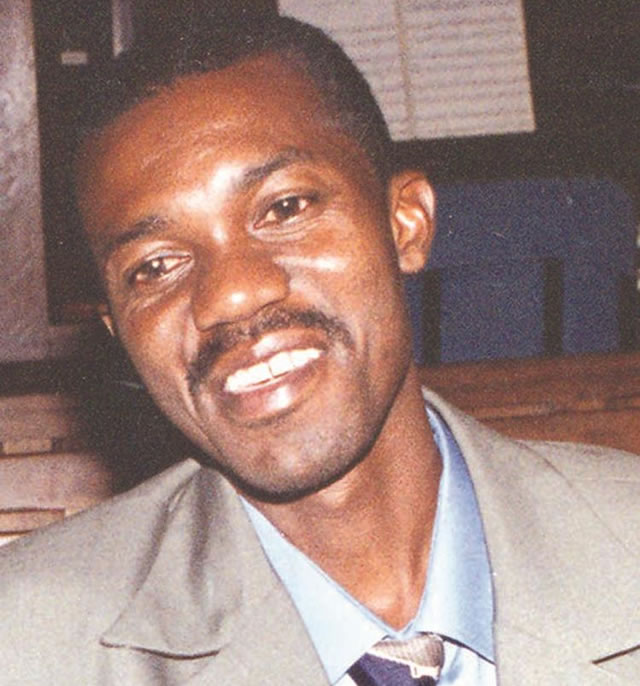
 Talk about the standards of journalism and the current state of the practice in Zimbabwe has taken centre stage in recent days amid concern of unethical and irresponsible behaviour by the media. Veteran journalist and member of the Zimbabwe Media Commission Matthew Takaona (MT) added his voice in the discourse in this interview with our Political Editor Tichaona Zindoga (TZ), admitting, that his commission had come short but he also proposes other ways in which the practice can reclaim what old school journalists feel is its past glory.
TZ: You guys from the old school of journalism, or let’s say the older generation, always say the standards of journalism have gone down in Zimbabwe. How justified are you in this claim and what is the empirical evidence to this effect?
MT: Journalism is guided by the way it balances the story, by the way it verifies the story and by the way it gives people the right to reply. Good journalism is when you find those values, where there is evidence of thorough verification and where those who are accused are given the right to reply.
Of course, you can talk about those other things like grammar and so forth, but these are the cardinal principles of journalism. When I look at journalism today, it is not very different from the journalism of yesteryear except in the area of politics. In the rest of the stories, I think the standards are extremely good.
It is when you get into the area of political stories that you find journalists really going for the person. And this fault cannot be attributed to journalists alone. It will take journalists and politicians to sit down together and say: “Where are we going? What direction are we taking as a country?”
Journalists alone will not be able to solve this problem. Politicians alone will not be able to solve this problem. Closing down newspapers will never be a solution. I also think the problem can be located in a certain end of our political discourse.
TZ: You seem to suggest that politicians and journalists should sit down and address this issue but politicians are by their nature self-seeking and manipulative. How do you see journalists wriggling themselves out of the clutches of politicians?
MT: I think the other problem is with the shareholding of these media organisations; ownership and reporting structures. The problem is found on either side. Whether private or public media at the end of the line where you find the shareholders you find someone influencing policy.
Those who are giving problems to journalism are the people at the peak of the shareholding structure. They have a keen interest in politics and they direct and dictate to journalists what to say and what not to say. So that’s why I am saying journalists alone cannot solve this problem unless politicians who have influence come together with journalists and find the way forward.
TZ: Maybe our situation is different from other countries because, say in the UK, some papers declare their interest and support and endorse certain political parties. Do you think we can go that route as well?
MT: We can go that route but even if we go that route there is no need for us to blindly support politics as journalists. We are the conscience; we are the watchdogs and as watchdogs and people with conscience, we cannot support anything blindly.
Yes, you can support either Zanu-PF or I support the MDC but it should not be to the extent that you ignore the truth. The truth must always be there. We must insist to the politicians who control the media that whatever we do the truth cannot be ignored.
TZ: But coming back to the issue of some sections of society complaining that journalism has gone to the dogs, it is a fact that many current editors are not young and some are actually chips off your old blocks and trained at good institutions. How now do you reconcile this situation?
MT: I am saying that our politics in Zimbabwe needs transition. From 2000 to the present politics in Zimbabwe has been undergoing a dark period. It is not the generation of the editor that has affected journalism. It is the politics of the day that has affected journalists. Since 2000 to 2015 the politics of the day has affected journalists and not the age of the editors. So let us not say the young journalists are not doing fine. We also have early old journalists in the newsroom but still the stifle in reporting politics is still there.
TZ: This week the chairman of the Information and Media Panel of Inquiry, Geoff Nyarota, wrote a piece in The Herald challenging you as the Zimbabwe Media Council and also the Voluntary Media Council of Zimbabwe saying that you were not playing your watchdog role on the media. How do you respond to that? I am sure you read that piece in The Herald?
MT: I think to some extent I agree with him. We have been especially silent on some of the happenings in the media. The silence is alarming when journalists day in, day out flout journalistic standards. There is need for organisations like ZMC and VMCZ to clarify their position and to read the policy statements. To that extent, I agree with him. We need to do more than that as regulatory frameworks.
TZ: We haven’t seen much activity from your side as ZMC. Ideally what should you be doing as a regulatory authority apart from the usual registration and other things; I am drawing your attention to the everyday operations of media? How should you be visible ideally?
MT: The law provides that the Zimbabwe Media Commission must appoint a Zimbabwe Media Council. The Zimbabwe Media Council is a board. That board must come up with a code of conduct that governs the way that journalists practice. So we must have a media council comprised of 11 people.
And those people must be drawn from across the board and must be representative of our society. They must be media representatives, labour and citizens. That council is there: it was appointed about three or four years back. But, unfortunately, I hope you understand that we have an economic situation in our country. Because of that this media council never took off.
Actually the council was under Commissioner Henry Muradzikwa, who is a fellow journalist; he has worked as an editor, he was an editor-in-chief for Ziana and also CEO for ZBC; he is a veteran journalist. He is the one in charge of that media council but unfortunately there are officially no resources for us to operationalise that. Members are there, they have been appointed but they have not been able to do anything because of this financial difficulty.
TZ: Some quarters have proposed legislation that limits or puts tax the kind of unethical behaviour in journalism we have seen. Do you think it is the way to go?
MT: When we talk about the media we are dealing with a very delicate issue. When we deal with Press freedom and also human rights, it is a right to free speech. And now when we want to control speech we don’t want to be careless about it otherwise you really stifle people from expressing themselves.
And you don’t want such laws where you stifle; we don’t want more laws and more laws and regulation because today you have good governance that will use those laws in a responsible manner but tomorrow you will have a rogue government that can come out and abuse those laws to the detriment of media.
So I think the best way forward is engagement and we can’t just run by laws, rules and so forth.
We are a responsible society, we have responsible journalists, we have very educated journalists and I think there is a way to go without the promulgation of new laws.
TZ: Ok. The flip-side of that is that maybe media regulates itself; but do you see that working in Zimbabwe? Is there willpower to do that? Or is there capacity so that the journalistic field regulates itself in Zimbabwe?
MT: The Voluntary Media Council of Zimbabwe was formed about eight years ago. This was an attempt for journalists to regulate themselves. This is not the first attempt by the media to form a voluntary regulatory board. Again in 1999 there was an attempt and the active players in that were Welshman Ncube, the president of MDC-N.
The first attempt failed after two or three years. The second attempt from 2008 has lasted almost eight years which means there is a bit of stability. But my suggestion is that we should not give the Voluntary Media Council expectations of overnight success. They have to sink their roots in the ground and then the results must speak.
TZ: The other question, which really could be taken as a paradox, is that some of the media organisations in Zimbabwe that subscribe to the VMCZ are the ones that have been seen to be most unethical or with a lot of infractions towards ethical and responsible reportage. How now do you reconcile that?
MT: That’s very true and I am saying that yes you find that some media organisations that are members of the Voluntary Media Council are some of the biggest culprits in terms of violating ethics. But I am saying that again the problem still goes back to politics. It goes back to politics. Remove the bad politics and I am sure the journalism would come good.
TZ: Lastly, what would you think it would take for the media in Zimbabwe to move forward and to be something that the journalists and the audiences can appreciate?
MT: I think what needs to be done is to allow a free market of newspapers, radio stations and television. The amount of readers or the amount of listeners or the amount of viewers will determine the existence of the media and not some funding from a donor or from a government.
If you just set those parameters, media will come out right because there are newspapers that tell a story that is totally ignored by the public but will still survive because there is a donor behind it or a government behind that publication.
Allowing the newspapers, the media, to get into the market including the readers to determine what they want. Let the public decide, let the readers decide. Once you do that you won’t have a better media. That’s the best barometer, the readers, the viewers and the listeners. Now we don’t know which newspaper is big or which paper isn’t because when they fail somebody comes to them with a big cheque and gives money to keep that bad newspaper going. That’s irresponsible. Let the market decide.


 Online Reporter