malvernmugadzikwa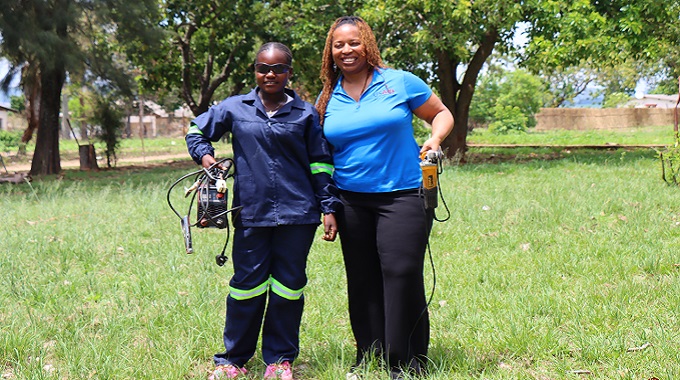
Youth Buzz
Theseus Shambare
WHEN Obadiah Matiyenga, 11 years then, dropped out of school a few years ago after failing to raise school fees, he thought his life was over.
His single mother always toiled to provide for the family.
Although she tried her best, she could only do so much under incredibly difficult circumstances.
He never sat for grade seven examinations nor attended secondary school.
The future seems bleak.
Fortunately for him, the Government brought Mavambo Orphan Care — a local non-governmental organisation — to his village in Goromonzi, Mashonaland East province, to offer training in empowerment programmes to orphans and vulnerable children (OVC) living with and/or affected by HIV/AIDS.
Matiyenga saw an opportunity to change his life. He jumped at the chance to learn welding.
“After two years of hard work, I graduated from the training programme and was given a welding machine, a grinder and capital to buy materials to use,” said Matiyenga.
He began making door and window frames, which he sold to fellow villagers and surrounding communities.
His business began to grow.
“I can now get a steady income every month. I am now able to help my mother on household expenses and put food on the table for my younger siblings,” he said.
Matiyenga, now 19, has ultimately become the family’s breadwinner.
“I wanted to make a lasting impact on my community. As a farming community, I knew that one of the biggest needs were tools. So, I began to make hoes, offering them at an affordable price to farmers in my village,” he continued.
Over time, his reputation grew, becoming the only reliable manufacturer and supplier of hoes, hand axes and other small implements in the area.
He dreams of honing his skills through continuous training as well as acquiring higher certificates within the field.
Similarly, Linda Chigondo (20) from Chibvuti village, Domboshava, Mashonaland East province, has become the true definition of inspiration and determination.
Her family of subsistence farmers used to struggle financially.
They barely had enough money to feed themselves, let alone send their daughter to school.
She never attended any school.
“Being born in my situation made me dream big. Nothing comes my way that can intimidate me,” she told The Sunday Mail.
Despite welding being generally regarded as an undertaking for males only, she decided to pursue it regardless of this view.
After completing the programme, she joined Mativenga in his welding business and together they have become a formidable team.
“Although I am still operating on a small scale, my dream is to become a successful owner of a big workshop. I would like to employ and empower my age-mates,” she said.
During a media tour in Goromonzi recently, the district development coordinator for the area, Ms Prisca Dube, said the Mavambo Orphan Care programme is unique and has significantly transformed the community.
“It is wise to teach a man how to fish than to give him fish. These are the programmes we want from our partners as the Government. We do not want to have youths who are donor-dependent but youths who can shape their future,” said Ms Dube.
Orphans and vulnerable children affected by HIV or who are under the care of HIV-positive parents, she added, had been side-lined for a long time.
“We appreciate the help extended to a total of 46 365 OVCs living with HIV or who are under the care of HIV-positive parents,” she said.
Mavambo Orphan Care technical director Ms Beaula Ruparanganda said: “We are not here to promote laziness; we are here to empower and create well-oriented youths who have foresight. These two youths are a clear testimony that despite coming from humble backgrounds, one can become a role model in their community, demonstrating that anyone can make a difference, regardless of their circumstances.
“Their success is a source of inspiration for young people in their villages, showing them that it is possible to overcome adversity and create a better future for themselves and their families.”
As Mr Elias Magosi, the Southern African Development Community (SADC) general secretary once said, “When we invest in the youth, we are investing in our future.
“We are investing in a future where the youth are leading the process of economic transformation, job creation and the entrenchment of democracy, peace and stability in the region.”
The SADC has made a strong commitment to investing in the region’s youth.
In the SADC Regional Indicative Strategic Development Plan (RISDP) 2020-2030, the organisation outlines a number of priorities for youth development, including promoting education and skills development, creating jobs and opportunities for young people, and increasing access to technology and digital platforms.
The SADC recognizes the importance of investing in the region’s young people as a means of achieving sustainable development.
To answer this call, President Mnangagwa has called on all stakeholders to come on board in mainstreaming the youths into the economic activities of Zimbabwe.
The President’s “Zimbabwe is open for business, leaving no one behind” mantra is creating opportunities for young people to contribute to the country’s growth and development.
With the right support, Matiyenga and Chigondo are just two examples of the many young Zimbabweans who can make a difference.
It is clear that investing in the youth is not only beneficial for individuals but also for the wider economy and region.
With their energy, creativity and drive, Matiyenga and Chigondo represent the best of what the youth of Zimbabwe have to offer.
X: @TheseusShambare



 Online Reporter