Chronicle Editor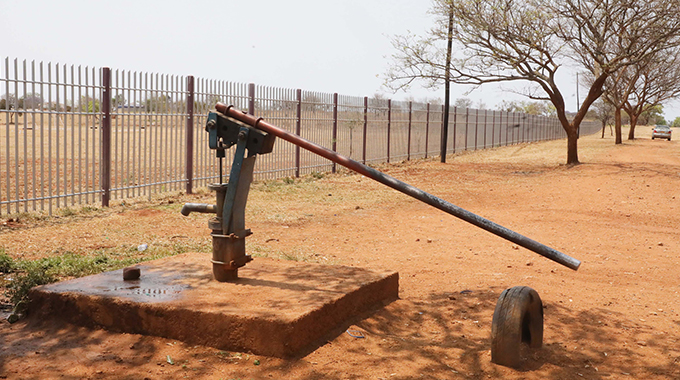
Sikhulekelani Moyo, [email protected]
GOVERNMENT has channelled nearly US$2,5 million towards drought mitigation and relief programmes across the country with emphasis on scaling up the drilling of boreholes to curb water shortages and save both humans and domestic animals.
Government is targeting to drill 35 000 boreholes in 35 000 communities where Village Business Units (VBU) will be established under the Presidential Rural Development Programme 8.0.
The VBU project is a key component of the Rural Development 8.0 model, which includes agricultural development, rural industrialisation, rural development and alignment with the country’s national development blue-print leading to Vision 2030.
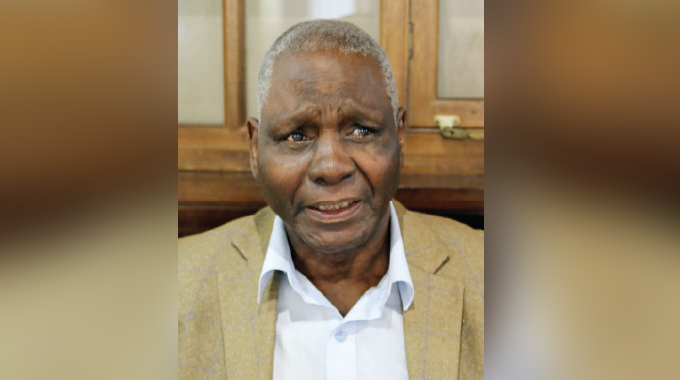
In a recent interview on the sidelines of the strategic planning workshop by the Ministry of Lands, Agriculture, Fisheries, Water and Rural Development in Bulawayo, Zimbabwe National Water Authority (Zinwa) chief executive officer, Engineer Taurai Maurukira said about 3 000 boreholes have been drilled with 635 set to be drilled under the Emergency Drought Mitigation Programme. He also said about 500 business units have been so far established.
“So far, 3 000 boreholes have been drilled across the country and more than 500 VBU and School Business Units (SBU) have been established and are vibrant across the country,” said Eng Maurukira.
“Emerging issues that I want to highlight are the current drought, the worst in 43 years, which has triggered various impacts including the death of cattle across the country.”
He said a special programme, the Emergency Drought Mitigation Programme, has been initiated to mitigate the drought effects in 635 wards across the country.
“We drill boreholes and concentrate on the water supply so that we don’t have continued loss of cattle,” said Eng Maurukira.
The VBU and SBU are capacitated with a solar-powered borehole, one hectare of land and the establishment of companies, which are run by communities, schools and youths.
Meanwhile, Eng Maurukira said the Government is also undertaking major capital projects where 12 major dams are being constructed across the country, targeting to finish big projects like Lake Gwayi-Tshangani and Kunzwi Dam next year with Tuli-Manyange and Dande dams targeted to be completed in 2026.
This will also allow irrigation projects in communities near the dams and along the water pipeline to different cities.
The completion of the dams will also allow dams like Mtshabezi, Ncema, Inyankuni, and Mzingwane to supply water to irrigation projects in surrounding communities.
“Of number one priority is the Gwayi-Tshangani Dam, which understandably requires an investment financial outlay and we are on 70,8 percent in as far progress is concerned,” said Eng Maurukira.
“The focus now is that when the Government was seized with the drought situation, next year the plan is to complete the Lake Gwayi-Tshangani itself and then we will have 104 kilometres of the pipeline and pump stations, which will allow irrigation Vision 2030 (V-30) accelerator programmes on the pipeline to be completed.
“Close on our priority is the Kunzwi Dam completion project, which will bring water to Harare and the surrounding communities, giving irrigation space to villages around Kunzwi Dam.”
Eng Maurukira said each dam project will be completed with five aspects, which include irrigation, water supply, mini-hydropower generation and fisheries.



 Online Reporter