Chronicle Editor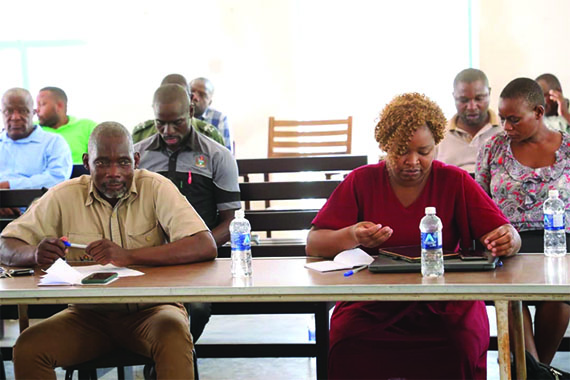
Nqobile Tshili in Binga, [email protected]
GOVERNMENT is crafting a master plan for Lake Gwayi -Shangani whose implementation is envisaged to trigger rural industrialisation as multi-million-dollar downstream industries are set to be established following the completion of the massive dam project.
Opportunities have been identified in agriculture, fisheries and tourism among other sectors.
A Government technical team is on the ground engaging local communities on the proposed development projects contained in the master plan
The main target for the project however is to provide a permanent solution to Bulawayo’s water shortage challenges while at the sametime ensuring that communities in Matabeleland region derive maximum benefits from the abundant water.
Government is therefore urging communities to take advantage of the many investment opportunities that will be availed.
Two satellite towns are expected to be established on either side of the lake and there are also plans to build five-star hotels. Government says communities that will be displaced by the dam project will not be disadvantaged but instead will enjoy improved livelihoods as a result of the benefits to be derived from the project.
A green belt will be established along the Gwayi-Shangani/Bulawayo pipeline hence contributing to national food security. During a consultative meeting with stakeholders in Binga in Matabeleland North yesterday, a team of experts outlined how communities will benefit from the project.
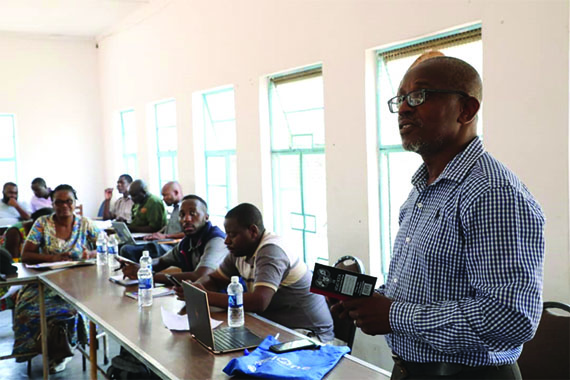
The Department of Irrigation stated that land earmarked for irrigation purposes has been identified.
Lake Gwayi-Shangani irrigation project Engineer Rangarira Mapanzura said they are targeting to irrigate 10 000 hectares and putting up the irrigation infrastructure is estimated to cost about US$100 million.
“The ministry has identified a gross of 12 000 ha with a net 10 000 irrigable land around the dam basin. In Hwange district we are targeting 240 ha, Binga 2 980 ha, Lupane 9 120 ha and Immergroen Estate 1 500 ha,” he said.
Eng Mapanzura said Government was targeting to irrigate 800 hectares along the pipeline with four sites having been identified which are Ngamo, Goldfield, Igusi and Nyamandlovu.
He said each site has a potential irrigable land of 200 ha.
Eng Mapanzura said 1 600 hectares will be run under the Vision 2030 accelerator model whose aim is to boost food production and improve the livelihoods of the local communities.
“The project will either be managed through public-private partnerships or the Agriculture and Rural Development Agency (ARDA) model while being financed by Government or the private sector at a cost of US$16 million. The commercial block will take 8 400 ha of land and is expected to attract US$84 million investment from the private sector,” he said.
Eng Mapanzura said communities that will be relocated as a result of the massive project are expected to benefit under the V30 model.
The model has transformed lives for rural communities in Lupane where Government is running a viable Bubi-Lupane Irrigation Scheme managed by ARDA.
Eng Mapanzura said the Department of Irrigation working with the Zimbabwe National Water Authority (Zinwa) is in the process of making designs for the irrigation project.
Zinwa said six pump stations will be established along the pipeline and work on some of them has since started.
New industries, which are expected to be established following the completion of the dam project and the pipeline, will create employment for local communities.
In his presentation on behalf of the Ministry of Tourism and Hospitality Industry, Eng Lawrence Sangurukani said ecotourism facilities will be established along the Lake.
He said the ministry is targeting to construct five-star eco-themed hotels within the area and is encouraging those with funds to take up the opportunities.
Some of the expected projects include water basin activities, a cultural village and two harbors.
“The people of Binga who are along the Zambezi basin have witnessed a number of people coming up with recreational activities and this what is going to happen once the Lake is completed. Many of these tourists coming to enjoy these activities will need accommodation hence the call for individuals or companies to invest in hotels,” said Eng Sangurukani.
He said Government was ready to jointly develop some of the facilities with the private sector under the public-private partnerships especially those capital-intensive projects.
Under the tourism sector, the Zimbabwe National Parks and Management (ZimParks) has also made plans on how to address the issue of movement of animals once the project is complete.
ZimParks protected area planning manager Mr Courage Mutema said Lake Gwayi Shangani will attract a lot of animals hence they have started mapping the routes likely to be used by animals.
He said Zimparks will also create recreational parks which will also boost the local tourism economy. – @nqotshili


 Online Reporter