Online Reporter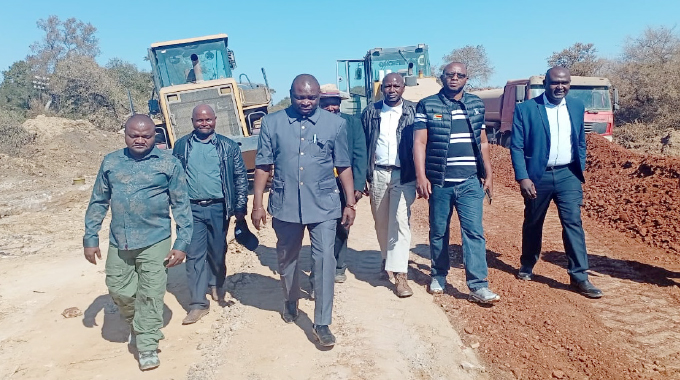
Raymond Jaravaza, [email protected]
GOVERNMENT has directed rural district councils (RDCs) to channel part of their devolution funds towards rehabilitating damaged bridges to restore access to communities that were cut off by heavy rains during the 2025/26 rainy season.
The move is expected to improve access to health facilities, schools and markets, while major bridges in Matabeleland North Province will be constructed using internally generated resources to ease the movement of people and goods and stimulate economic activity.
Many bridges, both small and large, that connect villages and link communities to business centres and major roads
were damaged by incessant rains that pounded Matabeleland North and other parts of the country during the rainy season.
In some areas, communities have struggled to access clinics while schoolchildren have been forced to take longer and often unsafe routes to school.
Minister of State for Matabeleland North Provincial Affairs and Devolution Richard Moyo announced the directive yesterday while touring the construction of a major bridge along the Bulawayo-Inyathi Road after an interface meeting with Government and Bubi Rural District Council (BRDC) officials.
The meeting, held at the Bubi RDC offices, was part of a series of engagements that Minister Moyo is conducting with all the seven rural district councils in Matabeleland North Province.
“Government has directed RDCs to use devolution funds to repair damaged bridges for easy travel within local communities. Yes, Government is aware that the devolution funds have not been released for over a year, but there are serious discussions at Cabinet level to have the funds released by Treasury so that critical infrastructure such as access roads from one ward to another and bridges can be attended to,” he said.
“When roads and bridges are fixed, our people in Matabeleland North will be happy and continue supporting the leadership of His Excellency Dr ED Mnangagwa.”
Minister Moyo said Government was committed to completing the two outstanding bridges along the Bulawayo-Inyathi Road in the shortest possible time.
Once completed, the bridges are expected to significantly reduce travelling time between Bulawayo and Inyathi
Business Centre to about 30 minutes.
Previously, the 60-kilometre journey often took more than an hour.
“The road is now tarred from Bulawayo to Inyathi and contractors have gone further with the rehabilitation of the
Bulawayo-Nkayi Road. We have not seen this level of development along the Bulawayo-Nkayi Road since 1980 and we have the Second Republic to thank for that,” said Minister Moyo.
“Three contractors are on site and working to ensure that the long-awaited road rehabilitation project stretches deep into Nkayi District until it ultimately reaches Nkayi Business Centre.”
According to a report presented to Minister Moyo by Bubi RDC, devolution funds have also been used to construct clinics and additional classroom blocks at several primary and secondary schools.
The council said 443 kilometres of roads had been upgraded through gravelling and grading using road construction equipment purchased through devolution funds, as well as fuel disbursed by the Zimbabwe National Roads Administration (Zinara).
The report further stated that 44 boreholes had been rehabilitated, while 19 of the district’s 23 Village Business Units (VBUs) had been established.
Bubi RDC chief executive officer Dr Patson Mlilo said the village business units and irrigation schemes introduced under the devolution programme were transforming livelihoods in rural communities.
“Bubi RDC has 23 wards and we are grateful to Government for establishing 19 Village Business Units that are changing the lives of villagers. We also have four irrigation schemes that were revamped by Government where villagers are involved in the production of winter wheat and other cash crops,” he said.
“From subsistence farming, our villagers have moved to commercial production of winter wheat, which has greatly improved their families’ lives.”
Under the devolution programme, Government has accelerated the implementation of infrastructure projects across the country, including roads, clinics, schools, bridges, dams and irrigation schemes aimed at improving service delivery and stimulating economic growth in rural communities.
Matabeleland Province has witnessed tremendous development, transforming it from a region once viewed as a neglected province into one admired by others through responsive infrastructure initiatives, including the expedited completion of long-stalled projects from previous administrations.