admin
admin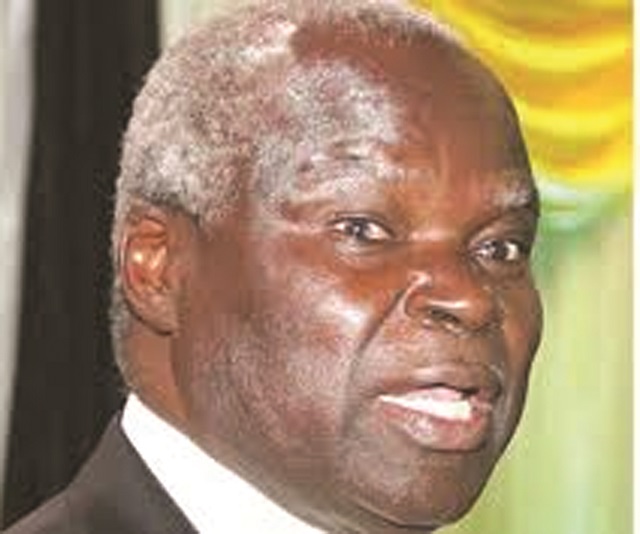

Vincent Gono recently in Nkayi
THE Government is set to put a lid on boundary wrangles among traditional leaders that in some instances were turning bloody by embarking on a national emplacement exercise that is likely to increase the number of chiefs from the current 280 as areas that were formally white-owned farms have been parcelled into resettlement areas, a Cabinet Minister said.
Local Government, Public Works and National Housing Minister Cde July Moyo told Sunday News in an interview in Nkayi last Wednesday that the Government was aware of the boundary wrangles that chiefs have been engaged in some of which were turning nasty.
“We have been having problems where traditional leaders, mostly chiefs, have been fighting over boundaries after the land reform programme. Areas where people were settled were previously white farms where previously no chief claimed ownership but after the resettlement exercise chiefs started fighting for land. It’s a national problem, it’s everywhere.
“Sadly, however, some of the fights were turning bloody while some took their fights to the courts to seek legal recourse. Much of the battles were based on historical narratives where the arguments have been centred on who used to hunt in the area while some have been displaced by the whites,” he said.
He said his ministry was going to put a stop to boundary contestations in the country through the emplacement exercise that it had embarked on that was likely to resuscitate some long forgotten chieftainships thereby increasing the number of chiefs although he would not be drawn into giving the estimated number of chiefs to be resuscitated.
Minister Moyo said so far they have covered 11 districts with a target of having covered more than 20 by year end.
“It’s work in progress. We have so far covered 11 districts and we are targeting 20 districts by the end of the year. In some instances we do not necessarily revive the chieftainship but we just divide the land between the conflicting chiefs. Then there are certain chieftainships that were abolished for various reasons and for those we look at the merits of the case and decide on whether to emplace or not.
“We simply go back to our records and check, the records are there although there are certain dynamics that we follow on emplacement in line with Section 29 of the Traditional Leaders Act,” he said.
He added that there were pre-colonial arguments advanced by some of the chiefs who argue that they were displaced by the settler regime.
The minister said the Government was committed to continue improving the livelihoods of traditional leaders in the country in a bid to capacitate them although there were financial constraints that they were facing.
“We have been facing challenges in our finances. The fiscal space is very small but we are trying to make sure our traditional leaders’ welfare is well catered for. We have engaged the Rural Electrification Agency (REA) to electrify the chiefs’ homesteads but the programme has been slowed down by lack of adequate financial resources.
“Besides, the succession system especially in Mashonaland makes it costly for us to do what we want because the chieftainship rotates within houses which means each house should benefit whereas in Matabeleland it is such that it moves from father to son and usually the son will be staying at the father’s homestead making programmes like electrification a once off thing.
“We have no problem with cars. Those we can give out but on such things as homesteads and electricity we are facing challenges,” he said.
He confirmed though that the benefits were a cause of strife among houses where they engage in fierce succession battles.
On the issue of chiefs’ regalia Cde Moyo said they were waiting for the chiefs to give them the design so that they make new regalia after it was agreed that the old one with red and purple should be changed as it perpetuates colonial history.



 Online Reporter