Online Reporter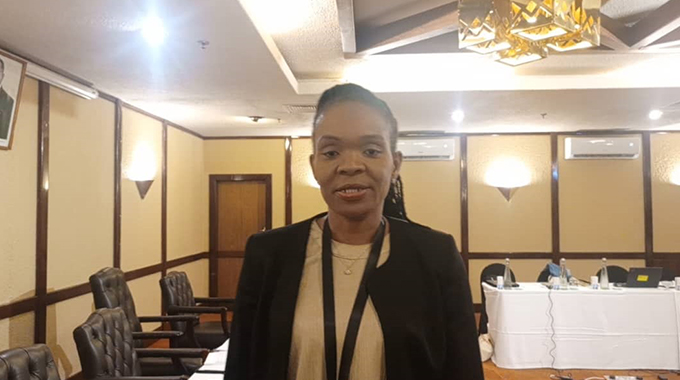
Rutendo Nyeve, Victoria Falls Writer
ENGAGEMENTS with the United Kingdom for the repatriation of valuable historical records taken during the colonial era are at an advanced stage, with Zimbabwe seeking to follow in the footsteps of Kenya, which successfully reclaimed its migrated archives.
The call for the return of the archives was amplified at the recently concluded 28th edition of the Eastern and Southern Africa Regional Branch of the International Council on Archives (Esarbica) Biennial Conference, held in Victoria Falls.
The conference brought together archivists, historians, and government officials to discuss the pressing issue of displaced African archives.
In an interview with Zimpapers, National Archives of Zimbabwe Director, Ms Brenda Mamvura, confirmed that negotiations with the British Museum are underway.
“Regarding the migrated archives, we are engaging with the British Museum in that regard, but I think as a Government we have to make modalities to have that heritage repatriated back home,” she said.
“This is not new to the Esarbica region. Within the region, we have Kenya, which is also part of Esarbica, and Kenya has managed to successfully repatriate its migrated archives from the same museum. So, I think we have to take a cue from what Kenya did.
“That is why we are here, to learn from each other and to take positive steps that have also been taken by other countries who have a success story.”
The issue of migrated archives remains a painful reminder of colonial plunder, with many African nations still struggling to reclaim their historical records.
Professor Nathan Mnjama, a renowned archivist and academic from the University of Botswana, delivered a keynote address at the Esarbica conference, outlining the devastating impact of these missing archives.
“Archives constitute the memory of nations and societies, shape their identity, and are a cornerstone of the information society,” he said, quoting the International Council on Archives (ICA).
“Of all our national assets, archives are the most precious; they are the gift of one generation to another and the extent of our care of them marks the extent of our civilisation.”
Prof Mnjama defined migrated archives as the archives of a country that have moved from their original place of accumulation. These records, often referred to as fugitive archival material or missing documents, are critical for reconstructing Africa’s history.
He categorised them into several types, including:
Colonial administrative records: created by European powers in their home countries but relevant to African nations.
Records transferred to Europe at independence; documents taken to avoid embarrassment or exposure of colonial atrocities.
Regional inter-territorial records, such as those from the Federation of Rhodesia and Nyasaland.
Records moved within Africa, such as Zimbabwean archives held in South Africa.
Personal collections of colonial officials — many taken illegally and now held in foreign universities.
Liberation movement records — documents from groups like Zimbabwe’s Zanu and Zapu.
Missionary records held by religious organisations abroad.
Prof Mnjama revealed that Britain deliberately removed sensitive documents to avoid accountability. He cited a 1961 colonial office directive which stated that successor governments should not receive records that might embarrass
Her Majesty’s Government or other Governments; compromise sources of intelligence information; or be used unethically by ministers in the successor Government. This systematic removal has left gaping holes in Africa’s historical narrative.
“The absence of these records has had severe repercussions, including denied citizens’ access to critical historical data, hindered efforts to hold colonial powers accountable for injustices and complicated land restitution claims, particularly in Zimbabwe and Kenya, where colonial land seizures remain unresolved,” he stated.
“For many African countries, migrated archives hold the solution to the settlement of displaced peoples from historical injustices, like illegal acquisition of their ancestral lands.”
He noted that Kenya’s journey offers hope.
After decades of denial, Britain admitted in 2011 to holding over 2 726 files, including sensitive documents on the Mau Mau uprising. Following a lawsuit by Kenyan freedom fighters, Britain settled out of court and agreed to digitise the archives. However, challenges remain; some records are still classified, and digital preservation requires continuous investment, a lesson Zimbabwe must heed.
Prof Mnjama outlined key steps for successful repatriation — strong Government support, adequate planning and funding, legal and diplomatic negotiations and collaboration with researchers and institutions.
For Zimbabwe, the return of these archives is not just about reclaiming history; it is about restoring justice, identity, and the right to a complete national memory.