Freeman Razemba in Dande
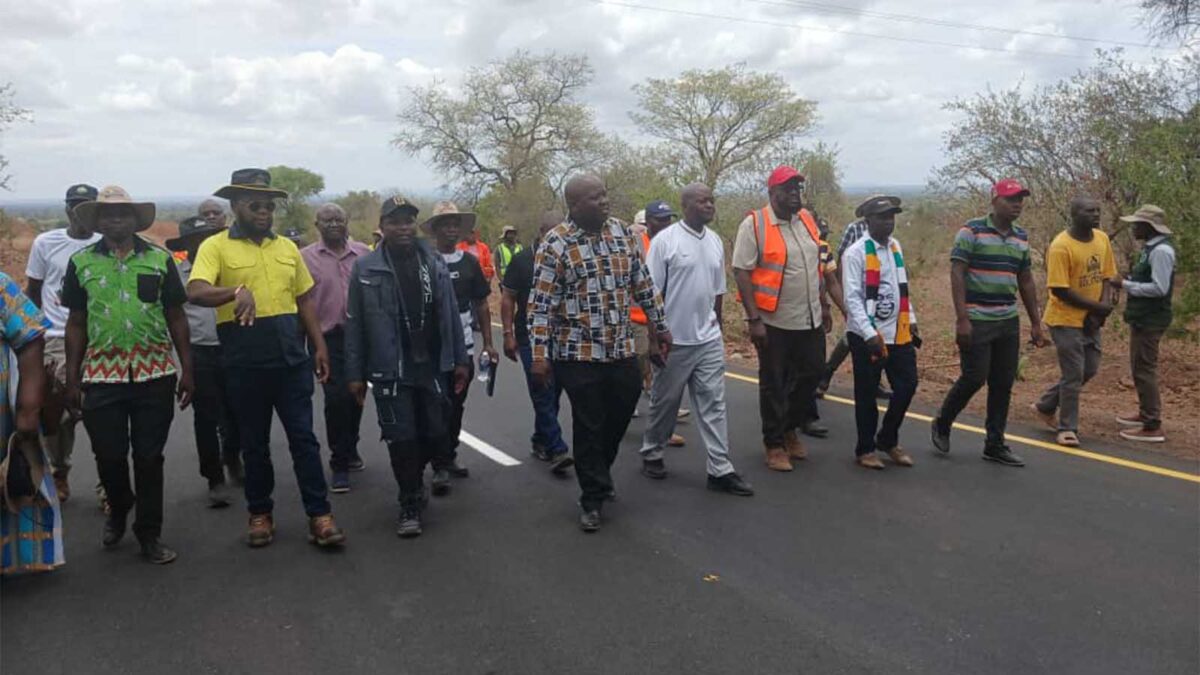
Government engineers and legislators on Wednesday toured the Ruya–Mukumbura (Mt Darwin–Mukumbura) Road, popularly known as the Ndoda Hondo Road, in Mashonaland Central Province, which is under construction to assess progress.
The upgrade is a flagship infrastructure initiative aimed at transforming a historically gravel track into a surfaced highway leading directly to the Mukumbura Border Post with Mozambique.
The corridor was named among 12 priority roads earmarked for improvement in 2026, building on Mashonaland Central’s NDS1 infrastructure gains and the extended Emergency Road Rehabilitation Programme Phase 2 (ERRP2).
The route connects Mt Darwin District to the Mukumbura Border Post, serving as Zimbabwe’s north-eastern gateway to Mozambique’s Tete Province. Upgrading the road is paired with broader plans to modernise the border post itself.
For decades, large stretches of the Ndoda Hondo route were gravel, making it prone to erosion and difficult to navigate during the rainy season.
Once fully tarred, the highway will lower transport costs, reduce transit times, and improve access to markets, schools, and clinics for surrounding rural communities.
During the tour, Transport and Infrastructural Development Minister Felix Mhona was represented by the Director Roads, Engineer Jaravani Kangara, who was accompanied by the Ministry’s Director for Policy and Planning, Mr Takura Vengesa, Mt Darwin North Legislator Cde Laban Munemo, and the contractor, Mr Tazvi Mhaka, the director of Tazvi Plant and Equipment.
The contractor is now doing the final 36km of the Mount Darwin-Mukumbura Road under the Emergency Road Rehabilitation Programme (ERRP).
The rehabilitation of Ndoda Hondo Road follows the successful rehabilitation of another section from Mt Darwin to the Zambezi Valley, which has brought convenience to the motoring public.
In his remarks, Engineer Jaravani Kangara said; “We have undertaken a tour of a completed section of the Ruya–Mukumbura (Ndoda Hondo) Road, marking another step in the ongoing efforts to improve road infrastructure, connectivity and accessibility.
“This stretch represents progress in connecting communities and making travel easier.”
He said the entire stretch from Harare to the border post is expected to be completed by next year.
The road stretches for about 265km. The Ministry of Transport and Infrastructural Development Provincial Roads Engineer for Mashonaland Central, Engineer Joseph Makokove, highlighted the importance and significance of the road in connecting Zimbabwe and Mozambique.
“We have our main road, which is the Mt Darwin-Mukumbura road commonly known as Ndoda Hondo road,” he said.
“The road links Zimbabwe to Mozambique. The contractors has since competed 5km of the 36km that is now left for the road to get to the border and on the Mozambican.
“This is an important road, which will increase trade if it is completed to the border post,” he said.
The Government came up with the Emergency Road Rehabilitation Programme 2 (ERRP2) not only to focus on major highways, but also those roads in suburbs of towns and cities that have been abandoned by opposition-run councils over the years, leaving motorists to navigate potholes and increasing the cost of owning and operating vehicles.
Over 2 000km of roads have been re-gravelled, while 6 627,9km have been graded, with 701 drainage structures constructed or repaired and 184 wash-aways reclaimed.
Across the country, 4 491,5km of drains have been opened while 6 141,2km of verges have been cleared.
Progress continues to be made on the patching of potholes, with 4 794,8km of road having been attended to.
Zanu PF, led by President Mnangagwa, has been on a drive to improve infrastructure across the country.
Dams, roads, bridges, hospitals, clinics and schools have been constructed while irrigation schemes that stopped operating several years ago have been resuscitated by President Mnangagwa’s administration.
The President has said that with more economic activities now taking place across the country, Zimbabweans are guaranteed a massive improvement in their living standards in line with Vision 2030 of an empowered and prosperous upper middle income society.