

 daniel chigunwe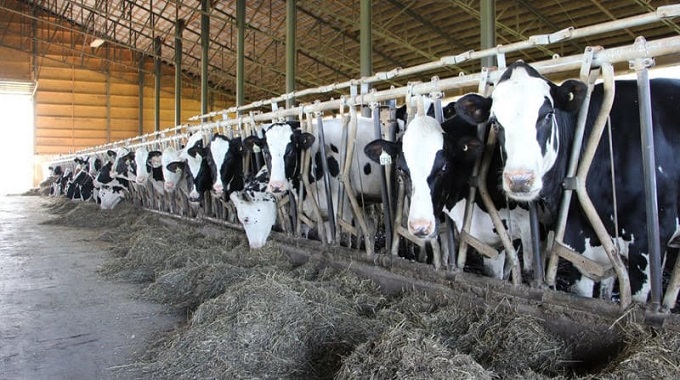
Business Writer
Government has significantly expanded the range of agricultural commodities eligible for warehouse receipt financing.
The strategic move includes the addition of livestock, such as cattle, chickens, ducks, goats, pigs, sheep and turkeys, to the list of accepted commodities.
This development is anticipated to bolster market accessibility and price discovery for farmers.
Warehouse receipt financing is a financial mechanism that empowers financial institutions to provide crucial post-harvest financing to farmers, buyers and other holders of warehouse receipts. The process involves registered warehouse operators issuing warehouse receipts through the centralised system of the Zimbabwe Mercantile Exchange (ZMX).
These receipts serve as certificates of title, enabling credit providers to use them as collateral.
With Warehouse Receipt Financing, farmers can secure much-needed post-harvest financing, facilitating their operations and improving their livelihoods.
Banks can benefit from a more efficient and cost-effective lending process.
Warehouse operators and agricultural contractors stand to gain from increased business opportunities.
In addition to livestock, the Government has added several other agricultural commodities to the warehouse receipt system.
These include cassava, chillies and other peppers, cucumbers and gherkins, garlic, lemons and limes, mangoes, mangosteens, guavas, grapes, melons, mushrooms, onions, oranges, peaches and nectarines, potatoes, sugar cane, sweet potatoes, tomatoes.
The system allows commodity holders to deposit their goods at designated warehouses in exchange for a warehouse receipt. Issued by the ZMX, this negotiable instrument can be used as collateral for loans or as a trading instrument in the commodities spot market.
Overall, the expansion of the warehouse receipt system is a significant step towards supporting the agricultural sector in Zimbabwe. By providing farmers with better access to financing and promoting efficient market operations, the government aims to drive economic growth and improve food security.



 Online Reporter