


 Tinaye Agere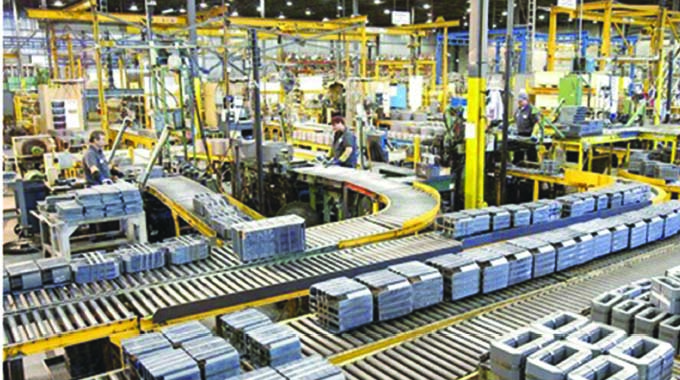
Michael Tome
GOVERNMENT will be dedicating more effort to the economy’s structural adjustment to suit the industrialisation agenda, a senior government official has said.
This effort will mainly be directed at the value addition of primary products into high-value commodities that are usable and sellable.
Finance, Economic Development and Investment Promotion Permanent Secretary George Guvamatanga said this while addressing participants at the recently held Zimbabwe Economic Society and Friedrich-Ebert Stiftung (ZES/FES) breakfast meeting on Mid-Term Fiscal Policy Review.
He said the government will make every effort to make sure that the forthcoming National Development Strategy 2 (NDS2) brings about structural changes to the economy, with a primary focus on the industrialisation agenda in the bid to attain Vision 2030.
According to Mr Guvamatanga, the industrialisation strategy would encompass an increase in the capacity of power generation and setting up a proper rail network.
As part of the efforts, he said the government will include refurbishment of Hwange 1 to 6 as the hydropower production continues to be threatened by the effects of climate change.
Increased power production is necessary to facilitate the production of usable iron and steel from raw materials, which is not possible without sufficient power.
Without that, Zimbabwe is likely to remain a producer of primary raw products, which does not help the industrialisation agenda.
He said the National Railways of Zimbabwe (NRZ), now under the sovereign authority of the Mutapa Fund, was finalising a deal to revitalise the rail network to ensure that the country had a functional rail system.
Mr Guvamatanga highlighted that there was a need to explore the potential of steel production in Manhize and lithium in Mberengwa, Goromonzi, and other regions across the country, with an emphasis on processing them into high-value commodities.
He was responding to the meeting after it sought clarity on the government’s position regarding the structural shift towards industrialising the economy.
“The only way forward for Zimbabwe is a complete structural adjustment on how we industrialise. We have to convert primary products that we have in abundance, into usable and sellable high-value commodities that we can sell regionally and internationally,” he said.
“We are looking at how we can quickly increase our power generation capacity, which at the moment is very much affected by any climatic shocks that we have because 30 percent of our power is still hydro-based and every time we have a drought, our power generation capacity is affected.
“If we do not have the power we are not going to be able to process our steel into usable iron steel, which means we will remain just producers of primary raw product, which does not help the industrialisation agenda.”
ZimConsult -Economic Consultants managing director Dr Daniel Ndlela said the structure of the budget should lean more on developing the industry, shifting away from relying on the export of raw minerals.
“As Zimbabwe, when we talk about exports, we are talking about raw minerals like platinum, and gold, that’s not development. The countries that have developed do not actually have mineral wealth, but they have developed thoroughly from the East Asian tigers to Mauritius next door here,” he said.
“Unless there is a structural shift towards manufacturing we will remain stagnant. I hope this should be reflected in the budget because this is more important.
“The introduction of Manhize steel plant, is very important plant and we hope it is going to assist us in our industrialisation, we wish for value addition in that steel because that’s the real backbone of our economy going forward.”
Mr Ndlela lamented the current situation where large quantities of goods were transported by road due to an inefficient rail network.
“Can we industrialise carrying coal by truck from Hwange to Harare and the rest of the country?” he said. “No. As a result, the Bulawayo to Victoria Falls road is damaged, because we are using trucks to carry very heavy loads and we will always wonder if we will ever come back to the railway transport network any time soon.”


 Bongani Ndlovu
 Online Reporter