Sukulwenkosi Dube-Matutu, [email protected]
THE Government has started releasing funds for the rehabilitation of Gwanda’s ageing water infrastructure that was damaged by floods early this year with the local authority targeting the restoration of normal water supplies in town.
Government has so far released US$50 000 of the US$100 000 required for the project, enabling council to procure new pipes, pumps and related equipment to replace critical infrastructure that was washed away by the floods.
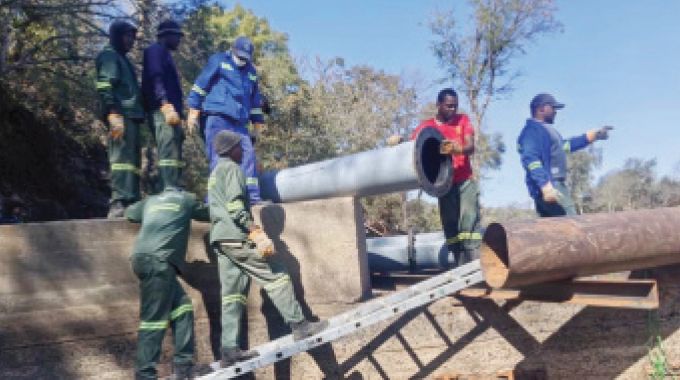
The rehabilitation works involve replacing a dual raw water pipeline that pumps water from the weir to the pump station after floodwaters destroyed the old system.
The pumping house was inundated during the floods, damaging equipment, while the raw water pipeline was ripped apart. The original pipeline, installed in the 1950s, had reached the end of its lifespan and could not be repaired, necessitating a complete replacement.
To keep the town supplied with water after the disaster, Gwanda Municipality installed a temporary pipeline. However, falling water levels at the weir have rendered the temporary arrangement ineffective, resulting in prolonged water shortages that have left some residents without water for nearly a week.
Gwanda Mayor Alderman Thulani Moyo said Government’s intervention had enabled council to procure the materials needed to permanently restore the damaged infrastructure.
“After the destruction of the raw water line from the suction site at the weir, council received assistance from Government through special funding to repair the water line,” he said.
“We have been using a temporary line while procurement processes were underway and waiting for delivery of supplies. As water levels dropped, it became increasingly difficult to continue operating the temporary line.”
Alderman Moyo said engineers are prioritising completion of one of the two pipelines so that pumping can resume while work continues on the second line.
“Once the first line has been completed, we will test it while continuing work on the second one. We require a dual-line system because we cannot operate one pump continuously for 24 hours. We alternate pumping every six hours to avoid overworking the equipment,” he said.
Alderman Moyo said although council had initially hoped to complete the repairs earlier, progress had been slowed by the difficult terrain around the dam wall.
“The work environment is challenging because there are gorges and heavy pipes have to be handled carefully. For safety reasons, work cannot continue overnight, but our teams are working as many hours as possible during daylight,” he said.
Beyond the immediate repairs, Alderman Moyo said the municipality plans to replace the entire water conveyance system from the pump station to the water treatment plant as part of a long-term solution to recurring water supply disruptions.
“Our water infrastructure dates back to the 1950s and requires comprehensive modernisation. We want to replace not only the raw water lines but also the distribution system to improve reliability and meet the minimum service delivery standards,” he said.
Meanwhile, council has been deploying water bowsers to critical institutions, including the district hospital, prison and Gwanda Old People’s Home, while residents continue relying on boreholes drilled across the town.
The rehabilitation project dovetails with the Second Republic’s infrastructure modernisation drive under the National Development Strategy 2 (NDS2), which prioritises rehabilitation of water supply systems, improved service delivery and climate-resilient public infrastructure as the country moves towards the attainment of Vision 2030.
The Government has, over the past few years, increased investment in water infrastructure through programmes that include dam construction, urban water rehabilitation, rural borehole drilling and support for local authorities to strengthen resilience against climate-related disasters. The interventions form part of President Mnangagwa’s development philosophy of ‘leaving no one and no place behind,’ while ensuring communities have access to safe and reliable water supplies.
Residents have welcomed the rehabilitation works but said a lasting solution remains critical.
Mr Ishmael Ntini said the town had endured recurring water challenges for years due to ageing infrastructure.
“As residents, we need a permanent solution to these persistent water problems. We have long known that the infrastructure had become obsolete and required complete replacement. We hope these works mark the beginning of lasting improvements because our old system cannot withstand disasters such as floods,” he said. — DubeMatutu