Gibson Mhaka and Mthokozisi Ncube Zimpapers Reporters
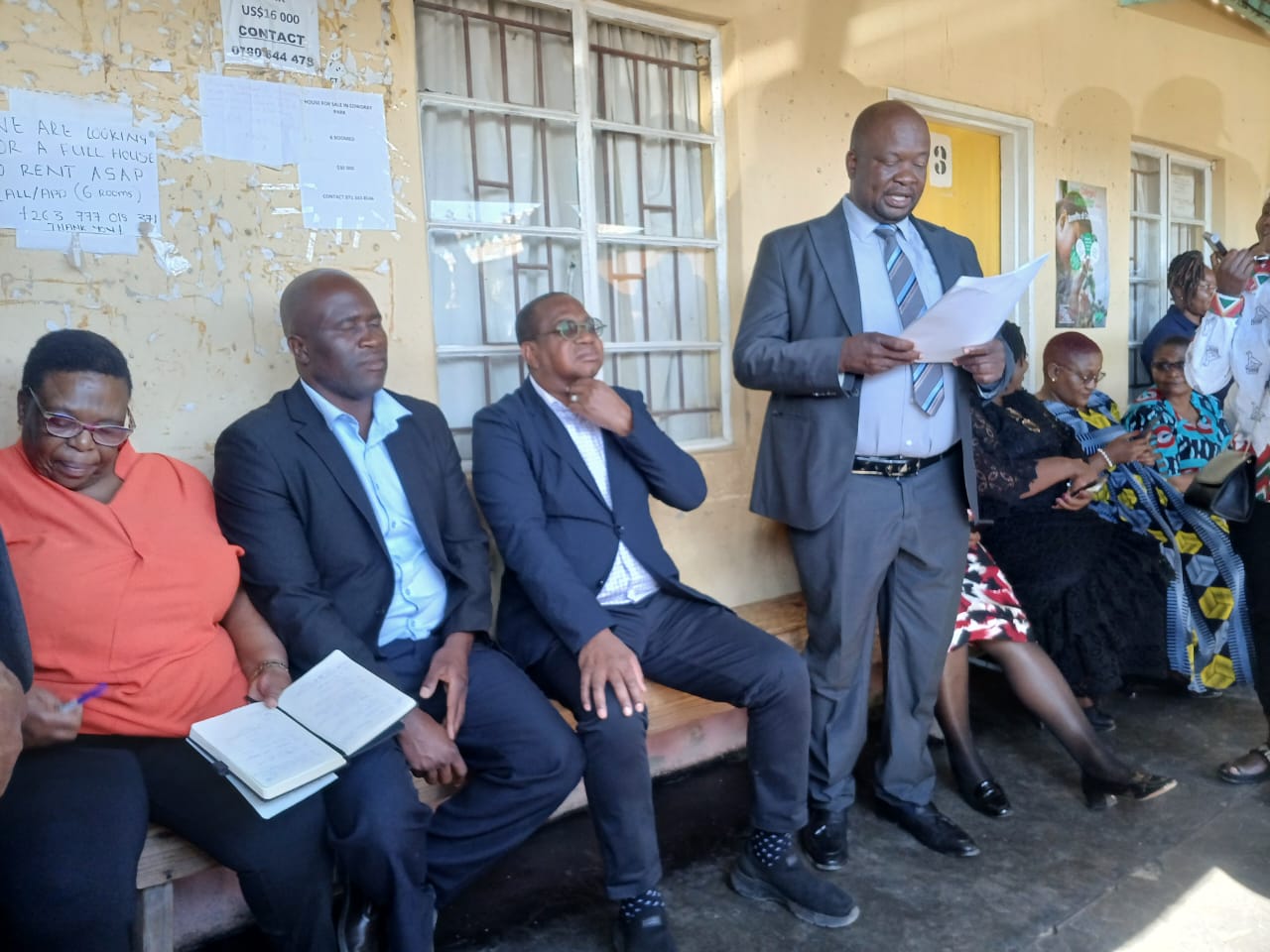
PARLIAMENT has intensified its oversight of Government housing programmes, with the Parliamentary Portfolio Committee on Local Government, Public Works and National Housing touring Bulawayo and Lupane to assess housing projects, urban infrastructure and service delivery.
The nationwide fact-finding exercise, undertaken in fulfilment of Parliament’s constitutional mandate, is expected to inform recommendations aimed at strengthening the implementation of Government housing policies, improving service delivery and supporting the attainment of Vision 2030 through sustainable and well-planned human settlements.
The committee, led by its chairperson, Dr Maxmore Njanji, visited several sites across Bulawayo yesterday, including the Garikai/Hlalani Kuhle housing project in Cowdray Park, Ngozi Mine informal settlement, Burombo, Sidojiwe and Iminyela flats.
The Bulawayo tour followed a similar inspection in Lupane on Friday, where legislators commended progress in housing and infrastructure development but raised concerns over inadequate funding for key projects, particularly the town’s sewer reticulation system.
Speaking during the Bulawayo tour, Dr Njanji said the oversight exercise was not merely procedural but a constitutional obligation aimed at strengthening accountability and improving service delivery.
“This oversight visit is being undertaken in fulfilment of Parliament’s constitutional mandate to ensure Government programmes are implemented efficiently, effectively and transparently,” said Dr Njanji.
“Section 119 of the Constitution obliges Parliament to ensure that all State institutions and agencies are accountable to the people of Zimbabwe, whilst Section 141 requires Parliament and its committees to facilitate public involvement in their processes. It is in fulfilment of this constitutional responsibility that the committee has embarked on this nationwide verification exercise.”
He said the committee was assessing the implementation of Government housing and human settlements programmes under the Zimbabwe Human Settlements Policy, the Regularisation and Sanitation Programme, and various urban renewal initiatives, which are key pillars in the attainment of Vision 2030 and the National Development Strategy.
“Our objective is to verify progress on the ground through physical inspections and direct engagement with implementing authorities and communities. We want to assess the quality and progress of housing projects, evaluate the provision of essential infrastructure such as roads, water supply, sewerage systems, and storm-water drainage, examine the extent of informal and dysfunctional settlements and assess progress in urban renewal initiatives,” he said.
Dr Njanji said the committee was also seeking to identify policy, institutional, financial and operational bottlenecks affecting programme implementation.
“The information gathered during these visits will form the evidence base upon which the committee will prepare its report and recommendations for presentation to Parliament. Ultimately, our goal is to strengthen policy implementation, improve accountability and enhance the delivery of safe, dignified and sustainable human settlements for the people of Zimbabwe.”
After inspecting the Garikai/Hlalani Kuhle housing scheme, which has for years grappled with inadequate infrastructure and service delivery challenges, the committee proceeded to Ngozi Mine, Burombo, Iminyela and Sidojiwe, settlements that continue to face issues related to planning, tenure security and access to basic services.
Addressing stakeholders after the inspections, Dr Njanji said the committee had gathered valuable evidence that would help shape parliamentary debate and future policy interventions.
“As Parliament, our oversight role is clearly enshrined in the Constitution. Section 119 gives us that responsibility, whilst Section 299 also empowers Parliament to exercise oversight over the utilisation of public resources,” he said.
“We have fulfilled our role by coming here to witness the situation on the ground. We have identified areas where there may be gaps in policy implementation and as Parliament, we will compile a comprehensive report that will be debated in Parliament. Where improvements are required, appropriate recommendations will be made.”
He said the Bulawayo visit was part of a nationwide programme that had already covered Gweru and Lupane, with inspections scheduled for Harare, Marondera and Mutare next week.
“We are travelling across the country because effective oversight must be evidence-based. We cannot make informed decisions from boardrooms alone. We must engage communities, implementing authorities and residents to appreciate the realities on the ground,” said Dr Njanji.
Meanwhile, Bulawayo City Council appealed for increased Government support to rehabilitate ageing water and sewer infrastructure, saying obsolete systems were impacting service delivery.
Bulawayo City Council Finance Director, Mr Tennyson Mpunzi, told legislators that ageing infrastructure had become one of the city’s greatest challenges.
“Our sewer and water infrastructure is simply too old. For every kilolitre of water that we purify, about 42 per cent is lost through leakages because of ageing infrastructure. That represents a significant financial loss and poor service delivery to our residents,” he said.
Mr Mpunzi said the city urgently required funding to modernise its infrastructure and improve water supply.
“Our appeal to Parliament is that we need funding to rehabilitate our infrastructure so that residents can enjoy reliable water supplies around the clock. Accessing funding remains very expensive, which is why we have been engaging development partners to assist us in improving service delivery.”
He added that Bulawayo’s existing water sources were no longer sufficient to meet the demands of the city’s growing population.
“When our water supply system was developed, Bulawayo had far fewer wards. Today, the city has almost doubled in size, meaning demand for water has increased significantly. We therefore require additional water sources.”
Mr Mpunzi welcomed progress on the Government’s Gwayi-Shangani Dam project and the city’s Glass Block Dam initiative.
During the committee’s earlier visit to Lupane, legislators commended the progress made in housing and infrastructure development but emphasised the urgent need for funding to address outstanding service delivery challenges.
The delegation toured the Garikai/Hlalani Kuhle housing project, roads, storm-water drainage and sewer infrastructure before inspecting houses built for civil servants under the Infrastructure Development Project.
“I just want to commend the Local Government and National Housing ministries for the good work they are doing. It is enshrined in NDS2, Vision 2030, and the Human Settlements Policy that people must have decent settlements,” said Dr Njanji.
He added that Parliament was carrying out its constitutional oversight role to assess progress and identify challenges affecting the projects.
“We are here to fulfil that mandate. We have seen provision of water, sewer infrastructure and the minimum standards required. We have also identified some gaps, particularly funding.”
Dr Njanji said delays in the disbursement of devolution funds had impacted the implementation of key projects.
“We need to come up with recommendations, including encouraging public-private partnerships and lobbying the Ministry of Finance to release funds on time so that service delivery is improved,” he said.
One of the committee’s key recommendations would be to push for funding for Lupane’s sewer reticulation project.
“We are going to lobby the Minister of Finance to release funds to ensure that proper sewer reticulation is put in place for Lupane. Now that Lupane has town status, the people deserve adequate services,” he said.
Lupane Local Board chairperson, Councillor Thandolwenkosi Moyo, said constructing a fully mechanised sewer system would cost about US$18.5 million, an amount beyond the local authority’s current financial capacity.
“For a proper mechanised sewer system, we need around US$18.5 million. We have been engaging Government and seeking development partners, but for a small town, it is difficult to secure that amount,” he said.
He added that the local authority was now considering a more affordable sewer pond system, estimated to cost about US$1 million, as an interim solution.
Cllr Moyo said council revenue was generated from rates, rentals and land sales, while much of its development budget was expected from devolution funds over a four-year implementation period.
The parliamentary committee is expected to conclude its nationwide assessment after visits to Harare, Marondera and Mutare before tabling a report in Parliament containing recommendations aimed at improving housing delivery, accelerating urban renewal programmes, strengthening infrastructure development and regularising informal settlements where appropriate.
Parliament intensifies oversight on housing projects