Chronicle Editor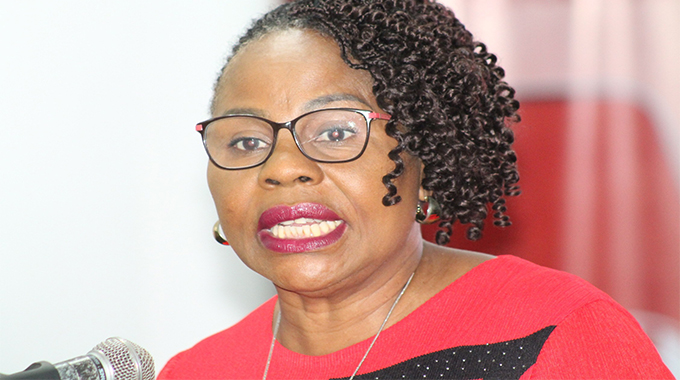
Farirai Machivenyika, Harare Bureau
Over 60 percent of projects embarked on by Government in this year’s 100-Day Cycle are on schedule, while the remainder have been affected by price increases and shortages of foreign currency.
This was said by the Minister of Information, Publicity and Broadcasting Services, Monica Mutsvangwa on Tuesday while presenting the 19th Cabinet meeting decision matrix.
The report of the second 100-Day Cycle was presented to Cabinet by the Minister of State for Presidential Affairs and Monitoring Implementation of Government Programmes, Joram Gumbo.
“The Second 100-Day commenced on February 28 and will end on June 7, 2019. It was reported that as at Day 50, 14 projects (16 percent) were ahead of target, 54 (60 percent) were on target, while 22 (24 percent) were behind schedule,” said Minister Mutsvangwa.
Ministries that had their priority projects progressing either on target or ahead of target are that of Environment, Tourism and Hospitality Industry; Finance and Economic Development; Higher and Tertiary Education, Science and Technology Development; Foreign Affairs and International Trade; Home Affairs and Cultural Heritage; Industry and Commerce; Justice, Legal and Parliamentary Affairs; Information, Publicity and Broadcasting Services and Mines and Mining Development.
“Those projects that were behind target were impacted by price escalations which rendered the initially allocated funds inadequate as well as the shortage of foreign currency,” Minister Mutsvangwa said.
She added that projects that were behind targets as at Day 50 include: the transformer manufacturing and prepaid meter installation projects; projects on setting up provision of surgical services at provincial hospitals, scaling up child, adolescent, mental health services and customer care training for health personnel; Compliance with Private Voluntary Organisations (PVOs) Act by Non –Governmental Organisations; capacity building for enhanced communication with persons who are hard of hearing, industrial Harmony and Sustainable Livelihood projects.
Other projects include the completion of the Makuti-Chirundu optic fibre backbone link; projects on security of tenure and mechanisation of irrigation development; the Tsholotsho Disaster Recovery; Magama Extension Water Reticulation project; establishment of Culture and creative industry facility; Establishment of a Recreational Park at Nemamwa Growth point, refurbishment of Wedza Country Club project and resuscitation of the girl’s hostel at Rodger Howman Training Centre in Masvingo.
The dualisation of the road from Melfort to Bromley along Harare-Mutare and the dualisation of the road from tollgate to the 59,4km peg along the Harare-Bulawayo Road as well as the Norton over-rail and fencing of the Beitbridge-Bulawayo Road Projects are also behind schedule.
The roll out of the infrastructure projects by Government is in line with the Transitional Stabilisation Programme (TSP) which recognises that a functional public infrastructure remains a key enabler to unlocking economic growth potential, increase competiveness and productivity, while equipping public services to meet demand.
In this regard, the TSP prioritises quick-win projects in energy, water and sanitation, ICT, housing and transport, with focus on expediting completion of ongoing infrastructure projects, that way contributing to the revival of the economy.
In order to achieve this, the Transitional Stabilisation Programme is therefore targeting increasing the budget on capital expenditures from the current 16 percent of total budget expenditures to over 25 percent, beginning from this and 2020 fiscal budgets and has identified key infrastructure projects for that period.


 Online Reporter