


 Chronicle Editor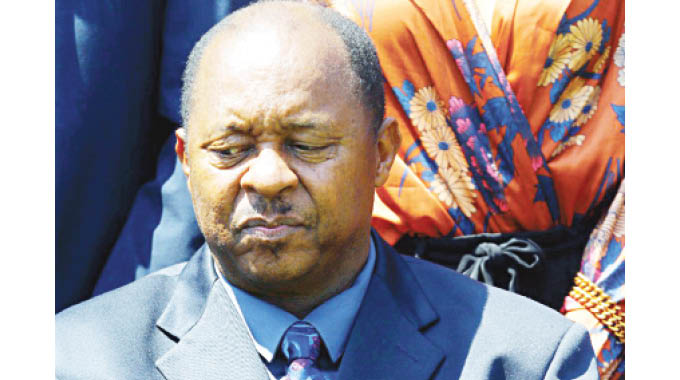
Leonard Ncube, Victoria Falls Reporter
THE Government is courting investors to develop health facilities in Victoria Falls as a way of improving access to health and promoting health tourism in the country’s prime resort.
Victoria Falls Hospital and two private health centres are the only health facilities in the resort town and in some cases, tourists who fall sick while on visit are airlifted to South Africa. In an interview during a tour of Victoria Falls Hospital recently, Health and Child Care Minister Dr Obadiah Moyo said Government was looking at improving health facilities.
“There are a lot of private players who want to set up hence there will be private hospitals here. We have airlines wanting to fly to the destination but they want to be assured that people they will bring will be satisfied with healthcare facilities. Our hospital will also be upgraded to be competitive as we want to bring medical tourism in this area as it is the most perfect site in the country,” said Dr Moyo.
He said it is part of Government plans to have the whole world flying to Victoria Falls for treatment as they also tour the Falls while recuperating.
“Health makes a difference in tourism,” said Dr Moyo.
Zimbabweans, especially those seeking treatment for chronic diseases such as cancer and heart complications, travel to India and South Africa where there are better facilities. This is, however, expensive for many who end up dying as they fail to raise the required money for travelling and surgeries.
Hwange District Medical Officer Dr Fungayi Musinami said upgrading Victoria Falls Hospital will go a long way in positioning the resort town as a destination of choice.
“We are elated that Government is working tirelessly to ensure we have state-of-the-art health facilities in Victoria Falls where our hospital is earmarked for upgrading through public-private partnerships. Victoria Falls has grown and we are moving with times hence I can confidently say with what we have so far, we have made sufficient progress in terms of preparing for any eventuality. We hope with Government strategies being put in place we will be ready for anything,” she said.
Meanwhile, the Director of Epidemiology and Disease Control at the Ministry of Health and Child Care Dr Portia Manangazira has said achieving the upper middle-income status by 2030 is dependent on improving water and sanitation for a clean environment.
She was speaking in an interview in Victoria Falls where Zimbabwe joined the rest of the world in commemorating the first ever Neglected Tropical Diseases Day (NTD) on 30 January. NTDs are a diverse group of infections which are common in low-income populations in the developing world.
There are 17 NTDs in the world but Zimbabwe is concerned about schistosomiasis (snail fever or bilharzia), soil transmitted Helminthiasis (STH) also called intestinal worms which are both the most common and problematic in the country, elephantiasis, trachoma, leprosy and skin rash. There are also three zoonotics namely trypanosomiasis (also known as nagana or sleeping sickness in animals), anthrax and rabbies.
In Zimbabwe NTDs are prevalent in high temperature districts which have poor water availability, while lack of soap and personal hygiene exacerbates the conditions.
“We’re excited to be part of the global commemoration of the World NTD Day which this year was commemorated for the first time ever on the 30th of January. This is because a group of about 250 global partners and institutions came together to raise awareness and bring out the neglect so that there is concerted action and effort to make sure that some members of the society are not left behind in a vicious cycle,” said Dr Manangazira.
She said Zimbabwe had made great strides in eliminating NTDs after recording about 86 percent reduction rate following a six-year mass drug administration (MDA) programme that ended in 2018.
“For us in Zimbabwe we are commemorating this day at a time when we have realised a lot of progress in terms of addressing NTDs.
“In 2010 we embarked on a survey that looked at prevalence of bilharzia and intestinal worms. We found high prevalence but now we are nearing zero which means through annual mass drug administration we have interrupted transmission of both bilharzia and intestinal worms.
“Now we have also made efforts towards eliminating elephantiasis through mass drug administration in 39 districts that we found endemic. And for trachoma we have mapped 30 districts and found 21 to have significant problem. For rabbis and anthrax, we teamed up with our colleagues in veterinary services and came up with guidelines and now we are looking at eliminating rabbis as a public health problem.
“I would say as a country we have moved a lot since 2010 but we haven’t done it all. So we are embarking on measures to reduce occurrence hence we have to revise and review our strategy so that it’s in tandem with elimination,” highlighted Dr Mangazira.
@ncubeleon



 Bongani Ndlovu
 Online Reporter