Online Reporter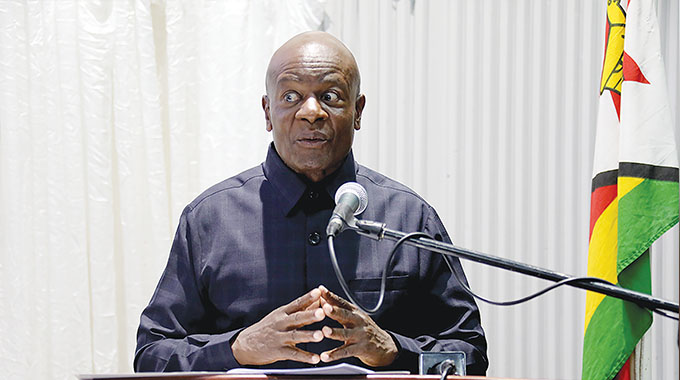
Sikhumbuzo Moyo in Tshino Tsholotsho
GOVERNMENT has migrated from its previous reactive approach to disaster management to taking a more proactive one, as it is pouring funding into post-disaster management.
This was highlighted by Local Government and Public Works Minister Daniel Garwe in his keynote address at the 2025 International Day for Disaster Risk Reduction commemorations held at Tshino Primary School in Tsholotsho yesterday.
The International Day for Disaster Risk Reduction was started in 1989 and is held on October 13 annually.
The commemorations are running under the theme, “Finance Resilience and not Disasters: Children and Youths as Agents of Change for Disaster Risk Reduction”.
Minister Garwe said as a result of the reactive approach, the Government has poured vast resources into post-disaster recovery efforts, often rebuilding communities in the same vulnerable locations using the same outdated methods
“For far too long, our approach to disasters has been reactive rather than proactive. Government has poured vast resources into post-disaster recovery efforts, often rebuilding communities in the same vulnerable locations using the same outdated methods. This cycle of destruction and reconstruction is not only costly but also unsustainable.
Government decided to break this pattern through investing in community resilience programmes. This shift is rooted in Government’s two core principles of building back better and building right the first time,” said Minister Garwe.
Minister Garwe said during Cyclone Dineo in 2017 that was also experienced in Tsholotsho, Government implemented the Tsholotsho Disaster Recovery Housing Project targeting 305 Displaced families and to date, Government has managed to complete 298 units while the remainder are at various stages of completion.
He assured villagers that the Government remains committed to finalise the recovery projects and ensure that the affected families are accorded decent shelter and livelihoods, adding that this project will also see the construction of access roads, drilling of boreholes and construction of Chief Mathuphula’s compound.
“I am pleased to inform this gathering that the Government, through my Ministry, completed the Binga (Nsungwale) Disaster Recovery Housing Project early this year. The project was implemented to address the housing challenge for Internally Displaced Persons (IDPs) following flash floods experienced in Nsungwale Village during the 2020 rainfall season. The project was complemented by the provision of a piped water scheme, ablution facilities, and refurbishment of classroom blocks and a staff cottage at Nsungwale Primary School,” said Minister Garwe.
Minister Garwe said it is not by accident that the organisers chose Matabeleland North Province to host this year’s commemorations, but it is as a result of the realisation that the province has not been spared by the effects of climate change, such as severe droughts, hailstorms, lightning, and floods.
He said by focusing on Matabeleland North, the Government is demonstrating its commitment to reaching the furthest behind first, ensuring that those most at-risk are prioritised in the disaster risk reduction efforts.
“This means confronting the specific challenges of marginalised groups, including women, children, and the elderly, who are often disproportionately affected by disasters. Besides the hydrometeorological and other hazards, fire incidents are becoming a menace in our country,” said Minister Garwe.