Online Reporter
Nqobile Bhebhe, [email protected]
THE Government has unveiled plans to establish a Special Economic Zone (SEZ) in every province as part of a wider strategy to stimulate economic growth and unlock provincial economic potential.
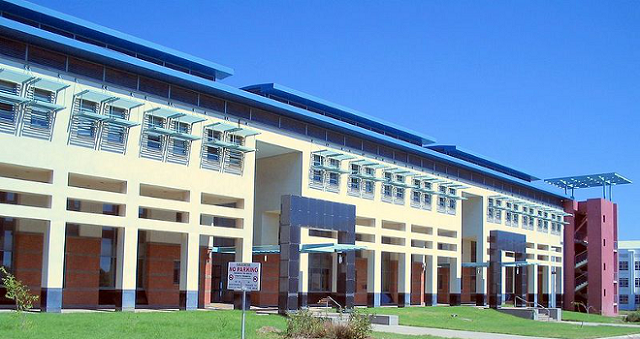
Finance, Economic Development and Investment Promotion Minister, Professor Mthuli Ncube, announced the initiative in Bulawayo yesterday during an address at a high-level academia–industry engagement held at the National University of Science and Technology (Nust).
He also outlined measures aimed at accelerating industrialisation and promoting inclusive growth.
The engagement, held under the theme “Aligning the 2026 Budget with National Development Strategy 2 for Inclusive Growth and Vision 2030”, brought together policymakers, captains of industry, academics and students to examine how fiscal policy can be aligned with national development priorities under NDS1 and the broader Vision 2030 framework.
Prof Ncube told delegates that the push to establish SEZs across all provinces is part of Government’s broader economic transformation agenda, which seeks to leverage local resources and comparative advantages found in different parts of the country.
“Government is working on introducing one special economic zone per province in a bid to stimulate economic growth,” said Prof Ncube.
He said SEZs are intended to drive nationwide industrial development by tapping into resource-rich zones and promoting value addition.
“The idea around special economic zones is meant to stimulate economic growth countrywide tapping into resources in specific zones,” he said.
Prof Ncube cited examples of provinces where Government is already considering sector-specific zones aligned to local resource endowments and economic strengths.
“For instance, in Bulawayo, Government is thinking of setting up an iron and steel economic zone. In Matabeleland South we are considering and, I must stress considering developing an agro-processing and horticulture zone around Antelope Dam. In Matabeleland North we have the Masuwe economic zone,” he said.
In December, Prof Ncube indicated that a study to support evidence-based policymaking for the resuscitation of Bulawayo’s industrial base and the operationalisation of SEZs would be commissioned.
The announcement comes as preparations gather pace for the proposed Bulawayo Industrial Park, an initiative expected to position the city as a hub for industrialisation, attract investment, create jobs across multiple sectors and drive wider regional economic transformation.
Industrial parks are designated areas purposely developed for industrial activity, typically offering subdivided plots supported by essential infrastructure such as roads, transport links and utilities. In some cases, they also provide shared facilities to encourage collaboration, efficiency and innovation among manufacturers.
By clustering industrial operations, such parks reduce logistical costs, improve the ease of doing business and create an enabling environment for enterprises to grow.
In Bulawayo, the Umvumila Zone has been identified as a priority starting point for the project.
Bulawayo’s industrial sector has suffered a steep decline over the years, with many companies either closing or relocating to Harare, resulting in significant job losses. However, the advent of the Second Republic and the introduction of ease of doing business reforms have enabled several firms to emerge from distress and increase capacity utilisation.
Prof Ncube said the proposed SEZs would help attract domestic and foreign direct investment, boost exports, create employment and drive infrastructure development across host provinces.
A special economic zone is an area within a country governed by distinct economic regulations designed to attract investment. Typically, SEZs offer incentives such as tax breaks, simplified customs procedures and streamlined administrative processes to encourage businesses to establish operations within designated areas.
By decentralising industrial development and aligning key economic activities with provincial strengths, Government expects the initiative to enhance productivity, strengthen value chains and contribute meaningfully to the attainment of upper-middle-income status by 2030.