Sukulwenkosi Dube-Matutu, Matabeleland South Bureau
MATABELELAND South is stepping up efforts to accelerate Vision 2030 through coordinated social protection programmes, with Government directing ministries, departments and agencies to strengthen collaboration, monitoring and accountability to improve livelihoods across the province.
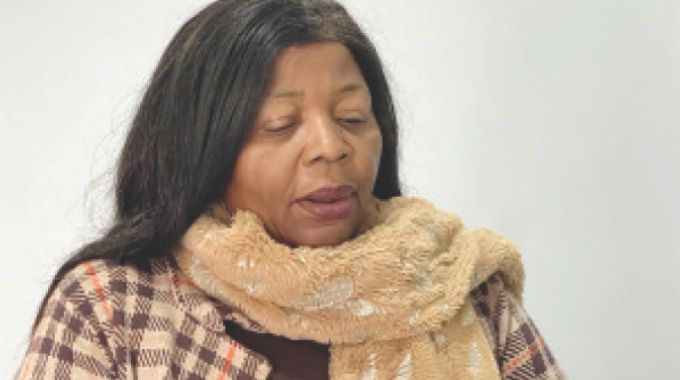
Speaking during the recent Matabeleland South Social Development, Gender and Social Protection Pillar meeting, Secretary for Provincial Affairs and Devolution Mrs Lathiso Dlamini-Maseko said national development requires a
‘Whole-of-Government’ and ‘whole-of-society approach to ensure no community is left behind.
“We have an important role of improving the welfare and livelihoods of our people. The work that falls under this pillar is among the most visible and impactful because it touches directly on the everyday lives of people in our province,” she said.
“It speaks to the health of our communities, the protection of our children, the empowerment of women and the dignity of persons with disabilities, the welfare of vulnerable households and the resilience of our society as a whole.”
Mrs Dlamini-Maseko said the social development, gender and social protection pillar is, therefore, not merely another Government structure but the embodiment of commitment to people-centred development. It is where Government’s policies and programmes converge to improve lives, restore dignity and create opportunities for every Zimbabwean.
“When President Mnangagwa says “ilizwe lakhiwa ngabanikazi balo,” he reminds us that national development is a shared responsibility.
“Equally, his Government’s philosophy of leaving no one and no place behind challenges us to ensure that development reaches every citizen, regardless of location, age, gender, social status or circumstance,” she said.
Mrs Dlamini-Maseko said there was need for all social protection and development players to meet their administrative requirements with a focus to implement effective programmes, achieve set targets, sustain gains and address existing gaps.
She said health, education, social welfare, gender affairs, disability inclusion, labour, community development are critical sectors in driving development of the nation.
“The communities we serve do not experience challenges in isolation. A child who drops out of school may also be vulnerable to drug and substance abuse. A household affected by poverty may simultaneously face health challenges, food insecurity and social exclusion,” said Mrs Dlamini-Maseko.
“A young person struggling with unemployment may require interventions from multiple Government institutions.
“This reality demands that we move beyond sectoral thinking and embrace coordinated action. The time for working in silos has long passed. The challenges confronting our communities are interconnected and our responses must be equally interconnected,” she said.
Mrs Dlamini- Maseko said there is need to strengthen monitoring and evaluation systems across all ministries, departments and agencies. She said attainment of set targets requires a whole-of-government and whole-of-society approach, where Government institutions, development partners, communities and the private sector should work together towards common objectives.
She urged development partners to continue supporting coordinated monitoring initiatives. Mrs Dlamini-Maseko said such support not only enhances accountability and evidence-based decision-making but also strengthens the
province’s collective ability to track progress and address implementation gaps in a timely manner.
She said the Government expects institutions to be clear about their responsibilities, timelines and expected outputs for improved monitoring and accountability as well as enhanced service delivery.
“One area that requires our collective attention is the growing challenge of drug and substance abuse, particularly among young people.
“This challenge cannot be left to one institution alone. It requires a coordinated response involving health professionals, educators, social welfare practitioners, law enforcement agencies, traditional leaders, churches and communities,” said Mrs Dlamini-Maseko.
“I encourage all ministries departments and agencies to work towards producing a consolidated and coordinated pillar position paper that reflects shared priorities, integrated interventions and common targets.
“Such an approach will ensure coherence in planning, implementation and reporting while avoiding duplication of effort and resources,” she said.