Ivan Zhakata
Government has called for greater investment in climate-resilient infrastructure as Zimbabwe seeks to build sustainable cities under Vision 2030.
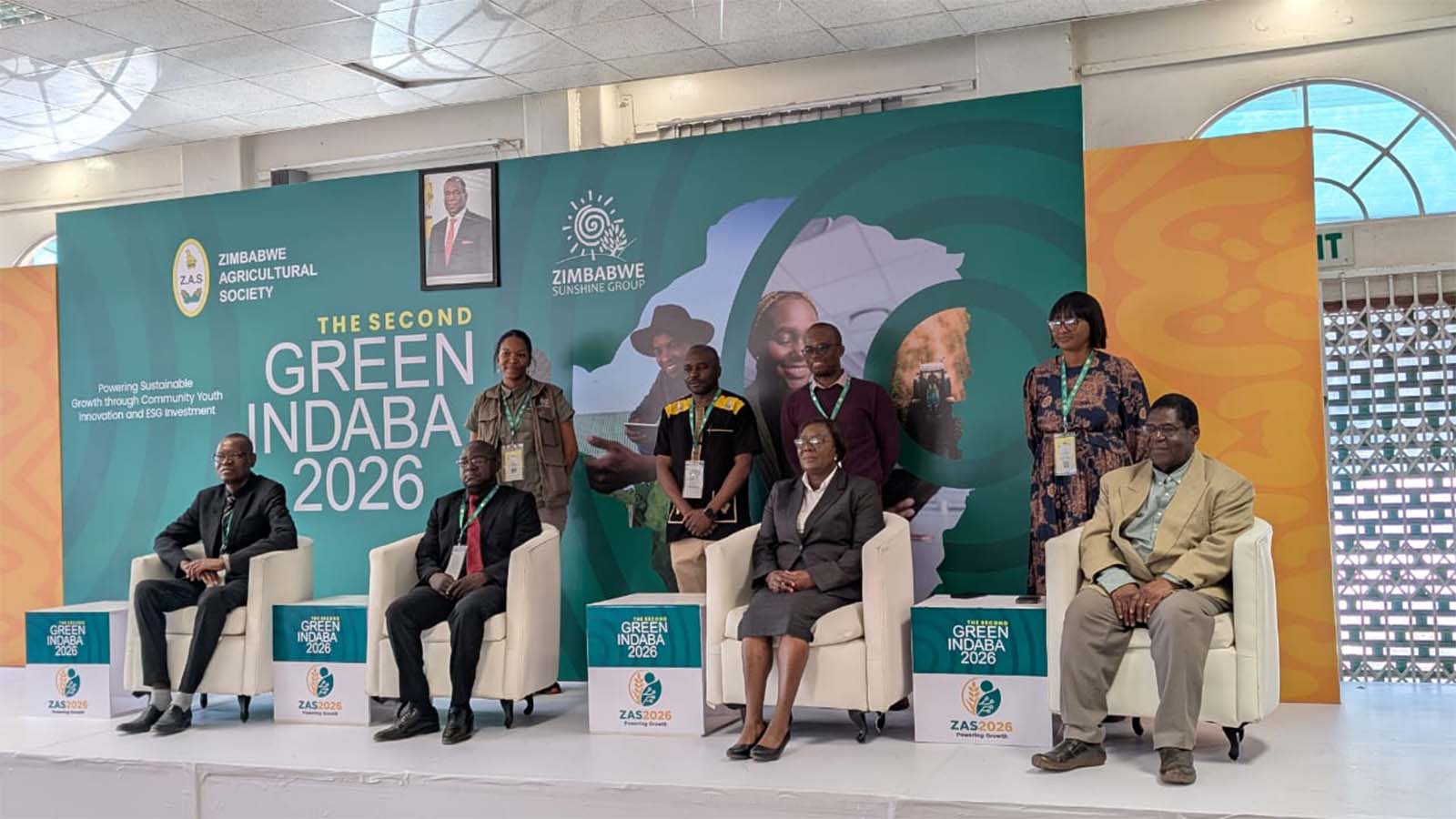
Speaking at the second edition of the Green Indaba on the sidelines of the 116th Zimbabwe Agricultural Show today, Permanent Secretary in the Office of the Minister of State for Harare Provincial Affairs and Devolution, Dr Shingirayi Mushamba said urban development is critical in achieving the country’s upper middle-income economy target.
His speech was delivered by the Office’s Director of Economic Affairs and Investment, Mrs Spiwe Nyamatore.
“Our cities and towns are not simply places where people live. They are centres of economic activity, innovation, commerce, public services and social development,” said Dr Mushamba.
He said rapid urbanisation has exposed major challenges, including informal settlements, inadequate infrastructure, poor water and sanitation services, waste management deficiencies and climate-related risks.
“We should not look at these challenges as problems, but as opportunities for us to rethink how we plan, finance, develop and govern our settlements,” he said.
“The Government recognises that informal settlements cannot be viewed through the lens of enforcement or removal. The response must be informed by planning, infrastructure, environmental considerations, community needs and the broader objective of creating functional human settlements,” he said.
He said Government will continue promoting sustainable and affordable human settlements through improved planning, infrastructure development, climate resilience and innovative financing models.
Dr Mushamba also challenged researchers and development partners to generate practical evidence that directly informs Government policy and implementation.
“The success of today’s meeting should not be measured by the number of presentations made or the number of reports produced, but by how it enters our policy, influences planning, guides investment and helps local authorities make better decisions,” he said.
Zimbabwe Agricultural Society (ZAS) chief executive officer Mr Rufaro Gunundu said the Green Indaba has moved beyond discussion to identifying practical solutions for sustainable urban development.
“We are not gathered here just to talk. We are gathered to act,” Mr Gunundu said.
“Our cities are the engine of Zimbabwe’s future, but growth without inclusion is not progress. Growth without sustainability is not growth at all.”
He said the discussions were aligned with several Sustainable Development Goals and would help promote green jobs, strengthen the circular economy and attract investment into sustainable urban development.
Representing Harare Mayor Councillor Jacob Mafume, Ward 1 Councillor Temany Utete said local authorities are prioritising climate resilience through renewable energy, environmental protection and community partnerships.
He urged Government, business, researchers and development partners to work together to finance projects that improve service delivery and strengthen climate resilience in cities.
The Green Indaba brought together policymakers, researchers, development partners, businesses and community organisations to discuss sustainable urban development under the theme “Powering Inclusive Growth: Communities, Research and Commerce for Sustainable Urban Development.”
The forum is intended to generate practical solutions to Zimbabwe’s challenges in urban centres, including housing, infrastructure, waste management and climate change.