Chronicle Editor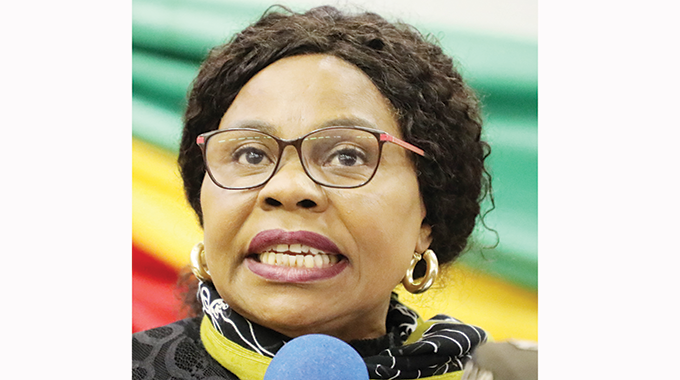
Prosper Ndlovu
A FREE and viable media industry is a key pillar towards attainment of a middle income economy by 2030 and the Government is fully committed to fulfilling this idea among others, a Cabinet Minister said yesterday.
Addressing delegates at the Zimbabwe New Media Summit organised by the National University of Science and Technology (Nust) and its partners in Bulawayo yesterday, the Minister of Information, Publicity and Broadcasting Services, Monica Mutsvangwa said Government was forging ahead with its drive to reform the country’s governance system under its broader democratisation agenda for the benefit of all Zimbabweans.
Despite scepticism by some, Minister Mutsvangwa, whose presentation topic was: “Media law review: Is it new wine in old wine skins for democracy and media in Zimbabwe”, said comprehensive transformation was being rolled out by Government and that notable progress has been made in reversing the stagnation experienced during the old dispensation led by former President Mugabe.
“What the new dispensation wants is free and viable press to underpin and propel the vision of a new and prosperous economy, the aim being to attain a middle income status for the Zimbabwean nation,” said the minister.
“My principal, your President, my President and President of the Republic of Zimbabwe, Cde ED Mnangagwa means exactly what he says.”
Minister Mutsvangwa said the reform agenda spearheaded by President Mnangagwa was inspired by the desire to develop Zimbabwe into a modern democracy.
She noted that an overhaul of legislative provisions was being done after realisation that the past leadership had imposed reactionary laws that served to frustrate freedoms and led to decay and stagnation of the economy against the aspirations of the armed liberation struggle.
As such, Minister Mutsvangwa said far reaching research and consultation were the hallmark of the new dispensation as Government seeks to create an inclusive policy framework.
“Our President is determined to make democracy work to the fullest extent in Zimbabwe.
So, please welcome on board. I am part of you and let’s work together and achieve a Zimbabwe, which we all want. Let’s join the ride to unimpeded press freedom with no ulterior motives to stifle public debate,” she said.
“To that end, Government committed itself to improve governance and media is one such targeted sector.
Government has embarked on wide ranging legal reforms to align existing laws to the constitution and introduce new laws that will make Zimbabwe a better country for its citizens.”
The minister said the democratisation process was in line with the country’s constitution and called upon all Zimbabweans to uphold its values and play their part.
Minister Mutsvangwa, however, expressed concern over the emergence of fake news that ride on the disruptive digital sphere.
While acknowledging fake news as a universal challenge, she said Zimbabwe was also not spared as it has suffered victim because of characters with nefarious agendas through peddling falsehoods to deliberately mislead the public.
Such unprofessional conduct is a threat to national democratic values hence the need to reform legislation to protect citizens while promoting their freedoms at the same time, said the minister.
Minister Mutsvangwa updated the gathering about the media reform process, which seeks to reverse draconian legislation such as the Access to Information and Protection of Privacy Act (AIPPA) among others.
After thorough consultation with stakeholders, she said Government has unpacked and unbundled AIPPA to come up with three Bills.
These are Freedom of Information Bill, Zimbabwe Media Commission Bill and Protection of Personal Information Bill.
Minister Mutsvangwa described the new bills as “most progressive” pieces of legislation to emerge out of the country’s media law reform agenda as their principles were drawn from modern democracies and contextualised locally.
In view of the viral influence of new media platforms she stressed the need to respect the right to privacy as enshrined in the constitution.
As such the minister said the new Bill on protection of personal information sets minimum standards and proposes to set up a data protection regulatory authority responsible for supervising, monitoring and enforcing and sanctioning data protection breaches.
“This has brought us at par with any modern democracy out there.
We are therefore giving assurances to any tourist or business entitities or persons coming to Zimbabwe that our data handling law will just be as those of any modern country,” she said.
Minister Mutsvangwa commended Nust for remaining focused and keeping abreast with media trends at home and abroad. She also emphasised the need to capacitate media training institutions with modern equipment to fully impact on society.
This also includes capacitating media content producers, which provides opportunity for diaspora involvement in creating viable partnerships.
The inaugural Zimbabwe New Media Summit enters day two today under the theme: “New media and democracy: Beyond fake news, misinformation and disinformation”.
Nust Vice Chancellor, Professor Mqhele Dlodlo, senior university staff, visiting academics, media practitioners, civic society leaders and students attended the event.


 Online Reporter