Online Reporter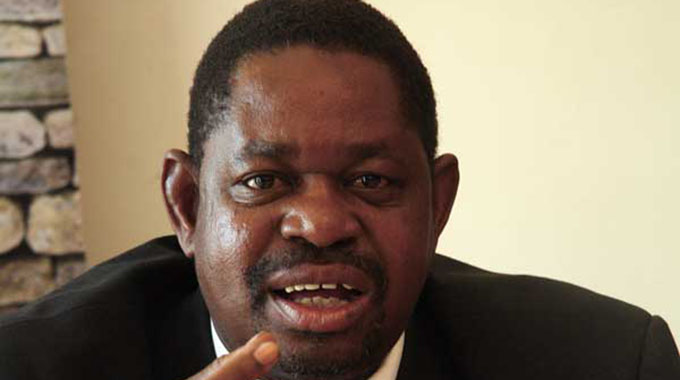
Sikhulekelani Moyo, [email protected]
SMALL-scale miners have welcomed the Government’s decision to reserve the country’s small and medium-scale gold mining sector exclusively for citizens and wholly Zimbabwean-owned companies, saying the policy is a major boost for indigenous participation, value addition and beneficiation in line with Vision 2030.
The new policy, announced by the Ministry of Mines and Mining Development, bars foreign individuals, foreign-controlled companies and foreign beneficial owners from participating in small and medium-scale gold mining activities.
It is intended to curb unsustainable mining practices, reduce conflicts between investors and communities and empower local miners to expand their operations.
The move is consistent with the Second Republic’s drive to maximise benefits from the country’s mineral resources through local participation, beneficiation and industrialisation under the National Development Strategy 2 (NDS2), which identifies mining as a key pillar for economic transformation.
In an interview, Zanu-PF deputy secretary for Mines and Energy, Cde Omega Sibanda, said the policy gives indigenous miners the opportunity to grow their operations and become competitive players in the mining industry.
“Government has restricted foreign investors from participating in small-scale mining, giving us as local miners the opportunity to expand and become bigger players in the sector,” he said.
“The Ministry has made it clear that no foreign individual, foreign-controlled company or foreign beneficial owner may acquire, hold or control any mining title classified as small-scale gold mining, participate directly or indirectly in the operation or management of small-scale gold mining activities, or enter into tribute, joint venture, syndicate or partnership arrangements that confer economic or operational control over reserved activities.”
The policy also outlaws nominee arrangements, proxy ownership and undisclosed beneficial ownership structures designed to circumvent the regulations, with offenders facing cancellation of their mining rights.
Under the new framework, small and medium-scale gold mining operations are defined as those producing up to 20 kilogrammes of gold per month or involving capital investment of up to US$15 million.
Operations exceeding either threshold will be classified as large-scale mining, where foreign investment will continue to be permitted.
The Ministry has directed all individuals and companies operating in the small and medium-scale gold mining sector to re-register by January 1, 2027, to ensure compliance with the new regulations.
Cde Sibanda said empowering local miners should go beyond restricting foreign participation and include deliberate measures to strengthen indigenous mining enterprises through partnerships.
“The Government must encourage partnerships within the small-scale mining sector. We used to have mining corporations where miners formed clusters and operated as bigger entities,” he said.
“There should be a legal framework that protects such arrangements because when small-scale miners work together, they become stronger, increase production and compete effectively with larger mining companies.”
The policy complements Government’s wider strategy of transforming Zimbabwe from a primary exporter of raw minerals into a value-adding and mineral-processing economy.
Zimbabwe has already introduced measures such as the ban on exports of raw lithium and the recently approved Minerals Value Chain Framework to encourage domestic beneficiation, industrialisation and job creation.
Zanu-PF secretary for Mines and Energy, Cde Paul Mangwana, said the ban on raw lithium exports has demonstrated the benefits of processing minerals locally.
“When we were exporting raw lithium, we were exporting jobs. The objective is to encourage mining companies to establish industries linked to mining within Zimbabwe so that employment opportunities remain in the country,” he said.
Cde Mangwana said local beneficiation remains critical in addressing unemployment and increasing export earnings.
“Lithium is one example of what can be done to create jobs, and the same principle should apply to all our minerals.
There should be more value addition even on gold. We should have more jewellery manufacturing plants in this country,” he said.
Cde Mangwana called on both local and foreign investors operating in the large-scale mining sector to invest in downstream industries that process minerals into finished products, saying this would accelerate industrial growth, create employment and maximise returns from Zimbabwe’s vast mineral wealth.
The mining sector is one of Zimbabwe’s key economic drivers and is expected to play a central role in achieving the country’s Vision 2030 target of becoming an upper-middle-income economy through increased local beneficiation, value addition and export growth.