Online Reporter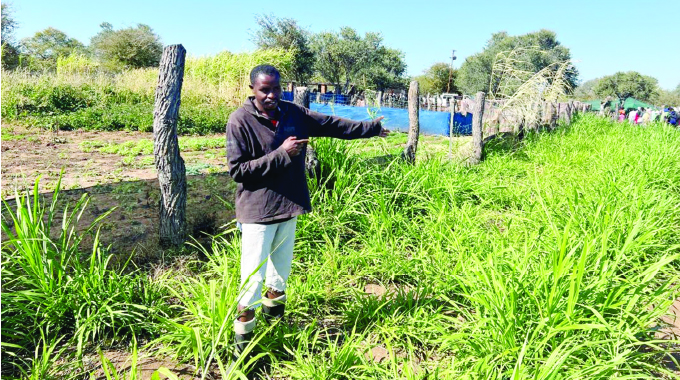
Sukulwenkosi Dube-Matutu, [email protected]
THE Government, through the Agricultural and Rural Development Advisory Services (Ardas), has rolled out feed formulation training programmes for communal farmers across Matabeleland South Province, as part of its broader strategy to mitigate the impact of drought and climate change on the livestock sector.
The initiative seeks to equip farmers with practical knowledge and skills to produce high-nutrient animal feed using locally available materials to ensure that farmers can supplement their herds even during lean periods such as droughts.
Last year, the province recorded the death of over 19 000 cattle due to the El Nino-induced drought, which served as a wake-up call for many farmers. Since then, several have adopted drought mitigation strategies such as silage and fodder production, some for the first time.
In an interview, Ardas’ Matabeleland South provincial deputy director, Mr Bhekilizwe Ncube said the training, which started in June, is part of the Government’s climate-proofing efforts for the livestock sector.
“We are conducting feed formulation trainings that were initiated in June, aiming to empower farmers with the knowledge and skills necessary to produce their own highly nutritious animal feeds using locally available raw materials,” he said.
“This initiative is part of broader efforts towards climate proofing and drought mitigation in the livestock sector. The programme adopts a cascading approach, where trainers are trained first, followed by extension officers and finally, farmers.”
Mr Ncube said self-sufficiency in feed production would help communal farmers better withstand climate variability. He said the ultimate goal is to considerably reduce livestock deaths by enhancing drought resilience.
“This year, we are building on lessons from 2023. Where farmers had feed or practiced hay preservation, fewer livestock deaths were recorded. One animal death due to feed shortage is one too many and it must be avoided,” he said.
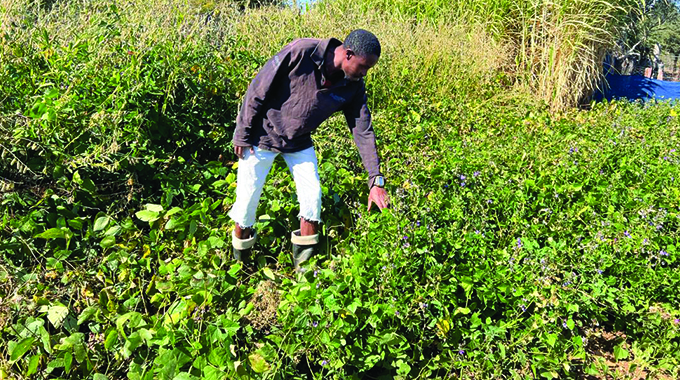
Mr Ncube urged irrigation farmers to dedicate part of their land to cultivating high-yielding fodder grasses and crops to support small stock such as goats and lactating cows. He also encouraged farmers to utilise crop residues as supplemental feed while pushing for investment in dedicated fodder plots.
“Farmers with large tracts of arable land should fence off sections for fodder production. Our target is to have at least 20 percent of irrigated land across the province under fodder crops,” he said.
Mr Ncube said there is a need to establish large-scale fodder irrigation schemes and hay production projects since commercial feed is unaffordable for most smallholder farmers.
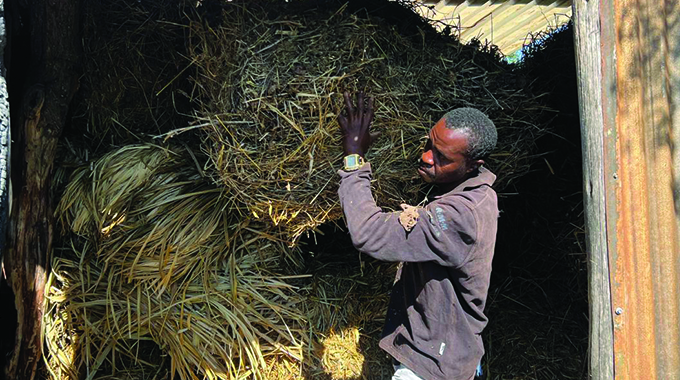
The province has set an ambitious target of producing 635 000 hay bales by the end of August to supply communal livestock farmers with affordable feed.
Mr Ncube noted that districts like Beitbridge and Umzingwane recorded the fewest cattle deaths last year, thanks to proactive uptake of drought mitigation measures, such as urea treatment of stover.
While commercial farmers have embraced fodder production and silage pits, he said more efforts are needed to bring communal farmers on board. Farmers are being encouraged to establish at least two silage pits and two fodder plots per household.
The training forms part of the National Livestock Recovery and Growth Plan, which seeks to grow the national herd to six million by 2025, up from the current 5,5 million.
The plan also aims to boost meat and dairy output for both domestic consumption and export.
In addition to feed programmes, the Government has intensified livestock health interventions through vaccination drives and artificial insemination using semen from genetically superior bulls to improve livestock breeds. — @DubeMatutu