Online Reporter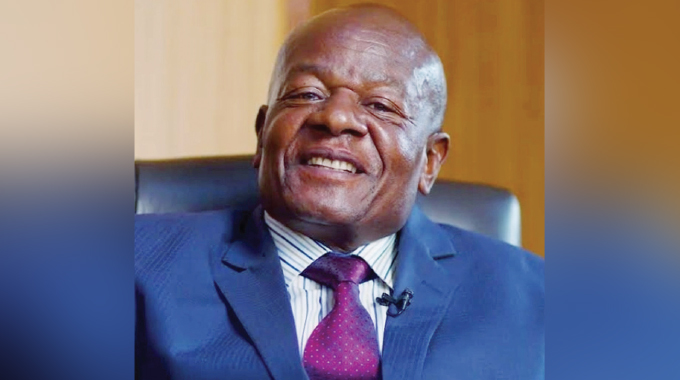
Debra Matabvu
TO tackle water management challenges and encourage responsible consumption, the Government is set to implement prepaid water meters nationwide, beginning with Harare.
This initiative aims to enhance efficiency in water usage while also improving revenue collection. The introduction of prepaid meters will empower residents to monitor and control their water consumption, promoting a more sustainable approach to resource management.
This comes as the Government recently concluded the signing of contracts with the City of Harare, Hangzhou Liaison Technology Company, and Helcraw Electrical for the privatisation of water in Harare under a Build, Transfer and Operate (BTO) model.
The model will also see raw water purification, distribution, billing, and wastewater management handled by private players, while smart meters will be installed at residential premises.
In the initial phase, Government will roll out 600 000 pre-paid meters, with 320 000 reserved for Harare, while the remainder will be distributed to Bulawayo, Gweru, Mutare and Victoria Falls.
The programme will first be rolled out in high-density suburbs across Harare, including in satellite towns of Norton, Chitungwiza and Ruwa.
The second phase will see the Government installing the prepaid meters in the remaining cities and towns across the country.
In an interview, Local Government and Public Works Minister, Hon Daniel Garwe said the signing of the contracts with the investors ensures the beginning of installation of the pre-paid meters.
“We have signed contracts with the investor; they are now on site,” he said.
“It is a process, however, we are glad that it has begun and in Harare we will start installing the pre-paid meters in the next two or three weeks.
“We will first focus on the high-density suburbs on every house. We will then install in other suburbs across the country.”
The installation of pre-paid water meters is part of a model, which will see the privatisation of the entire water system from purification to billing.
The City of Harare will also receive a new water treatment plant.
The introduction of the pre-paid water meters countrywide comes 10 years after the idea was first mooted.
In 2014, the Zimbabwe National Water Authority (Zinwa) in partnership with various local authorities, revealed plans to demand payment first before providing water services.
The pre-paid water system helps curb treated water theft and will boost revenue inflows by ensuring consumers pay for water upfront, the authorities argued.
Authorities also said the system would lessen the burden of water shortages in most local authorities.
The system was welcomed by business entities and organisations, but was met with stiff resistance by some residents.
In Harare, a pilot programme was launched in the Central Business District (CBD), Avenues, Milton Park, Sunningdale and a few other residential suburbs.
However, Town House shelved the project in 2016 before it could fully take off.
Nonetheless, Zinwa managed to install the water pre-paid meters at growth points and small towns such as Mvurwi, Glendale, Nyanga, Mutoko, Chivhu, Murambinda, Gokwe, Guruve, Filabusi, Karoi and Hwange.
Urban planning expert, Dr Percy Toriro, said it was an essential service that demands a thoughtful and balanced approach.
“While privatising public goods can lead to improved efficiency and delivery, it often risks making the service unaffordable for many,” he said.
“In most cities with well-managed water systems, a hybrid model is used — typically through a semi-autonomous utility. This setup allows for operational independence and faster decision-making, while still maintaining accountability to the public and accessing Government support when needed.”
Since 2000, most opposition-run local authorities have been failing to adequately provide water services to residents, with some areas going for years without running water.
Some African countries that have introduced full or partial water privatisation include South Africa, Senegal, Gabon and Côte d’Ivoire.