Online Reporter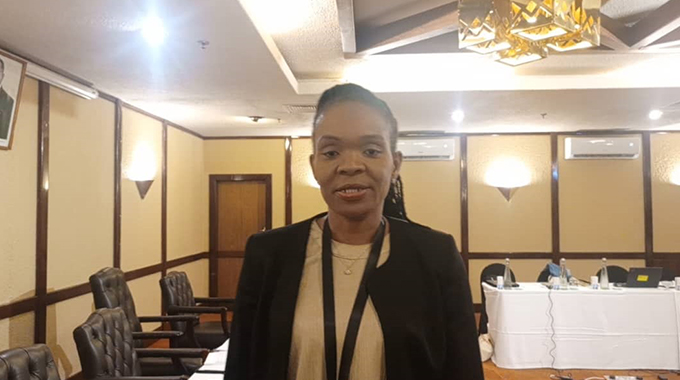
Rutendo Nyeve, Victoria Falls Reporter
THE Government has injected US$3 million into modernising public records administration through the implementation of an Electronic Document and Records Management System (EDRMS). The system is designed to enhance efficiency, streamline service delivery and align operations with global best practices.
The initiative is being spearheaded by the National Archives of Zimbabwe (NAZ) and will be piloted in three key ministries before a full-scale national rollout.
In an interview on the sidelines of the 28th Eastern and Southern Africa Regional Branch of the International Council on Archives (ESARBICA) conference, NAZ director Ms Brenda Mamvura said the system is expected to be fully operational by December, with 60 percent of procurement processes already completed.
The EDRMS, funded by the Government, marks a significant shift from Zimbabwe’s traditional paper-based records management to an integrated digital framework.
The Ministries of Finance, Public Service and the Office of the President and Cabinet have been selected to test the system before nationwide implementation.
“We’re pleased to announce that, as Zimbabwe and the National Archives of Zimbabwe, we now have a company that has won the tender to implement our Electronic Document and Records Management System. This year, as an institution, we are embracing this technology and have identified three ministries to pilot the system,” Ms Mamvura said.
The move is part of a broader e-Government strategy aimed at improving transparency, reducing bureaucratic delays, and ensuring seamless inter-ministerial coordination.
Ms Mamvura said the shift to an electronic system will significantly reduce service delivery times, benefitting both citizens and businesses interacting with Government departments. The new system offers several advantages, including systems integration to enable seamless data flow across departments. It is also expected to improve efficiency by reducing processing times for public services and enhancing accessibility through faster retrieval and better management of records.
“The advantages of having an Electronic Document and Records Management System are clear. The first is systems integration, which allows for seamless co-ordination across departments. The second is improved effectiveness and efficiency — Government institutions and parastatals will be able to serve their clients quickly and effectively,” she said.
The ESARBICA conference, hosted by the Ministry of Home Affairs and Cultural Heritage in partnership with the International Council on Archives (ICA), has provided a platform for African archivists to discuss digital transformation, artificial intelligence in records management and regional collaboration.
Zimbabwe’s membership of ESARBICA and ICA ensures that its transition to digital archiving adheres to international standards.
“Being part of ESARBICA makes sure that we share ideas and partner other archival institutions in areas of data migration and investment in artificial intelligence,” said Ms Mamvura.
She added that the conference has opened doors for benchmarking visits, allowing Zimbabwean archivists to learn from other countries while also showcasing homegrown solutions. With initial payments already processed, the Government is on track to complete the system by year-end.
“We’re at an advanced stage of procurement, and some of the first payments have been made. We believe that before the end of the year, we’ll be piloting this system,” said Ms Mamvura.
The migration from paper to digital records is a critical step in Zimbabwe’s broader public sector reform agenda.
“Bringing different countries to this conference enables our professionals to interact and pave the way for future collaborations. We are moving with the region and the world in embracing digital archives,” said Ms Mamvura.
Vice President of ESARBICA, Mr Francis Mwangi, who is also the director of National Archives in Kenya, said Zimbabwe, as a member of the ESARBICA has been doing very well in building the archives institution.
“Zimbabwe has been able to build an archival institution to a very high level. The last time we were here was 2015 and since then they have greatly improved. Their standard of archiving is very high compared to some countries of the ESARBICA. So, congratulations to Zimbabwe,” he said.