Chronicle Editor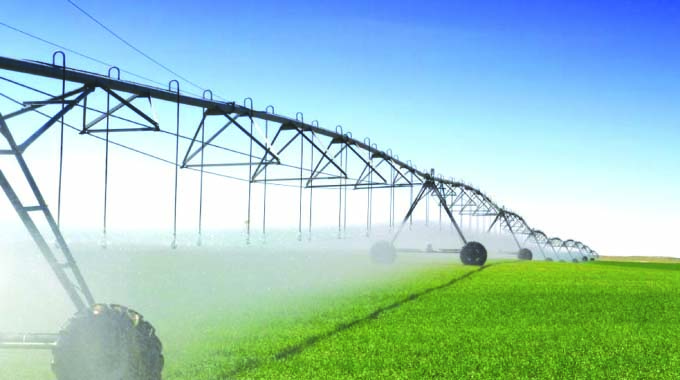
Harare Bureau
GOVERNMENT intends to increase the area under irrigation, through the Accelerated Irrigation Programme, from 175 000 hectares to 250 000ha as part of measures to mitigate the negative impact of climate change on agricultural production and enhance Zimbabwe’s adaptation to global warming.
This was said by Mr Tendai Mutasa, a climate change scientist in the Ministry of Environment, Climate, Tourism and Hospitality Industry.
He said this while addressing a climate change adaptation stakeholder meeting organised by the Centre for Agriculture and Food Policy (CAFP) in Harare yesterday.
The meeting was meant to facilitate deliberations on the role of digital technologies in climate change adaptation for agriculture along the Zambezi River Basin.
In order to scale-up climate change adaptation strategies, the Government has been conducting cloud seeding, upgrading meteorological seismology as weather station networks in the country.
It has also implemented extensive adaptation strategies in low rainfall areas funded by Green Climate Fund.
Zimbabwe has endured a number of droughts in recent years and this has presented major challenges to the agriculture-reliant livelihoods dotted across the country.
Addressing stakeholders at the workshop Mr Mutasa said the Government had taken it upon itself to continuously increase the area under irrigation as a way to counter the adverse effects of climate change.
“Climate change is real and I am sure you are aware that all socio-economic sectors are being affected. Let me quickly say that as part of efforts to address adverse effects of climate change, the Government is conducting Accelerated Irrigation
Rehabilitation Programme to minimise the negative impact of uneven rainfall. “This is to allow production throughout the year and the target is to increase area under irrigation to 250 000ha from 175 000ha,” said Mr Mutasa.
Dr Greenwell Matchaya, from the International Water Management Institute (IWMI), said the intention was to advise decision-makers within and outside of the public sector on how to use technologies to enhance climate change adaptation and improve agriculture productivity, particularly along the Zambezi River basin.
“The goal is to discuss the best ways to increase the use of digital technologies and opportunities that may be available for upscaling the use of technology in climate adaptation. Our overall aim is to advise decision-makers within and outside of the public sector on how to mainstream technologies in climate adaptation,” said Dr Matchaya.
He said the initiative was necessitated by the need to reduce the impact of persistent droughts, poverty and to improve resilience to climate change.
Zimbabwe has experienced extreme temperatures of 0,9 degrees Celsius above the average between 1901 and 2012 while the number of hot days has increased since 1950.
According to the World Bank and United Nations Development Programme, the country has also been witnessing a decline in average rainfall by five percent since 1915.
Further, the country has witnessed increased frequency and long dry spells during the rainy season and the severity of these changes is projected to worsen going forward.
Sustainable Development Goal (SDG) number 13 calls on governments across the globe to take urgent action to combat the effects of climate change.
It seeks to strengthen resilience and adaptive capacity to climate-related hazards and natural disasters in all countries.
The workshop was organised by the Centre for Agriculture and Food Policy in partnership with the Global Centre on Adaptation, Africa Development Bank and Indaba Agriculture Policy and Research Institute (IAPRI).



 Online Reporter