Judith Phiri, [email protected]
THE Government has stepped up its efforts to address the fifth quarter system, a colonial-era law which has been a result of farmers not being able to claim offals, hides, heads and hooves from abattoirs after slaughtering their beasts.
Deliberations to amend Statutory Instrument (SI) 182 of 2000 on Agricultural Products Marketing (Livestock/Carcass Classification and Grading) Regulation are now at an advanced stage, with the Ministry of Lands, Agriculture, Fisheries, Water and Rural Development and Agricultural Marketing Authority (AMA) looking into cattle marketing across the country and this includes beef marketing which involves the fifth quarter.
Responding to inquiries from this publication, the Ministry’s Director for Livestock Production and Development in the Directorate of Agricultural Rural Development and Advisory Services (ARDAS), Dr Sitokozile Sibanda, said they recently conducted a snapshot survey of abattoirs around Harare.
“We found out that the fifth quarter constitutes between 18 and 26 percent of total beef carcass weight. Currently, most abattoirs are charging a fee for slaughter services. Slaughter service fee ranges from US$35 to US$69 and this fee includes value-added tax (VAT),” she said.
“Farmers/producers collect their carcasses and the fifth quarter, except for the hide, which is retained by the service provider. Some of the abattoirs help the farmer/producer to sell their meat and offals.
However, if animals are sold on hoof, they are paid using the price per kilogramme of the live grade.”
She said a random sampling done in abattoirs in and around Harare, out of eleven abattoirs ten of them provide service slaughter for a fee and farmers/producers get their carcasses and the fifth quarter and only one does not offer a service slaughtering facility.
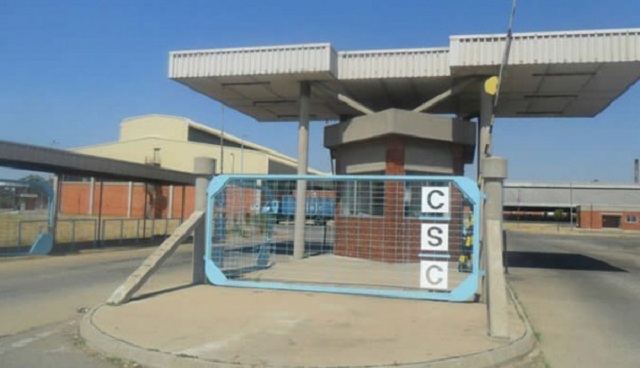
Historically, Dr Sibanda said during the Cold Storage Commission (CSC) era, the fifth quarter was meant to cover transport costs and overhead expenses since it went out into communal areas to organise and buy cattle from cattle sale auctions dotted countrywide.
“CSC paid the farmers/producers on the spot. Once payment is done, ownership changes from farmer to buyer and the risk now rests with the CSC. Risks such as losing cattle in road traffic accidents and ferrying diseased cattle that may be condemned at post-mortem inspections were taken away from the farmer/producer, so the fifth quarter rightfully belonged to CSC,” she added.
“There is a glaring omission of the fifth quarter in Statutory Instrument 182 of 2000, hence there is a need for its amendment. The Department is planning to review the statutory instrument 182 of 2000, resources permitting, to factor in the separate costing of the fifth quarter, among other sections.”

She said work was also underway with AMA and development partners to review the statutory instrument SI 182 of 2000, which previously did not address the fifth quarter.
Zimbabwe Commercial Farmers’ union (ZCFU) vice president, Mr Winston Babbage, said scrapping of the fifth quarter law was long overdue, to put an end to daylight robbery so that farmers can get value for their animals and are able to trade fairly on the markets.
“The fifth quarter system is a big issue where the farmer is only getting the carcass on service slaughter, while the hide and the fats are being taken by the abattoir or slaughterhouses for free,” he said.
“The hide is being exported or used to produce leather and the fats are producing glycerine, while the farmers, who are the owners of cattle, get nothing at all.”
He said it was as if farmers were doing all the work in livestock production and not getting an incentive for the by-products of their livestock.
Livestock specialist and farmer, Mr Mhlupheki Dube, called for the Government to intervene and remove the fifth quarter regulation, while condemning the current livestock pricing system, which affects farmers.
“Currently, the cold dressed mass (CDM) purchase price has decreased; commercial has dropped by US$0,30 from US$3,90 to US$3,60 and economy from US$3,60 to US$3,30, while super has dropped by US$0,20 from US$4,50 to US$4,30 and manufacture from US$1,70 to US$1,50.
“This means when farmers sell their cattle to abattoirs, they will get less for their animals, while at the same time they are trying to raise money for other summer cropping-related needs,” he said.
The CDM purchase price of choice has remained the same at US$3,90.