Online Reporter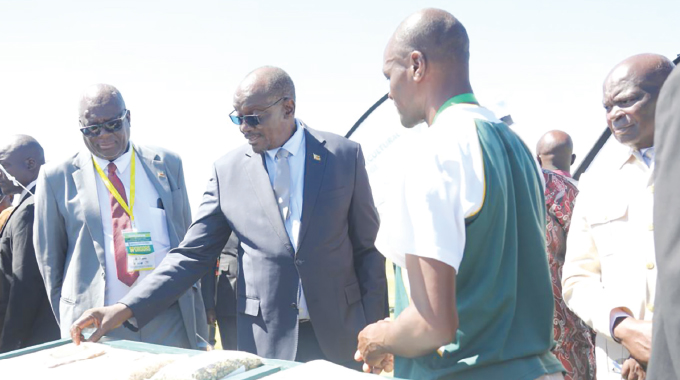
Raymond Jaravaza, [email protected]
ZIMBABWE has set its sights on fast tracking renewable energy development, scaling up efficiency initiatives and fostering climate resilient growth as it works towards Government’s target of producing 2 100MW of renewable energy by 2030.
Vice President Kembo Mohadi said this yesterday while addressing delegates at the Renewable Energy Conference held in Esigodini, Matabeleland South Province.
The event underscored the country’s determination to gradually shift away from coal towards cleaner energy sources, with a target of generating more than 25 percent — equivalent to 2 100MW — of renewable energy, excluding hydro power, within the next five years.
The conference drew a wide range of stakeholders, including the Zimbabwe Energy Regulatory Authority (Zera), Zimbabwe Electricity Supply Authority (Zesa), the Rural Electrification Agency (REA), several Rural District Councils (RDCs), educational institutions and other key players in the energy sector.
“Government’s target to achieve 2 100 MW installed renewable energy excluding large hydro power supply by the year 2030 aligns with Sustainable Development Goal 7, which focuses on ensuring access to affordable, reliable, sustainable and modern energy for all. This is key to balance, diversify sources of energy and power supply to the country’s economy to improve reliability and availability while at the same time building resilience to climate change.”
He said the Government has put in place robust, forward looking policy frameworks aligned with global trends in the energy sector to support sustainable energy development.
“Key policy initiatives include the National Renewable Energy Policy, which promotes the use of renewable energy technologies, aiming to diversify energy sources and reduce dependence on traditional energy forms, as well as the National Energy Efficiency Policy that targets energy efficiency in households, industry, mining, transport, commerce and agriculture.
“The National Energy Compact (2025) represents a bold commitment by Government to accelerate progress towards universal access to sustainable, reliable, and affordable energy. It’s a key instrument guiding the country’s transition towards a low carbon and inclusive energy future,” said VP Mohadi.
To underpin these policy measures, Government has introduced a range of incentives to lower entry barriers for investors in renewable energy, alongside financial support mechanisms designed to encourage the rollout of off grid technologies nationwide.
“Government scrapped licensing fees for capacity less than 10MW and has reduced licensing fees by 50 percent, especially for renewable energy technology projects and also put in place a facility that allows for qualifying energy projects to increase bankability and reduce investor risk particularly around currency volatility and tariff uncertainty.
“To date seven IPPs (Independent Power Producers) have been granted Government Project Support Agreements (GPSAs) while the IPPs to have access to Pension Funds through designating prescribed asset status and at the same time they are exempt from paying import duty on capital equipment for electricity generation.
“The private sector remains a key partner in the effective implementation of these policies. This is, therefore, a critical moment to strengthen collaboration and partnerships to accelerate the green energy transition and advance rural industrialisation in line with Vision 2030.”
VP Mohadi said Government had already made significant progress in expanding energy access across rural Zimbabwe, with 6 713 out of a total of 8 922 Rural Public Institutions (RPIs) electrified using a combination of grid and solar solutions.
He noted that about 68 percent of primary schools, 79 percent of secondary schools and 97 percent of clinics across the country had already been electrified.
“Government has also taken certain initiatives to accelerate rural energy access through grid extension and promoting decentralised off grid systems and other forms of energy such as biogas and LPG. This has seen an improvement in access to clean cooking technologies with a rise in the use of LPG even in the rural areas,” he said.
To further support the adoption of solar technologies, VP Mohadi said Government was at an advanced stage of establishing a Solar Technology Application Resource Centre at Chinhoyi University of Technology, with assistance from the International Solar Alliance (ISA).
Energy and Power Development Minister July Moyo, who also attended the conference, said public private partnerships were critical if Zimbabwe was to meet its 2 100MW renewable energy target within the set timeframe.
“Government cannot do it alone so we are saying public private partnerships key for us to meet our targets, hence it is essential that local authorities co own energy projects and participate in power purchase agreements. Cabinet has already approved the relevant Statutory Instrument (SI) that will allow local authorities to do that,” said Minister Moyo.
In a speech read on his behalf by the Matabeleland South provincial director for infrastructure development and environment, Mr Daniel Njowa, the Minister of State for Matabeleland South Provincial Affairs and Devolution, Cde Albert Nguluvhe, said provinces across the country possessed immense potential and strategic significance in energy development.
He highlighted Matabeleland South as a region offering strong opportunities for renewable energy, particularly solar power generation, owing to its favourable climatic conditions.
“As we gather here today, we do so at a critical time. The energy sector is facing pressing challenges, including increasing demand, infrastructure constraints, and the global imperative to transition towards cleaner energy systems,” said Minister Nguluvhe.
“This conflict provides us with a valuable platform to engage, reflect, and collaborate. As the office responsible for provincial affairs and devolution, we affirm our commitment to creating an enabling environment that supports investment, enhances efficiency, and promotes inclusive and sustainable energy development across Matabeleland South province.”
The conference was held under the theme: “Harnessing Solar PV for Productive Use in Agriculture, Artisanal Mining and Rural Communities for Sustainable Development”.