Peter Tanyanyiwa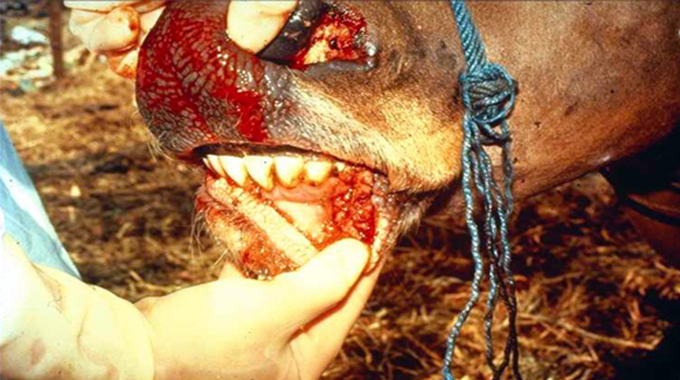
Theseus Shambare
Herald Reporter
GOVERNMENT has announced the rollout of 300 000 foot‑and‑mouth disease (FMD) vaccines to protect Zimbabwe’s pedigree and dairy herds, in a major push to safeguard the national herd and boost livestock productivity.
This comes as neighbouring South Africa battles a severe FMD outbreak, with only two provinces out of nine currently free from the disease.
The flare‑up, worst in KwaZulu‑Natal and Free State, has triggered livestock movement bans, disrupted beef supply chains and threatened regional trade.
Zimbabwe has not been spared, with recent outbreaks reported in Gutu, parts of Masvingo and Chivhu.
However, authorities say the situation has been contained.
Past episodes resulted in movement restrictions, cancelled sales, blocked exports and huge losses for breeders and dairy producers.
FMD is a highly contagious viral illness that affects cloven‑hoofed animals such as cattle, goats, pigs and sheep, causing fever and painful blisters on the mouth, feet and teats, leading to severe production losses.
Lands, Agriculture, Fisheries, Water and Rural Development Deputy Minister Davis Marapira said the vaccines were in stock and would be deployed strategically to shield the country’s most valuable livestock.
“We have got more than 300 000 vaccines which we are going to focus on the affected areas and we will ring‑fence our important areas — the pedigree breeders and the dairy farmers — to make sure we protect our seed stock and keep dairy production strong,” he said at the 57th National Breed Sale in Mt Hampden recently.
He praised Zimbabwe’s improving cattle genetics, citing top breeds such as Brahman, Simmental, Simbra and Tuli.
“Once we have this kind of seed, we can reach our target of 12 million cattle in the next 10 years, but we must jealously guard that quality,” he said.
Lands Permanent Secretary Professor Obert Jiri said the vaccine rollout was part of a wider Livestock Growth Plan, despite a drought last year slowing progress.
“We are now at about 5.7 million cattle, just short of our six million target for 2025. With better genetics, stronger disease control and improved feed, we can reach it by 2026 or 2027,” he said, adding that local capacity to manufacture FMD vaccines was a priority.
Prof Jiri added that the ministry’s focus was on three pillars: genetics, herd health and nutrition.
“We are improving genetics through artificial insemination and upgraded gene banks, reducing deaths from major diseases, and ensuring better feeding through silage making, hay baling and urea treatment of stover,” he said.
Zimbabwe Herd Book general manager Dr Mario Beffa stressed that controlling FMD was vital for trade.
“Foot and mouth is a disaster — it hampers exports and slows genetic improvement. Biosecurity is key, and we must keep protecting the herd,” he said.
Authorities believe the rollout will strengthen Zimbabwe’s position as a regional supplier of high‑quality beef and dairy products.



 Online Reporter