Chronicle Editor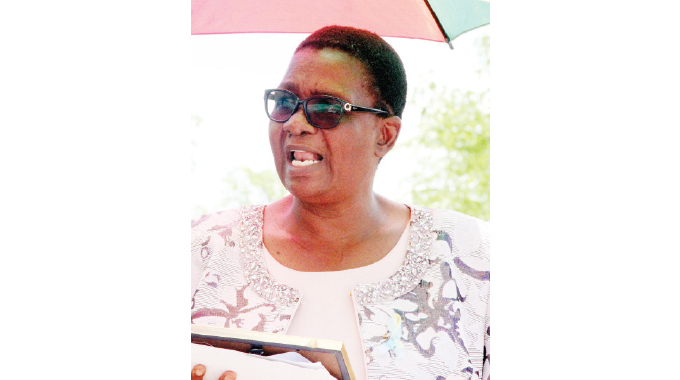
Michael Magoronga – [email protected]
GOVERNMENT has said the relentless efforts to curb cases of bullying, drug and substance abuse in local schools will continue until a safe learning environment has been created.
This comes as the country is grappling with the scourge of bullying, drug and substance abuse among learners.
President Mnangagwa is leading the fight against the scourge and is on record calling for the arrest of the peddlers of the drugs as well as the consumers.
He has also called for the expulsion of bullies from schools to create a safe learning environment among learners.
First Lady Dr Auxilia Mnangagwa is also playing her part as the mother of the nation through her Angel of Hope Foundation which is spearheading the nhanga/ixhiba concept during which she will be interacting with youths across the country and conscientising them about such social ills.
Speaking during the recent conferment of Loreto High School with the Secretary’s Merit Award, Permanent Secretary in the Ministry of Primary and Secondary Education, Mrs Tumisang Thabela said pursuant to the adoption of the Zimbabwe School Health Policy where all learning institutions are expected to provide safe and child-friendly spaces for all children, the fight continues.
The host school itself is struggling with cases of bullying and drug/substance abuse which are rampant at the school which has since launched its own anti-drug movement, Stop Drug and Substance Abuse (SADA).
Mrs Thabela said safeguarding pupils against all preventable harm is an integral part of the provision of a relevant, equitable, inclusive, transformative 21st century basic education and upper secondary education for all.
“The Ubuntu/Unhu philosophy should define character taking the elimination of drug and substance abuse as a very key priority and has elevated it to the inter-ministerial committee level. At all governance levels, we need to be actively involved in fighting these emerging ills so that we can have a future to talk of,” she said.
Mrs Thabela said the community should play its role in raising a child to become a responsible citizen.

“We need to go back to our common African belief that we need the whole village to bring up our children where every elder is a revered parent to every child. From the nuclear family through the extended family, the community, the God-fearing church, the school to higher socialisation and governance levels, we need all to work together to raise our children,” she said.
The cyber space remains a frightening agent of socialisation and advocacy should be taken to this platform and work on mitigating strategies as whole communities in support of the Government efforts to recover youths from emerging social threats.



 Online Reporter