admin
adminColumbus Mabika Herald Reporter
Government is committed to recognising minority languages to promote diverse cultures and preserve the identity of minority groups, a senior Government official has said.
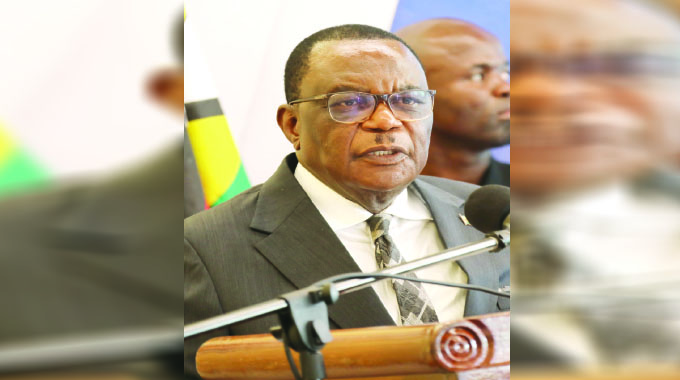
Giving oral evidence before the Parliamentary Portfolio Committee on Defence, Security and Home Affairs chaired by Umzingwane MP Levi Mayihlome (Zanu-PF) on a petition by the Chikunda community from Mashonaland Central to have Chikunda recognised as a national language, Secretary for Home Affairs Mr Aaron Nhepera said Government was committed to implementing the recognition of minority languages.
The Chikunda community is a small group living in the Kanyemba and Mbire areas in Mount Darwin on the border with Mozambique.
The Government wanted to move forward and take concrete steps towards translating national documents into minority tongues.
“For linguistic minorities, language is a central element and expression of their identity and of key importance in the preservation of group identity. Unfortunately, significant challenges are faced by minorities who speak minority languages and wish to maintain and use them in public and private life,” he said.
“Language is often particularly important to non-dominant communities seeking to maintain their distinct group and cultural identity, sometimes under conditions of marginalisation, exclusion and discrimination. It is in this vein that our role as Government to ensure preservation of this heritage,”
Mr Nhepera said historical factors such as colonialism had a huge impact on languages, resulting in the marginalisation and rapid decline in the use of indigenous and minority languages.
“The introduction of colonial languages in Africa initiated the marginalisation of native and minority languages leading to a rapid decline in their use.
“Colonial languages were promoted in education, administration, political life and communications. Minority and indigenous languages were often seen as backward, a barrier to colonial hegemony, or as slowing national development.”
Zimbabwe has recognised 16 indigenous African languages, with Tonga, Nambya, Kalanga, Sotho, Venda and Shangaan among others, but only Shona and Ndebele have enjoyed prominence by being studied at university level.
In an unrelated petition to the same committee, the coloured community in the country urged the Government to regularise the 00 suffix on national identity numbers, which they say has segregated the group on opportunities in civil service and the Government.
The 00 suffix is given to those who are regarded as originating from outside Zimbabwe, and is generally given to immigrants and the descendants of male immigrants, and in particular to people of full or partial European or Asian origin through the male line.
In the petition, the coloured community’s representative Mr Quincy Petersen argues that due to the 00 coding, no Coloured person was able to benefit from the country’s land redistribution programme.
Responding to the petition, Registrar General Mr Clemence Masango said modalities were in place to solve the plight of coloured community identification.
“The 00 coding was a colonial system, which marginalised and segregated certain sections of society from enjoying some privileges, however we working on means to have the coloured community registrations and identifications be recorded from their districts of origin and places of birth,” he said.


 Online Reporter