Online Reporter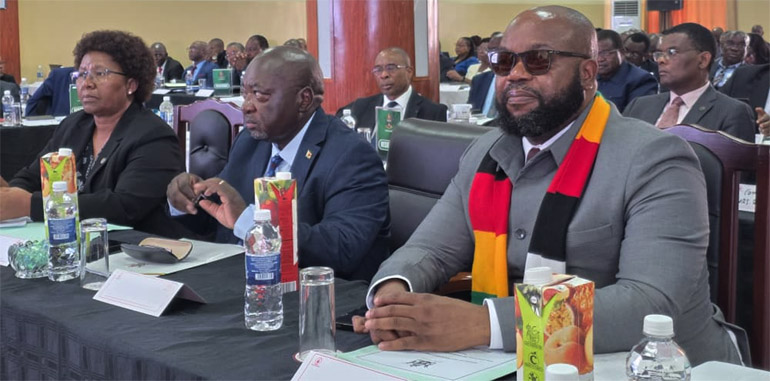
Ray Bande
Senior Reporter
PERFORMANCE contracting for senior Government officials is not a temporary initiative, and the authorities are committed to mainstream and institutionalise new mechanisms to strengthen the system, making it more robust, resilient, results oriented, and modernised.
This was highlighted by the Chief Secretary to the President and Cabinet, Dr Martin Rushwaya, during the official opening of the 2026 Performance Contracting Validation Workshop for top public officials, held at a Mutare hotel on Wednesday.
Dr Rushwaya emphasised that these initiatives align with the country’s drive to enhance a results driven management framework designed to accelerate the delivery of the national development agenda under Vision 2030.
The workshop serves as a critical preparatory stage ahead of the Annual Performance Contract Signing Ceremony, scheduled for mid March.
He further noted that the forthcoming Performance and Results Act will introduce provisions for legal enforcement, moving beyond reliance on administrative principles alone.
“It should be clear in our minds that performance contracting is here to stay, and we will continue to mainstream and institutionalise new mechanisms to make it more robust, resilient, results oriented and mordenised.
“In order to ensure resilience and sustainability of our performance management system underpinned by the Integrated Results Based Management (IRBM) and other contemporary models of governance, there are measures in place to ensure short to medium term strategies that are being instituted,” said Dr Rushwaya.
Dr Rushwaya urged the country’s top officials to ensure that they build transformative results that will be applauded by future generations.
“Let us build a legacy of tangible, transformative results that will be remembered by generations to come. The work begins now. The accountability starts here,” he said.
Dr Rushwaya emphasised that the Validation of Performance Contracting system is not a fault finding initiative.
“Validation is therefore not fault finding exercise. It is a governance tool for strengthening, planning, implementation, performance evaluation, and the overall achievement of results (outputs, outcomes and impact),” he said.
Dr Rushwaya commended the presence of all Government top officials at the workshop in Mutare, and described it as evidence to commitment and work culture ethos within the country’s central authority.
“In addition to permanent secretaries, we have here the presence of deputy chief secretaries, commissioners and top officials from academia, represented by the vice-chancellors and university council chairpersons.
“This again demonstrates extraordinary commitment and work culture ethos that we are inculcated at the top echelons of the public sector, hence resonating well with His Excellency, the President’s policy directive on the need to institutionalise servant leadership values across the public sector,” said Dr Rushwaya.
He urged senior Government officials to take full ownership of their performance contracts.
“Contracts holders should participate in the development of strategic plans and performance contracts rather than delegating to junior officials.
“This workshop is a clear demonstration that this is now a thing of the past because attendance is in person by the performance contracts holders.
‘‘In Zimbabwe, we are blessed with the political commitment that we see in our leaders. If our leaders are in compliance, why should we not follow?” he said.
Government introduced and implemented the Performance Contracting System in the 2021 fiscal year, marking a bold strategic move by the Second Republic to professionalise and institutionalise a high performance culture and accountability across the public sector, a preconditions for building a Governance Excellence Model for the country.
The workshop in Mutare, which ends today (Friday), represents a critical milestone in the ongoing efforts by Government to strengthen performance management and delivery of quality service by the public sector, especially coming as the country commence the implementation of National Development Strategy (NDS2), which happens to be the last programmatic blueprint towards the achievement of the national vision: A prosperous and empowered upper middle income society by 2030.