Chronicle Editor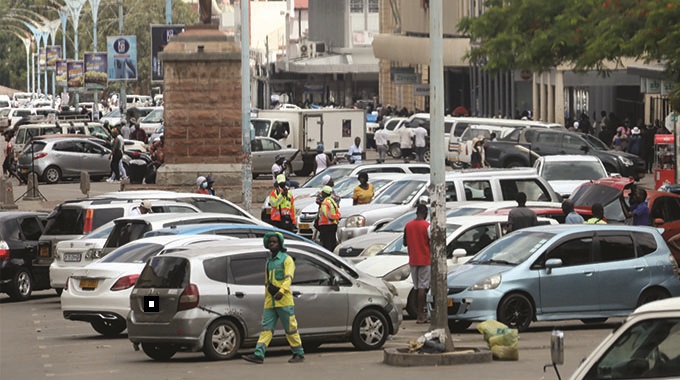
Nqobile Bhebhe, [email protected]
THE transport sector stakeholders are strongly advocating for the Government to implement a budgetary support scheme to encourage small operators to trade their unsafe, unregistered taxis, commonly known as mushikashika, for safer kombis in a structured and transparent swap arrangement.
This proposal takes inspiration from South Africa’s successful model of upgrading outdated Toyota Siyaya vehicles to Toyota Quantums.
The proposal was presented by the Parliamentary Portfolio Committee on Transport and Infrastructural Development, chaired by Cde Knowledge Kaitano.
The plan suggests that pirate taxi operators should exchange their old and dangerous Honda Fit and Sienta vehicles for safe Toyota Quantums in a regulated manner, with the valuation difference financed as a loan.

This initiative would help to eliminate illegal taxis, reduce traffic congestion and improve pedestrian safety while promoting a regulated transport sector. Unregistered taxis have been responsible for significant traffic disorder in Zimbabwe, often picking up and dropping off passengers at unauthorised locations and flouting traffic laws.
After discussions with stakeholders, there is now a major push for the Government to facilitate the replacement of old kombis and pirate taxis, with an emphasis on creating a more regulated and safe transport system. “This applies to pirate taxi (mushikashika) players where the Government can eliminate the Honda Fits, Sientas, NV150 and NV250 from the road by offering their owners, say, a safer Toyota Quantum for every four pirate taxis owned,” said Cde Kaitano.
The Bulawayo City Council and police regularly conduct crackdowns on illegal taxi operators and unruly kombi crews to restore order within the city’s disorganised transport sector. In separate interviews, pirate taxi operators and commuters expressed mixed reactions to the proposal.
A mushikashika operator in Bulawayo expressed concerns about the financial feasibility of the swap arrangement.
“I generate around US$30 daily per Honda Fit, which makes it about US$120 for four vehicles. A kombi generates only about US$50-US$60 per day, so it’s more profitable to operate Honda Fits,” he said.
He also questioned the selection criteria and implementation timeframe for the swap, doubting its ability to fully address gaps in the market.

“Another key issue that would need clarification is the selection criteria for the swap arrangement and the implementation time frame. In my opinion, it would be an unnecessary financial burden to the Government when procuring kombis,” he said.
On the other hand, commuters underlined the convenience offered by Honda Fits, particularly in areas underserved by kombis.
“Honda Fits provide door-to-door services for a small extra fee, which is convenient for me since there are no kombis in my area,” said a commuter from Burnside.
Despite reservations, Expriccos Taxis chairman, Mr Mpikelelo Khumalo, endorsed the proposal as a significant step toward regulating the sector and ensuring accountability.
“This is a noble and brilliant idea that came out of the Parliamentary Committee on Transport recommendations, which should be embraced by all unregistered operators. I urge all unregistered operators to engage each other and come up with a consolidated standpoint directed at taking up the offer,” he said.

Mr Khumalo said the idea is brilliant and should be embraced by unregistered operators as it will bring accountability and fairness to the industry, with all operators paying taxes and levies.
“Accountability is vital in any business, and once illegal operators are eradicated, the industry will flourish on a win-win basis. Every operator should pay taxes or levies to authorities, which is not the situation now,” he said.
Mr Khumalo urged operators to collaborate and present a unified stance to facilitate the scheme’s implementation.
Stakeholders also raised concerns about high compliance costs for small operators.
“To operate legally, a kombi requires about US$1 600 annually for permits and an additional US$3 800 for Vehicle Inspection Department (VID) certification. This makes illegal operations more appealing to small operators,” noted the Transport Committee.
To address this, the committee proposed creating an online “One-Stop Shop” for document applications, streamlining processes between local authorities and the Road Motor Transportation Department (RMT).


 Online Reporter