Chronicle Editor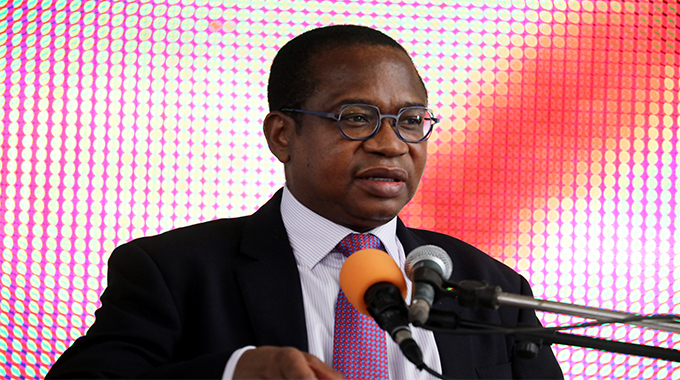
Nqobile Tshili, Chronicle Reporter
GOVERNMENT has appealed to Zimbabweans to trust them as it is walking the talk on economic reforms.
Finance and Economic Development Minister Professor Mthuli Ncube said this during the National Assembly’s Question and Answer Session on Wednesday.
He said Government’s austerity measures were bearing fruit as Treasury is realising a budget surplus.
“The nation must trust us, the reason being that we ‘walk the talk’ on everything that we say. We said that we will stabilise Government finances and institute fiscal discipline and we have done that. We also said we are going to reform the monetary sector and system – we have done that. We have also said that we will continue to fine tune the monetary sector – we are doing that,” said Prof Ncube.
He said due to unjustified price hikes, product demand has declined resulting in some companies’ self-correcting prices.
“A few days ago, we learnt that companies such as Delta and others have begun to reduce the price of drinks. This really demonstrates the fact that the austerity measures that we have put in place have managed to curtail demand and the price increases that we have seen so far are totally unjustifiable. They are not justifiable because we continue to have surpluses,” said Prof Ncube.
“So, we are not increasing the growth of money supply and in fact, in the last two months the growth of money supply has been negative. There is no justification whatsoever to increase prices further in line with the exchange rate as if one of the components of the basket of consumption is currency. It is not. People consume goods and they do not consume US$. We should desist from linking our salaries or anybody’s salaries to the US$ exchange rate.”
He said Government will continue to fine tune monetary reforms and this will result in US$800 million being accessible through the interbank market.
Prof Ncube said the business sector is to blame for the forex black market currency trading.
“It is certainly true that business people are sourcing money from the parallel market, otherwise it would not be existing in the first place and they use this for pricing goods and so forth. Our argument is, why do it when you have got an interbank market? There is no reason to have the parallel rate where the fundamentals do not support it either in the form of money supply. The current account deficit or the fiscal position do not support that high exchange rate and therefore, players must move back to the interbank market because we believe that is where the market ought to be,” he said. – @nqotshili



 Online Reporter