Online Reporter
Gibson Mhaka, Senior Reporter
THE Government has warned school heads and responsible authorities against barring pupils over non-payment of fees, rejecting the Zimbabwe Gold (ZiG) currency, imposing unauthorised fee increases and forcing parents to buy uniforms from designated suppliers, saying offenders risk suspension, dismissal and prosecution.
The warning comes ahead of the opening of the second school term on Tuesday amid growing complaints from parents over alleged malpractices by some learning institutions.
Over the years, parents have frequently raised concerns over schools demanding fees exclusively in United States dollars, imposing unapproved levies, excluding learners over arrears and compelling families to buy uniforms and stationery from school-run shops at inflated prices.

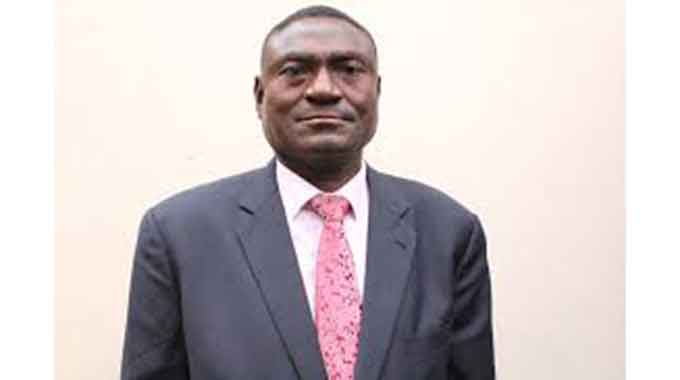
In an interview, the Ministry of Primary and Secondary Education’s Director of Communications and Advocacy, Mr Taungana Ndoro, said Government inspectors and monitoring teams would be deployed countrywide from the first day of term to ensure compliance with ministry policy and the law.
Mr Ndoro said schools that refuse to accept ZiG or other approved currencies were violating national monetary policy.
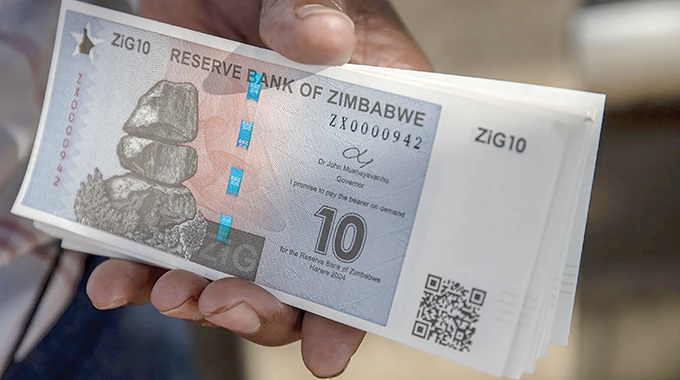
“Zimbabwe operates under a multi-currency system, and the Zimbabwe Gold (ZiG) currency, alongside all other currencies in the approved basket, remains legal tender for the payment of school fees,” he said.
“It is therefore illegal for any school to demand fees exclusively in United States dollars, and any such practice constitutes a serious violation that will attract stern disciplinary action.”
Mr Ndoro said the ministry had engaged law enforcement agencies, including the Zimbabwe Republic Police (ZRP), the Zimbabwe Anti-Corruption Commission (ZACC) and the Financial Intelligence Unit (FIU), to deal decisively with offenders.
“School heads and responsible authorities who refuse to accept ZiG payments are liable to face severe consequences. These include being publicly named and shamed, suspension from duty, dismissal from employment and being brought before the courts,” said Mr Ndoro.
The ministry has also established rapid response and command centres across districts and provinces to receive complaints from parents.
“Regarding a dedicated hotline, the ministry has established over 100 rapid response centres and command centres across all districts and provinces,” said Mr Ndoro.

“Parents and guardians can report any school that rejects ZiG payments or engages in any other malpractices at their nearest district office, provincial office, or directly to the ministry’s national office in Harare.”
Mr Ndoro reiterated that no learner should be denied access to education because of unpaid fees, saying the constitutional right to education remained non-negotiable.
“The constitutional right to education is sacrosanct, and Government policy is crystal clear that no child shall be turned away from school, excluded from lessons, or barred from sitting examinations due to non-payment of fees,” he said.
The Constitution guarantees every child the right to basic State-funded education, while Government policy over the years has consistently directed schools to engage parents over arrears without disrupting learning.
Despite these directives, some schools have continued to send pupils home over unpaid fees, attracting criticism from parents, who argue that the practice traumatises learners and worsens inequalities.
“The ministry is fully aware that some schools, citing parental arrears, continue this illegal and traumatising practice, and we condemn it in the strongest terms,” said Mr Ndoro.
To ensure full compliance as the term opens, the ministry is deploying monitors and inspectors nationwide. The Minister of Primary and Secondary Education, Torerayi Moyo, has directed that Government officials, including school inspectors, will be in the field from the very first day of the term to monitor the smooth and orderly opening of schools.
On school fees, Mr Ndoro said no institution was permitted to increase fees or levies without written approval from the Permanent Secretary.
“The legal process for adjusting school fees is strict and non-negotiable. All proposed fee and levy increases must first be agreed upon by the parent body through a proper School Parents Assembly, and are then subject to final approval by the Permanent Secretary,” he said.
“No fee increase for the second term or any term is lawful without this signed letter of approval.”
Mr Ndoro urged parents to demand proof of approval whenever schools introduced new charges.
“I can therefore categorically confirm that any school currently charging increased fees for the second term of 2026 without a formal, signed approval letter from the Permanent Secretary is acting illegally,” he said.
“Such schools are liable for prosecution and their heads will face charges of misconduct, which can lead to dismissal.”
Mr Ndoro also dismissed claims that some School Development Committee levies could legally be charged exclusively in foreign currency.
“The ministry does not recognise any school-related payment, whether called a levy, project fund, or any other name, that is legally allowed to be payable in ‘USD only’,” he said.
“The multi-currency system applies to all transactions. While School Development Committees operate under a specific legal framework, they are not exempt from the national monetary policy.”
Mr Ndoro said schools were prohibited from setting their own exchange rates or refusing local currency.
“All fee conversions must be pegged strictly to the official interbank exchange rate, and no school is permitted to set its own exchange rate or refuse the local currency. Any school or SDC doing so is in violation of the law,” he said.
The Ministry also warned schools against forcing parents to buy uniforms and stationery from school shops or designated suppliers, saying the practice amounted to an unlawful monopoly.
“The ministry’s directive on forced purchase of uniforms matter is clear and has been repeatedly communicated that no public school is allowed to compel parents to purchase uniforms from the school or from a specific, designated supplier,” said Mr Ndoro.
“Forcing parents to buy school uniforms as a condition for enrolment or placement is illegal and constitutes an unlawful monopoly.”
Mr Ndoro said parents were free to buy uniforms from any retailer, provided approved school colours and designs were followed.
“Parents have the right to purchase school uniforms from any supplier of their choice, provided the correct school colour codes are followed. Our latest directive to school heads who continue this practice is an immediate order to cease,” he said.
Mr Ndoro said the ministry was already investigating several institutions accused of engaging in unlawful practices and warned that offenders would face disciplinary action.
“Schools that force parents to purchase uniforms or stationery directly from the institution are acting unlawfully. The consequences for non-compliance are severe and such cases will be treated as misconduct,” said Mr Ndoro.
He urged parents and guardians to continue reporting violations through district and provincial education offices as the Government moves to restore order, transparency and fairness in the education sector.