Chronicle Editor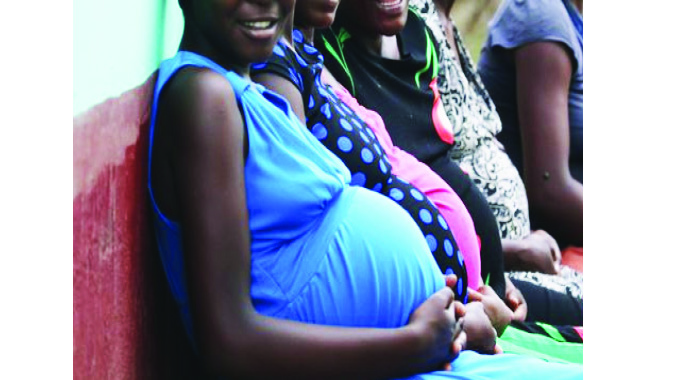
Michael Magoronga, Midlands Correspondent
FOR every woman, giving birth should be their greatest achievement and not a dreaded experience.
Consistent with that dictum, the Government has scaled up efforts to improve the healthcare system in the country with a number of projects lined up to ensure an improved maternal and prenatal system.
Through devolution funds, the Government has facilitated the construction of clinics and health facilities in many rural communities to bridge the rural-urban divide in health access.
The Second Republic has walked the talk in fulfilling President Mnangagwa’s development philosophy of not leaving anyone and any place behind.
Through devolution funds, the rural folk have been given the power to decide priority developmental areas and most of them have decided to improve health delivery and general access to facilities. Prior to that expecting mothers were travelling long distances to their nearest health institutions and that had a net effect of some of them having complications as they delivered at home.
Devolution funds have generally targeted such areas.
Recently a $35 million Mapfungautsi Polyclinic funded by devolution funds, opened its doors to the public.
The polyclinic will service Gokwe South and some parts of Gokwe North where people were travelling up to 140 kilometres to access antenatal services in Kwekwe.
The clinic is expected to service about 11 000 people from the two districts. The clinic is one of the many projects meant to improve people’s lives and will help lessen the burden of expecting mothers.
The commissioning was characterised by pomp and fanfare, the usually sleepy Mapfungautsi reverberating with song, ululations and dance. Chiefs Njelele, Mutendi, Chireya and Sayi from the two districts as well as Gokwe town councillors and officials attended the event which they described as a milestone in the development of the district.
Mafungautsi Polyclinic is just one example of how the Government has moved in to address the challenges faced in the antenatal care system.
According to the United Nations Population Fund (UNFPA), the number of women dying while giving birth (maternal mortality rate) in Zimbabwe is unacceptably high as 461 women per 100 000 live births die every year.
In the Midlands Province, according to the provincial medical director Dr Mary Muchekeza maternal deaths increased from 79 deaths per 100 000 births in 2018 to about 130 deaths per every 100 000 births in 2021.
She attributed the increase in deaths to a number of reasons among them shortage of skilled personnel in the area.
Nationally, according to the Health Service Board (HSB), as at November 30 last year, a total of 2 246 health care professionals had left the service, more than double the number that left in 2020 which stood at 993.
In 2019 and 2018 a total of 767 and 756 employees left the sector respectively.
Since 2019 the Midlands Province has lost 128 midwives.
The maternal challenges are further compounded by the long distances that some of the expecting mothers travel to access antenatal care as well as the costs associated with it.
Despite all the challenges, the Government is not sitting on its laurels but is working round the clock to try and preserve lives and retain personnel.
“These figures are unacceptably high and we are doing all within our power to stop this trend,” said Dr Muchekeza.
Shortage of equipment at most health facilities is among one of the causes, she said.
The province has 256 health facilities but only 15 have comprehensive emergency obstetric and neonatal care services.
Dr Muchekeza said some hospitals have been forced to suspend surgical procedures due to shortage of equipment and staff.
Silobela District Hospital in Kwekwe district, Musume and Masase Mission Hospital in Mberengwa are some of the health institutions that have been forced to suspend surgical services.
Dr Muchekeza said some pregnant women in districts such as Gokwe North, Gokwe South, Mberengwa, Zhombe and Silobela were travelling long distances to access health services which deters them from accessing neonatal care services. Those near the new Mapfungautsi facility will be served locally.
Whilst there are some challenges at some health institutions, health experts also note that child marriages fuel maternal deaths as most minors will not be physically ready for pregnancy.
Obstetrician, Dr Chinamora Mutevhe, said there were so many challenges faced by girls who fall pregnant prematurely, both socially and in terms of health.
“There are so many complications that are faced by young girls who start getting sexually active at an early age.
Firstly, the baby might not grow properly as it will be competing with the mother for nutrients whilst in the body.
This might lead to the baby being born smaller than normal,” explained Dr Mutevhe.
The body, he says, will still be small to carry a baby and a surgery is unavoidable under such circumstances.
“Given the cost of operation and circumstances, some might fail to meet the costs and eventually either the mother or the baby or both die due to complications,” he said.
Some women are even reluctant to access neo-natal clinics and end up having complicated pregnancies.
Former health minister, Dr Henry Madzorera stressed the need for better remuneration for health workers for the country to retain their services.
“Government should continue showing its commitment to addressing the issue of remuneration so that skilled workers are retained,” he said.
He added that easy access to better equipped health facilities should be made a priority as long distances deter some women from accessing antenatal clinics during pregnancy.
“Most of the people cannot afford the antenatal clinic costs, let alone the distance they have to travel to access the clinics. This is where some complications are supposed to be detected and dealt with. But just because women only come to deliver without having gone through the other processes, it exposes them to dangers,” he said.
He urged the Government to ensure that public healthcare facilities adhere to the policy that expecting mothers do not pay maternity fees.
President Emmerson Mnangagwa recently said that his Government is determined to implement comprehensive reforms within the health delivery system to enhance access to and affordability of healthcare.
Officially launching Stoneridge Health Centre in Harare, President Mnangagwa said the Government was determined to improve reproductive and maternal health hence the construction of clinics in every corner of the country powered by solar energy and with enough ambulances.
“The health facilities of this nature dovetail with my administration’s development philosophy of ‘leaving no one and no place behind’. In light of the above, the construction of Cowdray Park Clinic in Bulawayo, Mataga Clinic in Mberengwa, and Runyararo Clinic in Chimanimani, under phase one of the project should be speeded up,” he said.
Under the US$200 million programme, 26 more health centres and five provincial hospitals will be constructed.
“It is important to note that these facilities will be fully furnished with modern equipment and other medical accessories and consumables. The envisaged construction of maternity wards in all the targeted health facilities will go a long way in enhancing maternal health and reducing maternal mortality,” said president Mnangagwa. – @michaelmagoron1



 Online Reporter