Chronicle Editor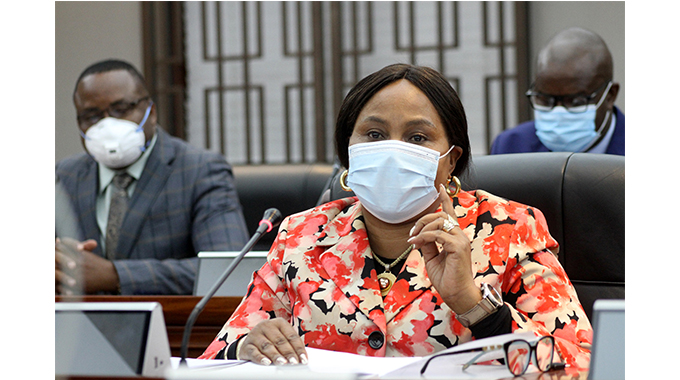
Mashudu Netsianda, Senior Reporter
GOVERNMENT has assisted more than 260 000 households affected by the lockdown and provided basic commodities to 15 institutions for people living with disabilities as part of its expanded social protection programmes to mitigate the effects of Covid-19 and drought on people’s livelihoods.
When restrictions were imposed on March 30 to prevent the spread of Covid-19, drought had already left millions vulnerable and the lockdown. Though necessary in saving lives, the restrictions came with hardships.
To alleviate challenges people are facing, Government is scaling up social protection programmes that include grain distribution to vulnerable communities, cash transfers for cereal, public assistance cash transfer for Covid-19 relief as well as harmonised social cash transfers.
In addition, Government is also scaling up child protection services, provisions for the physically challenged as well as support to ensure the safety for those rendering essential services. The social safety net programmes mark significant interventions by Government to lessen the burden on the poor and vulnerable during a difficult period for the country.
In her post-Cabinet briefing on Tuesday, Information, Publicity and Broadcasting Services Minister Monica Mutsvangwa said Government has, under the Financial Support to the Informal Sector affected by the Covid-19 Lockdown, assisted a total of 268 586 households.
“The Minister of Public Service, Labour and Social Welfare highlighted that the projects under this cycle mainly relate to interventions to assist vulnerable groups. These included the provision of basic commodities to 15 institutions for people living with disabilities in Harare, Bulawayo, Manicaland, Midlands, Masvingo and Mashonaland East,” she said.
“These projects had been successfully carried out. Under the Financial Support to the Informal Sector affected by the Covid-19 lockdown, 268 586 households were assisted.”
Minister Mutsvangwa said Government is also in the process of developing Covid-19 Guidelines for the Workplace, and development of a Social Security Scheme for Workers in the Informal Sector.
She said her counterpart in the Ministry of Transport and Infrastructural Development, Engineer Biggie Matiza also outlined progress made in five prioritised projects.
The projects include the upgrading of the Harare-Beitbridge road. Government has so far completed rehabilitating and upgrading the first 100 kilometres of the 584km long Harare-Masvingo-Beitbridge highway.
When complete, the highway which will have eight toll plazas, will result in increased and more efficient movement of cargo and passenger travel for the benefit of Zimbabwe and the Sadc region.
Projected to cost US$650 million, the State-funded project will be key in attaining Vision 2030, which seeks to transform the country into an upper middle-income economy.
An additional 100km is set to be completed by the end of this year and Government projects that the entire project will be finished by 2022 if contracted companies complete 200km every year.
The modernisation of the highway has been included in the Comesa-ECA-Sadc Tripartite and the African Union Programme for Regional Corridor Development
Other projects include the construction of a concrete structure for the north wing of the terminal building at the Robert Gabriel Mugabe International Airport, The Kopa-Jopa road rehabilitation, which was damage by Cyclone Idai.
The rehabilitation of Mhandamabwe-Chivi-Tokwe road and Skyline-Chimanimani road, which was damaged by Cyclone Idai are at varying stages of implementation. — @mashnets



 Online Reporter