

 admin
admin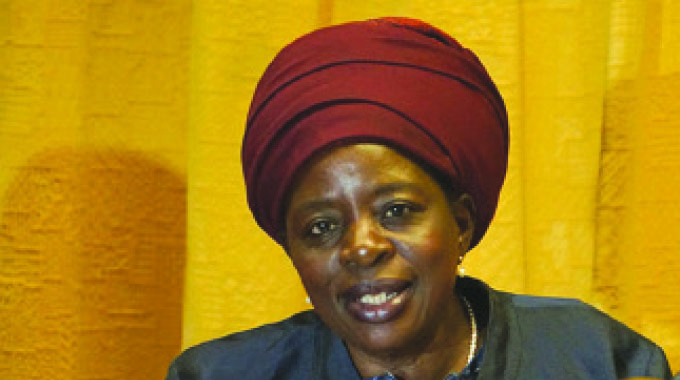
Business Reporter
Government and business have largely cooperated in a constructive way over the past few years, according to the Minister of Industry and Commerce, Dr Sekai Nzenza, while reassuring the private sector of the continuation of cordial engagements.
Despite occasional dips, largely caused by macroeconomic shocks, the local industry has registered an impressive performance over the past five years, characterized by huge investments and improved output. Of note was an increase in the proportion of the valued added products from 15,7 percent in 2018 to 18,4 percent in 2021.
Exports grew to US$366 million last year from US$324 million in 2021. Capacity utilization expanded to 66 percent in 2022 from 47 percent in 2020. The local products occupying the retail space increased to 84 percent in 2022 from 40 percent in 2017.
Previously, the biggest challenge between the Government and the private sector was trust deficit with both parties often blaming each other for the frosty relations.
Dr Nzenza however said she was impressed with the manner the business community cooperated with the Government, saying this was in line with the Zimbabwe is open for business mantra.
“I can say when I joined the ministry, there was a lot of scepticism,” Dr Nzenza said in an interview. “I remember when we went to the Confederation of Zimbabwe Industry at the launch of their survey in 2020, it was basically them leading the whole process, but it also helped us to see where we wanted to work on; what strategies would we have, what where are the quick wins. I am happy the gap has been bridged. It is something that we would like to see going forward because our aspiration to re-industrialization is largely influenced by strategies to develop the manufacturing sector through a private-sector led approach, so dialogue becomes critical.”
Dr Nzenza said the engagement also resulted in the Government making company visits and attending business forums and workshops organized by the private sector. The ministry also helped the industry by facilitating Value Added Tax deferment and tax rebates as well as support letters for Special Economic Zones.
Improving ease of doing business and making access to foreign currency to manufacturers, export development, broad-based economic empowerment initiatives, rural industrialization, research and innovation and linkages with Small to Medium Enterprises were also some of the strategies that helped propelled the industry.
The Confederation of Zimbabwe Industries (CZI) said the Government had “in a big way” been open to dialogue as well as an open-door policy that changed the atmosphere “between business and the Government.”
“They have come to the table seeking our views on how to serve the public best, and that has really changed our relationship,” CZI president Mr Kurai Matsheza said in an interview.
The Zimbabwe National Chamber of Commerce (ZNCC) chief executive Takunda Mugaga said: “The overall approach has changed and the Government has since dropped its command approach. It now values the contribution of the private sector and we would like to see the same even beyond the Ministry of Industry and Commerce.”
Economist Prosper Chitambara said the Government had been “friendly” to business.
“The Government has opened up space for dialogue unlike in the first republic, which is critical in keeping tabs on private sector needs,” said Mr Chitambara. “We have seen a lot of limitations like price controls, which existed in the first republic.
“Of course, there is a lot that still needs to be done but the second republic has been friendly to business.”
While the manufacturing industry used to be among the leading sector in the economy, the unconducive environment, which prevailed before the coming of the Second Republic was dominated by severe economic instability. Furthermore, the high cost of doing business, foreign currency shortages, and limited foreign direct investment saw the country experiencing factory closures, job losses, and de-industrialization.



 Online Reporter
 leeroy