

 admin
admin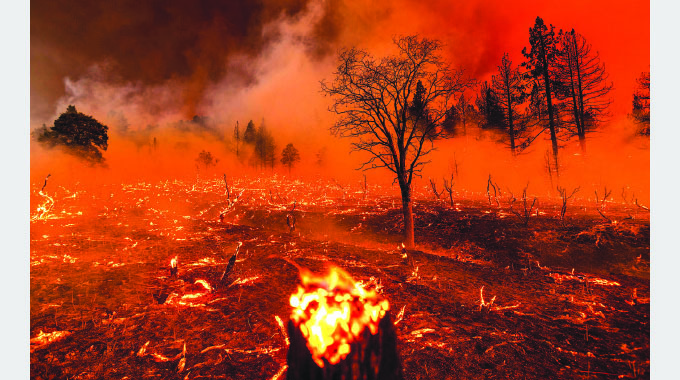
Bulawayo Bureau
THE Environmental Management Agency has urged communities to play an active role in preventing veld fires and curb the adverse impacts.
EMA’s Umguza district officer Mr David Maunze warned that due to high rainfall experienced last year, the veld fires are likely to be a big risk as there is a lot of biomass, the grass and shrubs, fallen leaves and the like that as they dry out can fuel high-intensity fires.
The EMA is keen on grass being harvested for thatching and hay, to reduce the fuel load if a fire breaks out.
“This year generally we are expecting veld fires to be on a high due to high biomass resulting from last year’s above-the-normal rainfall,” he said.
“One of the biggest problems is that we have huge forests and to contain such a landmass with so much biomass that is around the district is very difficult. But communities and other Government organisations should work together for a better environment with fewer veld fires.”
Mr Maunze urged communities to acquire requisite fire equipment to combat veld fires in the event of an outbreak.
“Communities have been urged to prepare fire-guards before the fire season, ensure that there are fighting teams, put in place fire-fighting equipment, reduce biomass by thatch grass combing and hay baling, and fires are expected to be reported in a space of seven days to the responsible authorities,” he said.
Mr Maunze said communities should have fire alarm systems in place and react swiftly when fires occur.
According to EMA, Matabeleland North has in the past three years recorded a higher number of hectares burnt, rising each year from 74 002,24 hectares in 2020 to 172 215,01 hectares in 2021, which doubled to 399 622,79 hectares last year.
Mr Maunze said veld fires were one of the drivers of land degradation in the country leading to deforestation and desertification as grasslands and forests are destroyed.
Last year, veld fires killed 18 people across the country with a total of 5,386 fires reported countrywide, damaging 244,227,34 hectares.



 Online Reporter
 leeroy