admin
admin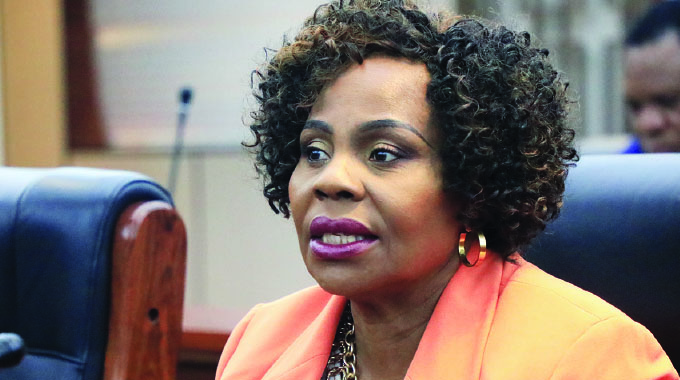
Farirai Machivenyika
Senior Reporter
The Government expressed concern over the spate of price increases, which have come ahead of harmonised elections set for August this year, but believes the various measures announced last week will see prices falling, Information, Publicity and Broadcasting Services Minister, Monica Mutsvangwa, told the Senate yesterday.
Minister Mutsvangwa, who is also the leader of Government business in the Senate, said the price increases have been caused by saboteurs, who are manipulating the currency in a vain bid to set the citizens up against the ruling ZANU PF.
ZANU PF has performed well since the 2018 elections, with infrastructure projects such as dams, roads, airports, border posts, houses, clinics and schools being constructed across the country.
Electricity generation is also being expanded, with Hwange’s Unit 7 already complete and the technical commissioning of Unit 8 is expected soon.
Such developments, done using locally generated resources, have stunned opposition parties and their foreign handlers, who now believe that using price increases to discredit ZANU PF ahead of the elections could be a solution.
“Government is concerned by the price increases which have caused suffering to the citizens and has taken various measures to alleviate the situation,” said Minister Mutsvangwa. “These measures include the removal of duty on the importation of basic commodities while an inter-ministerial committee that includes the ministries of Finance and Economic Development, and Industry and Commerce, has been set up to investigate the root cause of the price increases.”
Minister Mutsvangwa said acts of sabotage could not be ruled out as Zimbabwe is headed for elections.
“We will be going for elections soon and we know that there are elements that want to cause suffering to the citizenry so that they turn against the Government,” said Minister Mutsvangwa.
Some of the measures adopted by the Government include the exemption by the Reserve Bank of Zimbabwe of all proceeds from domestic sales in foreign currency from the 15 percent surrender requirement.
All external loans to the Government were also transferred from the Reserve Bank of Zimbabwe to Treasury while the foreign exchange auction system will be further fine-tuned.
Businesspeople claim they are increasing prices since the rate has gone up on the parallel market where they say they get the forex.
This is despite the fact that they get forex from the auction system, and they are also selling most, if not all, of their goods in foreign currency.
Some supermarkets have pegged all their prices in forex and when one is using their bank card to pay, they use the parallel market rate.
Those that have Zimbabwe dollar prices, convert any forex payments at the prevailing auction rate, a development that leaves the consumer at the mercy of traders.



 Online Reporter