Oliver Kazunga
Senior Reporter
ZIMBABWE’S lithium producers have until January 2027 to establish lithium sulphate plants, with Government making compliance a condition for advancing to the next stage of processing towards battery manufacturing.
The deadline represents a major test for the country’s drive to extract greater value from its lithium resources, with authorities insisting that producers first meet the immediate processing requirement before the country moves to more advanced stages of beneficiation.
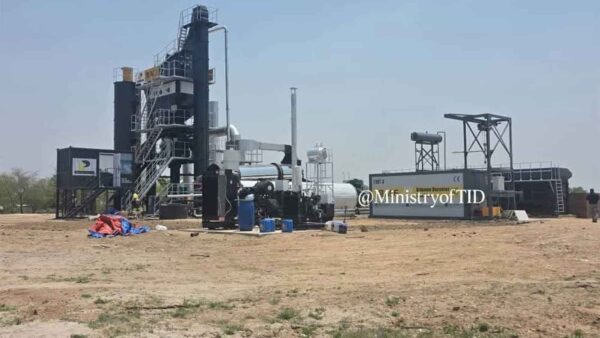
At present, Zimbabwe has five active lithium mines: Gwanda Lithium Company — Kamativi Mining Company (KMC) — Bikita Minerals — Sabi Star Lithium Mine-and Prospect Lithium Zimbabwe (PLZ), which has established a US$400 million lithium sulphate plant and is already exporting the product.
The plant has an installed capacity of 80 000 tonnes annually.
Bikita Minerals, which is also owned by another Chinese firm, Sinomine, is reportedly investing in local beneficiation with a US$500 million lithium sulphate plant.
In an interview yesterday, Mines and Mining Development Minister Dr Polite Kambamura said the Government was concentrating on ensuring lithium companies comply with the existing directive before considering further beneficiation.
“For now, we have mandated the companies to do lithium sulphate, so we are looking forward to them complying with that directive.
“So, if you have been following up, by January 2027, the companies should have set up lithium sulphate plants; then thereafter, we can now speak of further beneficiation.
“We cannot talk of it now; we want them to comply first with this Government directive of setting up lithium sulphate plants, so this is the work that we are following up at the moment and the good example is that Prospect Lithium Zimbabwe has set up a lithium sulphate plant,” said Dr Kambamura.
This position effectively puts lithium producers on notice that Government will first assess compliance with the lithium sulphate requirement before opening discussions on more sophisticated downstream processing.
Zimbabwe, which holds some of Africa’s largest lithium reserves and ranks among the world’s key producers, is positioning the mineral as a central pillar of its mining-led industrialisation and energy transition strategy.
The country has attracted more than US$3,4 billion in investment into lithium mining in recent years, with major Chinese investors developing operations and processing facilities.
The investment pipeline comprises US$2 billion already deployed and a further US$1,45 billion earmarked for value-addition projects, positioning Zimbabwe to deepen its role in global battery mineral supply chains.
The Government’s policy has increasingly focused on ensuring the growing investments translate into greater domestic value addition — employment — industrial activity — and export earnings.
Data from the Minerals Marketing Corporation of Zimbabwe (MMCZ) indicates that the country earned US$746 million from lithium sales in the first half of this year, split predominantly between spodumene concentrates (US$672,8 million) — and early higher-value lithium sulphate shipments (US$73,2 million).
Lithium sulphate is an inorganic salt primarily used in producing lithium-ion batteries for electric vehicles and energy storage systems, as well as manufacturing specialised glass and ceramics, and treating bipolar disorder.
It acts as a precursor for lithium hydroxide, enhances the performance of batteries, and acts as a flux to lower melting temperatures in glass production.
Production is projected to reach 344 000 tonnes of lithium sulphate at peak output, strengthening Zimbabwe’s ambition to become a major global hub for battery mineral processing.
The January 2027 deadline is therefore expected to be a key milestone in determining the extent to which the lithium industry is moving from extraction towards local processing.
The setting up of a lithium sulphate plant by PLZ has been commended by the Government as a positive example of compliance with the directive.
PLZ operates the Arcadia lithium mine in Goromonzi District, Mashonaland East Province — and is backed by Chinese battery materials giant, Zhejiang Huayou Cobalt.
The development comes as Zimbabwe seeks to position itself higher up the global lithium value chain, particularly as demand for the mineral remains closely linked to batteries, electric vehicles and renewable energy storage.
Dr Kambamura said the Government was not yet ready to provide details on the next stage of processing.
“It’s too early to tell that; for now, we are sticking to the directive that we gave them as Government.”
The phased approach means lithium producers should first establish the required sulphate processing capacity before authorities consider additional downstream processing requirements.
This could ultimately pave the way for Zimbabwe to develop a more integrated lithium value chain, although such a transformation will require significant investment in processing technology, energy, infrastructure and skills.
The lithium policy is part of the Government’s broader mineral beneficiation strategy, which seeks to ensure that Zimbabwe retains a larger proportion of the value generated from its mineral resources.
The push is particularly significant for lithium, which has rapidly emerged as one of the country’s most important mineral investment sectors.
Zimbabwe introduced restrictions on the export of unprocessed lithium ore in 2022, seeking to encourage local processing and discourage the country from simply exporting its mineral wealth.
The subsequent emphasis on lithium sulphate represents another step in that policy direction.
It is believed that the January 2027 deadline will not only be about establishing processing plants — but also for lithium producers to demonstrate that their operations are aligned with the Government’s industrialisation agenda.
The deadline could also influence future investment decisions in the sector, with investors expected to factor local processing requirements into the development of new lithium projects.