admin
admin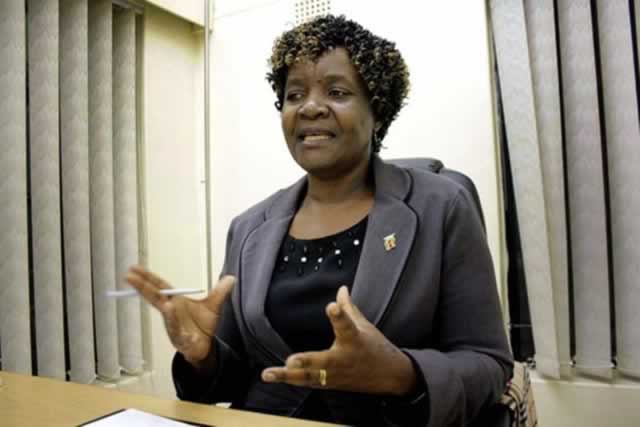
Government disbursed about US$42 million to distressed companies through facilities targeted at struggling firms in the first nine months of the year, an official said on Friday.
The amount is, however, a drop in the ocean compared to the US$2 billion required for capacitating the local industry, which is teetering on the brink of collapse.
Having survived a decade of economic meltdown, most local companies are failing to secure long funding for retooling and working capital due to the liquidity crunch.
Some of the factors that have constrained the industry include low aggregate demand due to low disposable incomes across households has resulted in the manufacturing sectors operating below capacity.
Individual consumption is skewed towards basic commodities thereby negatively affecting the rest of the industry outside the value chain of basic commodities.
Lack of demand has also been worsened by the fact that Government has little to spend. In a country with a Government with less expenditure, the economy goes into stagnation in the absence of stimulus package.
Lack of long-term loans caused by transitory nature deposits has also made it difficult for industry to obtain long- term credit for retooling and working capital.
With Zimbabwe’s debt at close to US$11 billion, this on its own raises the country’s risk profile and makes it difficult for companies to source offshore finance.
Zimbabwe has also suffered from stiff competition from foreign trade leading to a situation where the country is literally running trade deficits with most of its trading partners.
As such, the Government established two facilities — the Zimbabwe Economic and Trade Revival Facility and the Distressed and Marginalised Areas Fund — to support struggling firms.
In total, the facilities were supposed to avail US$110 million in company revival funding this year.
But Industry and Commerce Permanent Secretary Mrs Abigail Sho-nhiwa said only US$41,7 million out of approved applications valued at US$71,8 million, had been disbursed.
“The pace of disbursements has, however, been slow in relation to industry’s requirements and has been limited to a few companies,” she said.
Under Zetref, a US$70 million joint venture facility between the Government and the Africa Export and Import Bank, only US$17 million was disbursed between January and September out of the applications worth US$39 million which were approved.
Under Dimaf, a US$40 million facility between the Government and Old Mutual, a total US$24,7 million was disbursed against applications worth US$32,8 million approved.
The two facilities are available to companies across all sectors of the economy through selected financial institutions.
Mrs Shonhiwa said the Government, also battling a cash crunch, had failed to meet its part of the bargain under Dimaf where it is supposed to provide half of the funding for the facility.
Some companies have criticised the facilities for unfavourable lending conditions which have resulted in some failing to access bail out support.
The on-going cash crunch has severely impacted on ability of industries to produce at competitive prices and quality, given that the economy has largely become a net importer of foreign manufactured goods.
Industry capacity utilisation continues to decline, with last estimates by the Confederation of Zimbabwe Industries showing that productivity had slumped to 39,6 percent this year from 44 percent in 2012.
With a Government that is unable to print money to improve the liquidity situation due to the current use of multi-currencies, the situation remains precarious as alternative funding sources have largely remained dry. — Business Reporter-New Ziana.


 Online Reporter