

 Online Reporter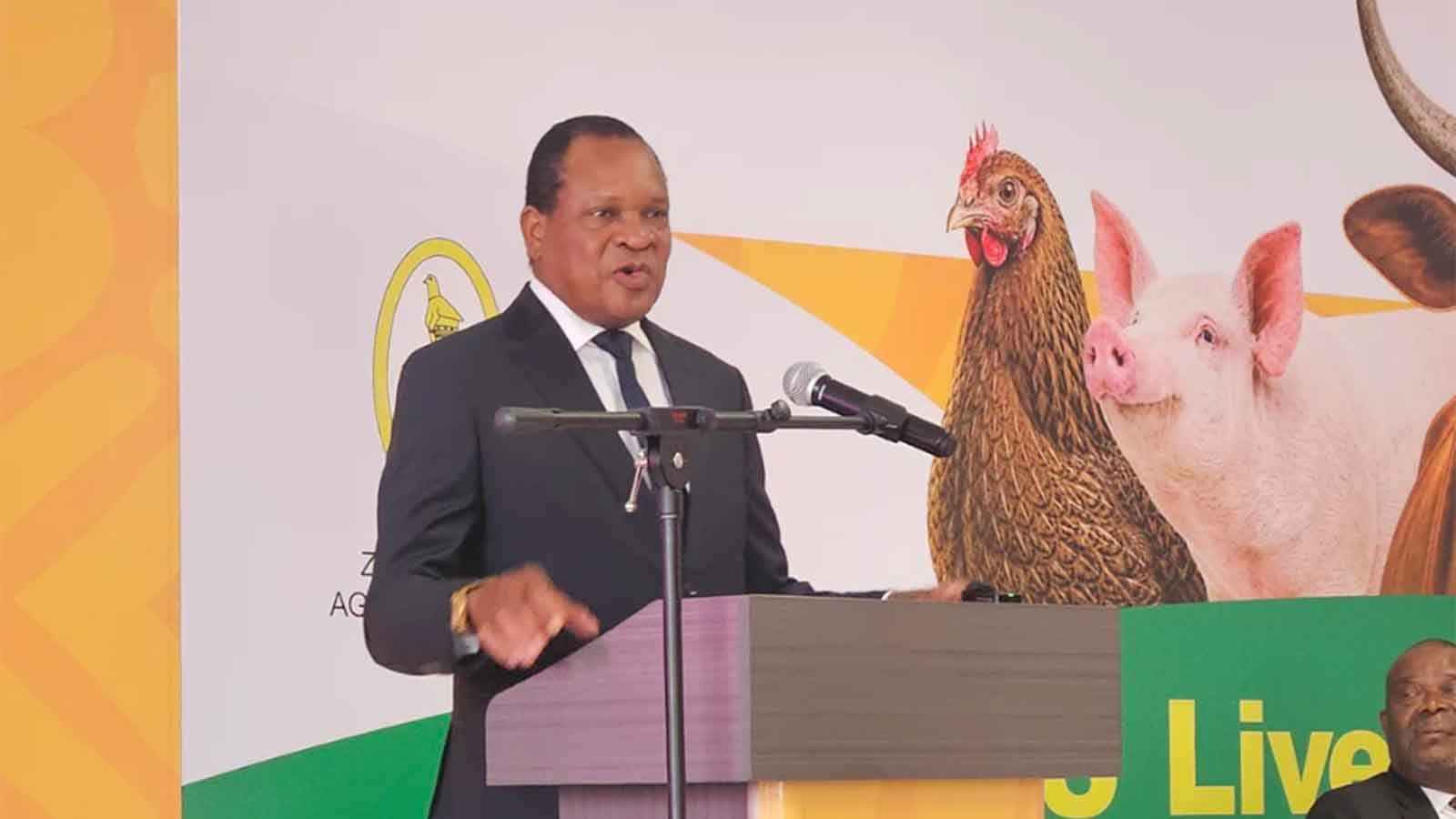
Edgar Vhera-Specialist Writer – Agribusiness
GOVERNMENT has urged financial institutions to provide well-tenured “patient capital” to livestock farmers, as it targets 100 000 cattle artificial inseminations annually, with focus shifting towards elite genetics beyond indigenous Tuli, Mashona and Nguni breeds.
Agriculture, Mechanisation and Water Resources Development Minister Dr Anxious Masuka said this on Wednesday when he officially opened the Zimbabwe Agricultural Society (ZAS) livestock conference.
The conference ran under the theme: “Building Resilient Livestock Systems towards a US$15.8 billion Agriculture Economy by 2030: Addressing the Production and Marketing Challenges.”
Dr Masuka said the conference theme was relevant and timely, as it was being held amidst heightened focus on livestock mitigation and adaptation measures ahead of the predicted super El Niño.
“Our core livestock mandate of transforming the livestock value chains from a traditional rural safety net and social status symbol into a commercialised business that is highly productive for economic development remains unchanged.
“Regarding finance for livestock development, various funding options are available, but the need for appropriately tenured capital cannot be over-emphasised,” he said.
This stems from the realisation that most financial institutions were only giving short-term loans for day-to-day operations and no long-term loans for capital development.
Dr Masuka said since 2020, all livestock species had recorded steady growth, despite episodic climate-induced shocks, occasional disease burdens, increasing shortage of pastures and increasing inbreeding, especially in communal areas.
He said the revival of the sector was being achieved through the provision of improved breeds, better disease control, pasture development and management, feed formulation, supply and distribution of feed and fodder during times of distress, and better extension support.
“Artificial insemination is ongoing, with a target of 100 000 annually, with focus on indigenous cattle genetics improvement for communal areas and other breeds in A1 and A2 areas,” he added.
NMB business banking head, Mr Erasmus Bhunu, concurred that financing was a binding constraint as a result of limited bankable collateral, high cost and short tenor of capital, fragmented, informal markets, and an export-readiness gap.
“Communal land tenure and informal herd ownership make it hard for farmers to offer conventional collateral to banks.
“Interest rates and short loan terms are poorly matched to livestock production cycles of two to four years,” he said.
Mr Bhunu said fragmented, informal markets reflected weak market linkages, price discovery and post-sale payment risk.
He said traceability, disease-free zoning and certification investment were needed to access premium regional and export markets that presented export-readiness gaps.
NMB has invested US$70 million in the agriculture value chain and developed a livestock financing strategy anchored on four pillars: production financing, market-linked financing, investment structures and export enablement.
“Under value chain and contract financing, an anchor buyer (abattoir, feedlot or exporter) contracts smallholder farmers for future offtake. The contract itself becomes the collateral banks lend against — de-risking both sides.
“This is best suited to beef finishing, dairy cooperatives and poultry contract growers with a credible anchor buyer,” Mr Bhunu said.
NMB has also innovated with a livestock-backed collateral financing model, wherein it adapted the warehouse-receipt principle where livestock is held in accredited feedlots or custody schemes are registered, valued and used as loan collateral — unlocking credit without transferring land title.
“NMB has also developed the blended finance and guarantee funds financing model, where public and development finance absorbs first-loss risk so commercial banks can lend into the livestock sector at viable rates and tenors.
“This works as it crowds in commercial capital that would otherwise see livestock lending as too risky, keeps Government exposure limited to the first-loss tranche, not the whole book, and can be capitalised by Development Finance Institutions (DFIs), the African Development Bank (AfDB), or a national agriculture guarantee fund,” he explained.
Mr Bhunu said Zimbabwe’s diaspora and impact investors are an underused capital pool looking for credible, mission-aligned returns, and proposed diaspora bonds and impact investment as the fourth financing model.
“Zimbabwe’s herd is growing; the market opportunity is real. What stands between them is a financing architecture built around how livestock moves from kraal to market.
“Government, financial institutions, DFIs and donors, cooperatives and farmers, as well as processors and exporters, need to come to the table to establish sustainable partnerships,” he noted.



